

NGO Audit Checklist (2026): What a CA Actually Checks Before Signing Your Report
Understand what a Chartered Accountant checks during an NGO audit in India. A practical checklist to help NGOs stay compliant and audit-ready.
Vivek Bhos
Updated 4 min read
Form 10B / 10BB statutory due date30/09/2027
Statutory due date
For many NGOs, audit season feels stressful.
Not because audits are complex —
but because everything is usually prepared at the last minute.
Files are scattered.
Documents are incomplete.
And suddenly, there’s pressure to “fix everything before the CA arrives.”
The reality is simple:
👉 Audits are not difficult if your records are structured.
This guide breaks down what a Chartered Accountant actually checks during an NGO audit — so you can stay prepared in advance.
Why NGO Audits Matter
Audits are not just a legal formality.
They directly affect:
Your credibility with donors
CSR funding opportunities
Compliance with Income Tax regulations
Long-term sustainability
A clean audit builds trust.
A messy audit raises questions.
When is an Audit Required for NGOs?
In India, an NGO audit is required if:
Total income exceeds ₹2.5 lakhs
You are registered under 12A
You receive grants or CSR funds
Audit reports are usually filed using:
Form 10B
Form 10BB
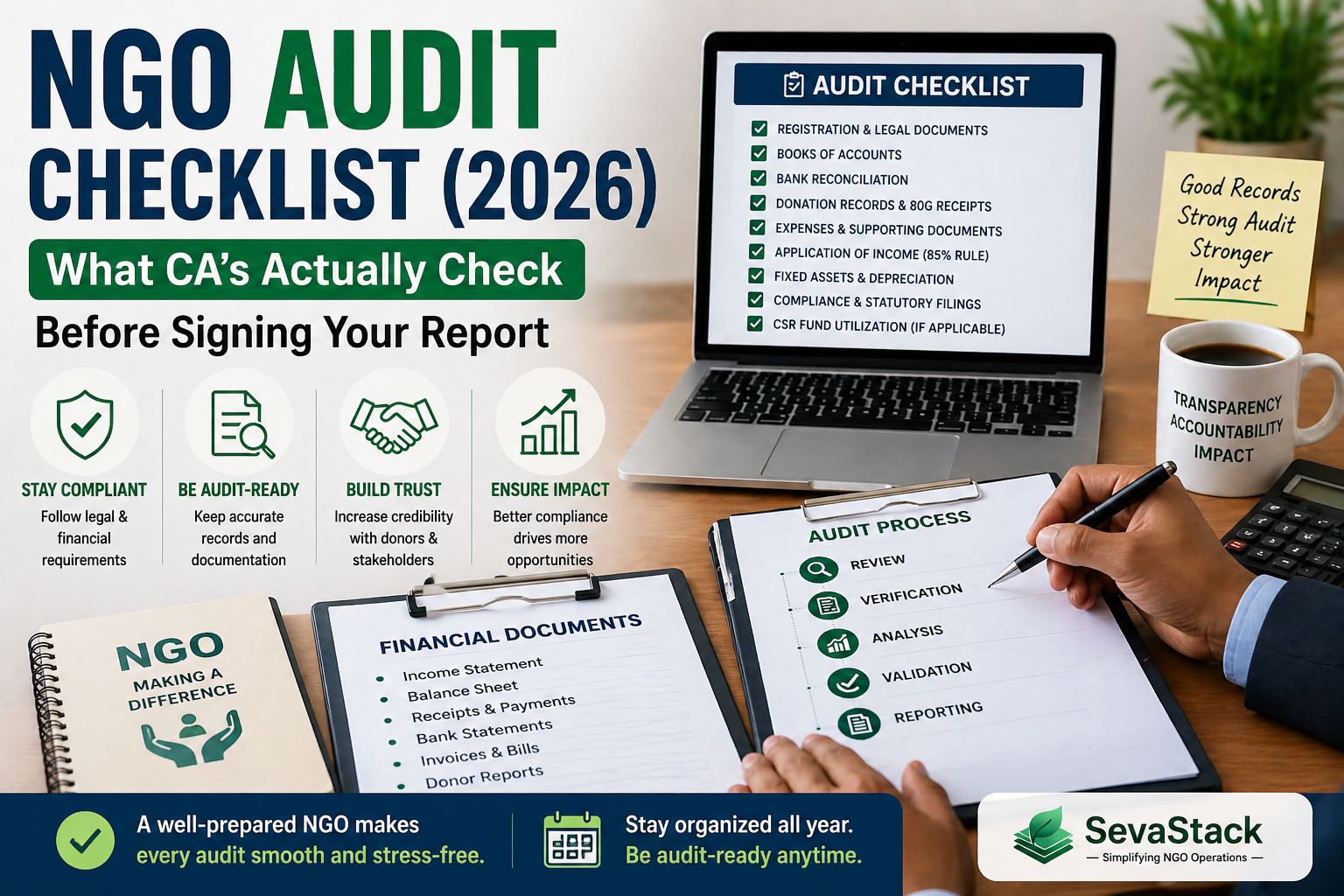
What a CA Actually Checks: Complete Audit Checklist
1. Registration and Legal Documents
This is the first thing any CA verifies.
Trust deed / Society registration / Section 8 certificate
PAN of the NGO
12A registration
80G certificate
👉 Any mismatch here creates immediate issues.
2. Books of Accounts
Your financial records must be clear and complete.
CA checks:
Cash book
Bank book
Ledger accounts
Journal entries
👉 Records should match your bank statements.
3. Bank Statements and Reconciliation
All transactions must be traceable.
CA verifies:
Bank statements
Bank reconciliation (BRS)
Unexplained entries
👉 Any mismatch raises red flags.
4. Donation Records
This is a critical area.
CA checks:
Donor details
Amount received
Mode of payment
Proper entries in books
👉 Anonymous or unrecorded donations can create compliance issues.
5. 80G Receipts Issued
If your NGO issues 80G receipts:
CA verifies:
Correct format
Proper donor details
Matching amounts with records
👉 Errors here can affect donor tax claims.
6. Expense Verification
All expenses must be justified.
CA checks:
Bills and invoices
Supporting documents
Whether expenses align with NGO objectives
👉 Personal or unrelated expenses are flagged.
7. Application of Income (85% Rule)
Under income tax rules:
👉 NGOs must spend at least 85% of their income on charitable activities.
CA verifies:
Total income
Total expenses
Whether the 85% rule is met
8. Fixed Assets and Inventory
If your NGO owns assets:
Computers
Equipment
Vehicles
CA checks:
Asset register
Purchase records
Depreciation
9. Compliance Filings
CA ensures you are up to date with:
ITR-7 filing
Form 10BD / 10BE
Audit reports
👉 Missing filings can lead to penalties.
10. CSR Fund Utilization (If Applicable)
If you receive CSR funds:
CA verifies:
Proper utilization
Project-wise tracking
Supporting documents
👉 Companies expect clean reporting here.
Common Audit Mistakes NGOs Make
Maintaining records only at year-end
Missing bills or invoices
Not tracking donations properly
Mixing personal and NGO expenses
Poor documentation
These are avoidable.
How to Stay Audit-Ready All Year
Instead of preparing once a year:
Maintain a simple system:
Record transactions regularly
Store documents properly
Track donations and expenses
Keep compliance updated
👉 This makes audits smooth and stress-free.
What Happens If Audit is Not Proper?
Poor audits can lead to:
Loss of 12A or 80G benefits
CSR funding rejection
Income tax penalties
Loss of donor trust
Audit quality matters more than people think.
How SevaStack Helps NGOs Stay Audit-Ready
Most audit issues come from scattered data.
With SevaStack, NGOs can:
Maintain structured records
Track donations and expenses
Store documents in one place
Stay prepared for audits anytime
It reduces last-minute stress.
Final Thoughts
Audits should not feel like a crisis.
They should feel like a routine check.
If your records are clean and structured:
👉 Audit becomes simple
👉 Compliance becomes easier
👉 Trust increases
Start early, stay organized, and audits will never be a problem.
Vivek Bhos
Written by the Sevastack team, who build and maintain the 80G receipt, FCRA, and Form 10BD/10BE automation used by Indian NGOs on the platform every day. Compliance guidance is reviewed against current Income Tax Act and FCRA rules before publishing.
Read next
Finance
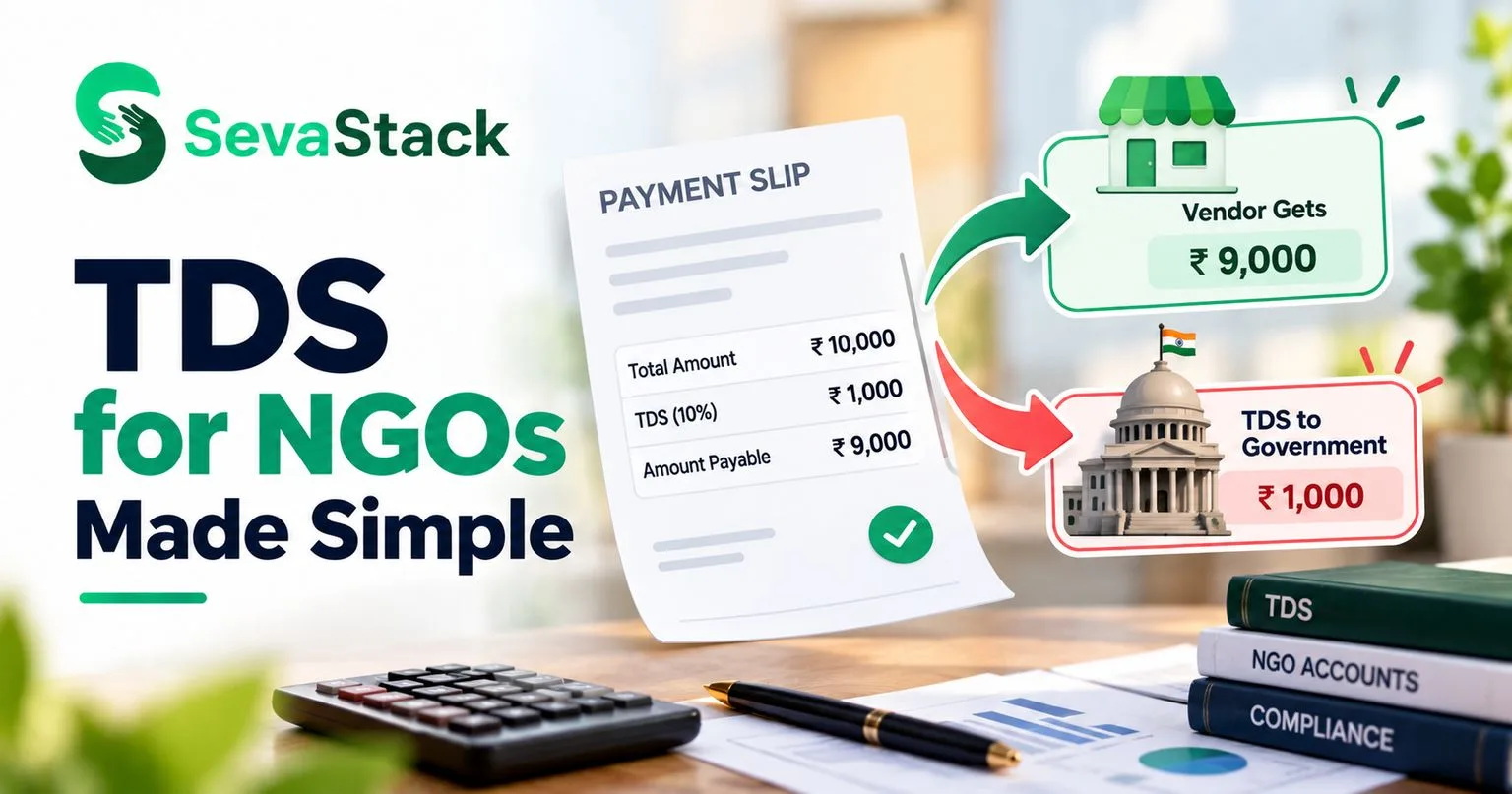
TDS on Vendor Payments: A Simple Guide for NGOs (2026)
Does your NGO need to cut TDS when paying vendors, contractors or professionals? A simple 2026 guide with rates, limits, due dates and mistakes to avoid.
Finance
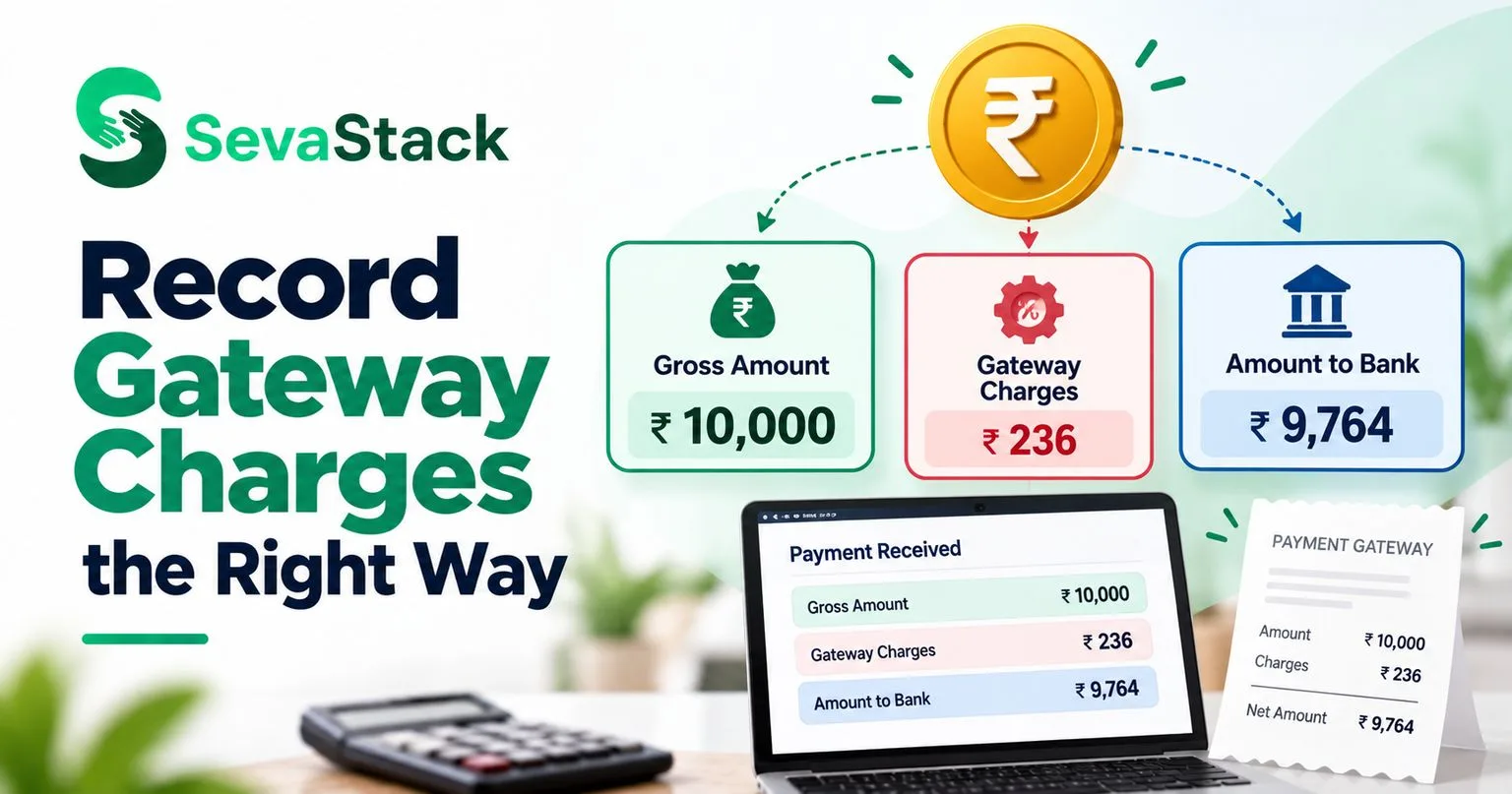
Payment Gateway Charges: How NGOs Should Record Them
Online donation reached your bank with some money cut? Learn in simple words how NGOs should record payment gateway charges, with an easy example.
Finance
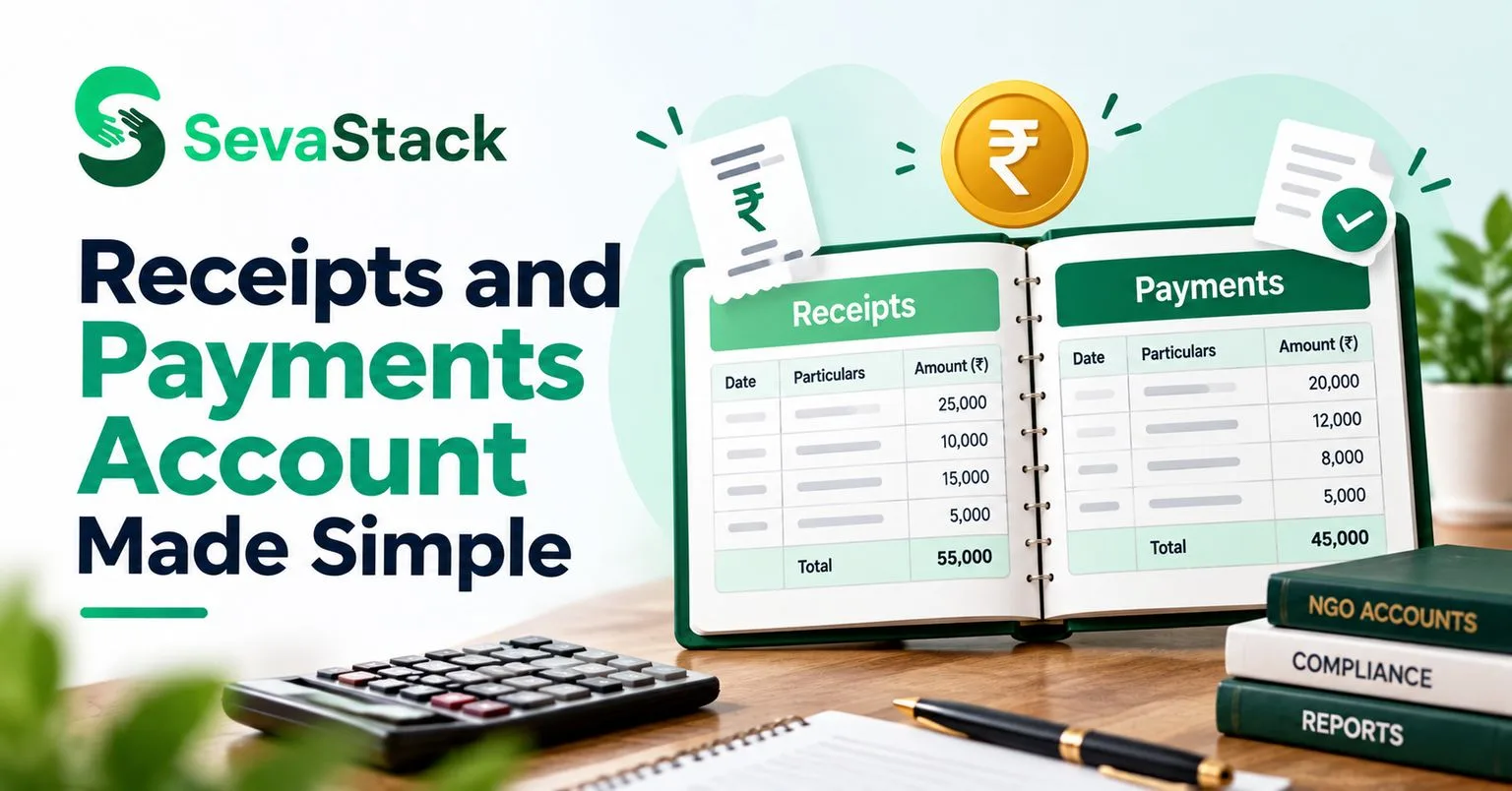
Receipts and Payments Account: A Simple Guide for NGOs
What is a Receipts and Payments Account? Learn in simple words how NGOs prepare it, how it differs from Income and Expenditure, with an easy example.
Never miss a filing date
Sevastack keeps your NGO's compliance calendar and reminds you by email and WhatsApp before each return is due. Donors, 80G receipts and accounts sit in the same place.