

CSR-1 Registration Rejected? 7 Real Reasons NGOs Get Rejected (And How to Fix Them)
Facing CSR-1 rejection? Learn the 7 most common reasons NGOs get rejected in India and how to fix them step by step.
Vivek Bhos
Updated 4 min read
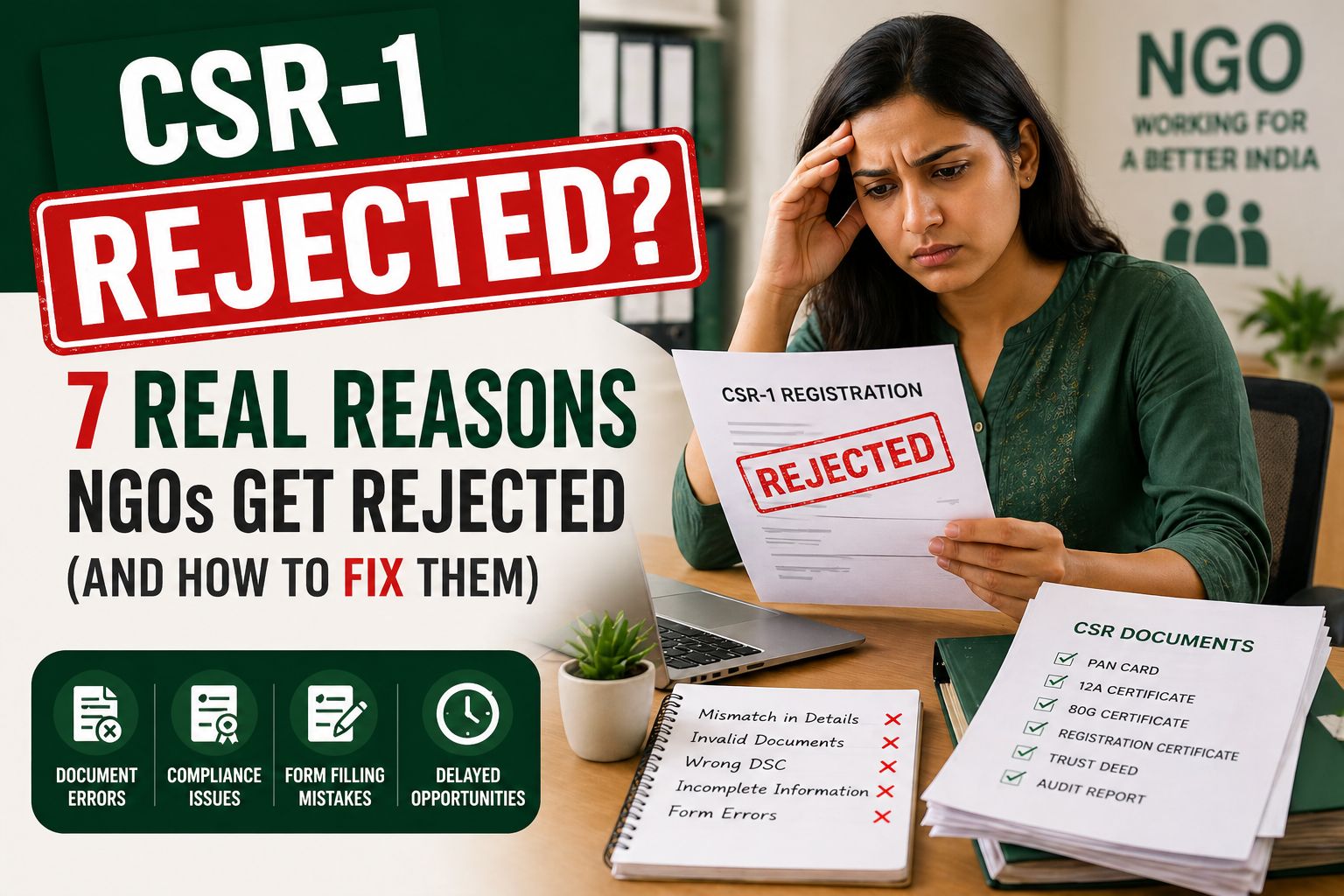
For many NGOs in India, CSR-1 registration feels like a small step.
But in reality, it decides whether you can receive CSR funding or not.
And this is where many NGOs get stuck.
Applications get rejected.
No clear explanation.
And then confusion starts.
If this has happened to you, you’re not alone.
Most CSR-1 rejections happen because of a few common mistakes — and once you understand them, they are completely avoidable.
What is CSR-1 and Why It Matters
CSR-1 registration is mandatory if your NGO wants to receive CSR funding from companies under Section 135 of the Companies Act.
Without CSR-1:
Companies cannot legally fund your NGO
Your proposals will not be considered
You lose access to a major funding source
So getting this right is important.
7 Real Reasons CSR-1 Applications Get Rejected
1. Mismatch in NGO Details
This is one of the most common issues.
Name in PAN does not match registration certificate
Address differences across documents
Minor spelling errors
Even small mismatches can lead to rejection.
How to fix:
Check that all documents have exactly the same details before applying.
2. Invalid or Inactive 12A / 80G
Many NGOs assume that having old certificates is enough.
But if your 12A or 80G is:
Expired
Not revalidated
Not updated under new rules
Your CSR-1 can be rejected.
How to fix:
Ensure your 12A and 80G are valid under the current income tax system.
3. Incorrect Digital Signature (DSC)
CSR-1 requires certification by a Chartered Accountant or authorized professional.
Common issues:
Expired DSC
Wrong signatory
Incorrect certification
How to fix:
Use a valid DSC and ensure the correct professional is signing your form.
4. Wrong NGO Type or Registration Issues
If your NGO structure is unclear or improperly registered, it creates problems.
Trust deed issues
Society registration not updated
Section 8 compliance gaps
How to fix:
Make sure your legal structure is properly documented and up to date.
5. Missing or Incorrect Documents
Incomplete documentation is a major reason for rejection.
Typical issues:
Missing registration certificate
Incorrect PAN details
No proper supporting documents
How to fix:
Prepare a checklist and verify all documents before submission.
6. Applying Without Proper Eligibility
Some NGOs apply too early.
For example:
No proper activity track record
No compliance history
Newly formed NGO without clarity
While CSR-1 does not require 3 years like FCRA, credibility still matters.
How to fix:
Ensure your NGO has basic operations and documentation in place.
7. Errors in Form Filling
Simple mistakes in the CSR-1 form can cause rejection.
Wrong section selected
Incorrect details of trustees
Data entry errors
How to fix:
Double-check the form before submission or get professional help.
What to Do If Your CSR-1 Gets Rejected
First, don’t panic.
CSR-1 rejection is not permanent.
You can reapply.
Step-by-Step Recovery
Identify the exact issue
Correct documents and details
Cross-check all entries
Re-submit carefully
Most NGOs get approved in the second attempt if errors are fixed properly.
How to Avoid Rejection Completely
If you’re applying for the first time, focus on preparation.
Keep all documents aligned
Verify compliance status
Use a CA if needed
Review everything twice
CSR-1 is simple — but only if done carefully.
Why CSR-1 Rejections Hurt More Than You Think
It’s not just a form rejection.
It delays:
CSR funding opportunities
Partnerships with companies
Growth of your NGO
In some cases, it also affects credibility when companies evaluate your NGO.
How SevaStack Helps NGOs Stay Ready
Most CSR-1 issues happen because documents and compliance are scattered.
With SevaStack, NGOs can:
Keep all documents organized
Track compliance status
Stay ready for CSR requirements
Avoid last-minute errors
It helps bring structure to the process.
Final Thoughts
CSR-1 rejection is frustrating, but it is usually fixable.
In most cases, the problem is not complexity — it’s small mistakes.
If you:
Keep your documents aligned
Maintain compliance properly
Double-check your application
You can avoid rejection completely.
Vivek Bhos
Written by the Sevastack team, who build and maintain the 80G receipt, FCRA, and Form 10BD/10BE automation used by Indian NGOs on the platform every day. Compliance guidance is reviewed against current Income Tax Act and FCRA rules before publishing.
Read next
Finance
NGO Accounting in India (2026): The Complete Guide to Fund Accounting, 80G, FCRA & Financial Management
Learn everything about NGO accounting in India—from fund accounting and financial statements to 80G, Form 10BD/10BE, FCRA, CSR grants, audits, and accounting best practices for trusts, societies, and
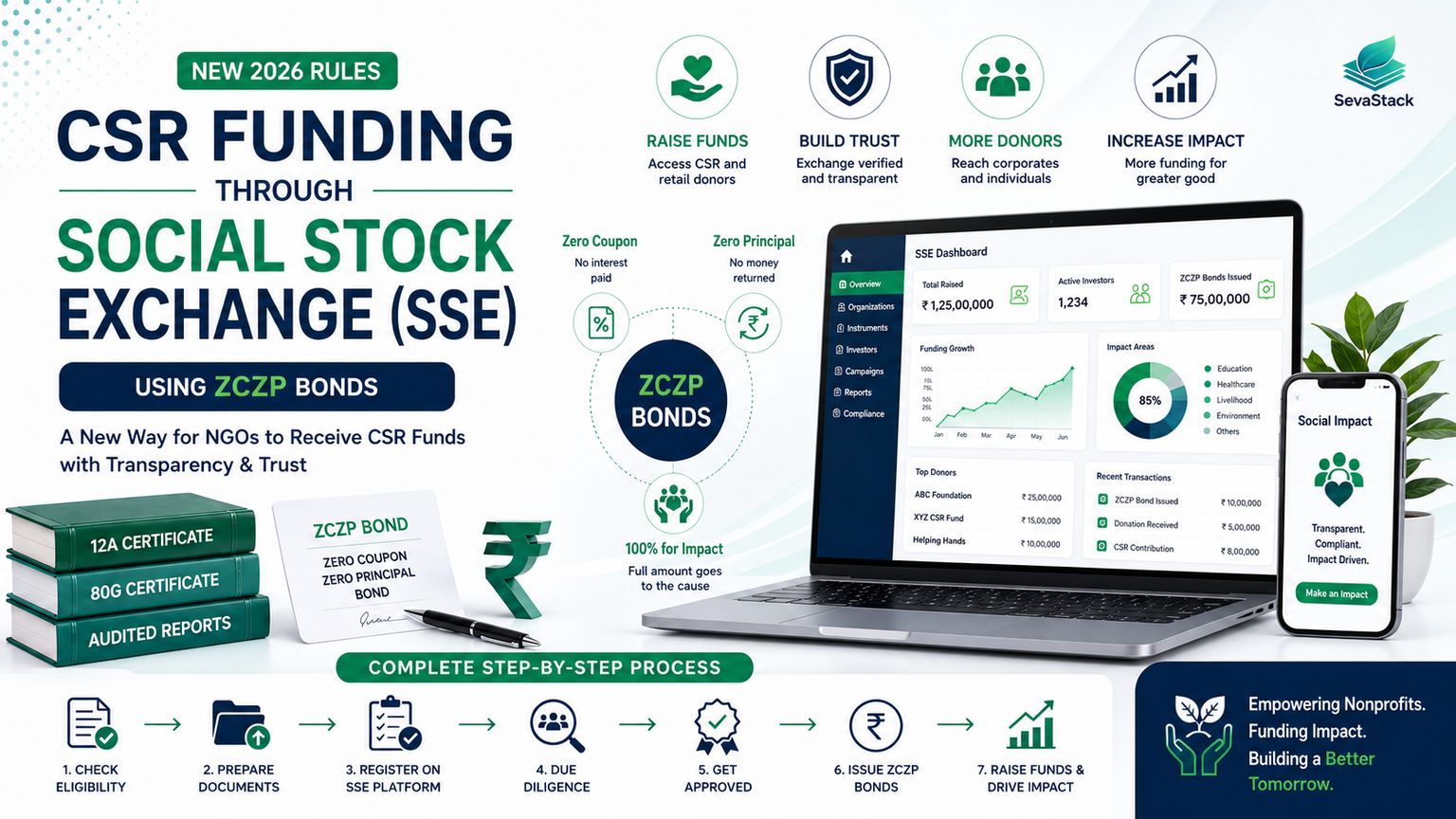
Fundraising
How NGOs Can Receive CSR Funds Through Social Stock Exchange (SSE) and ZCZP Bonds: Complete Guide (2026)
Learn how NGOs can receive CSR funds through India's Social Stock Exchange (SSE) using Zero Coupon Zero Principal (ZCZP) bonds. Understand eligibility, the new 2026 rules, and how the funding process
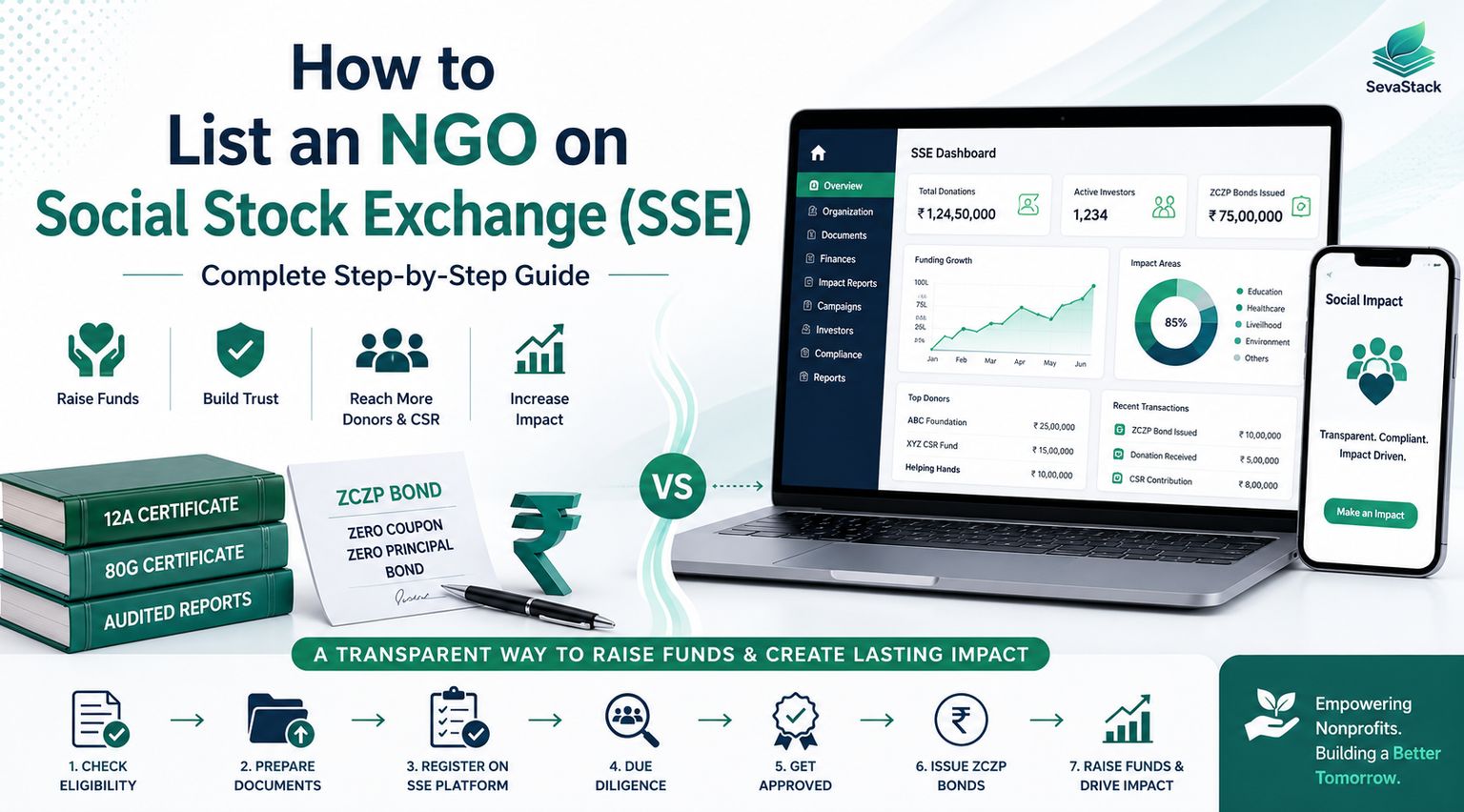
CSR
How to List an NGO on India's Social Stock Exchange (SSE): Complete Step-by-Step Guide
Learn how NGOs and Section 8 companies can list on India's Social Stock Exchange (SSE). Understand eligibility, required documents, ZCZP bonds, fundraising opportunities, and the complete step-by-step
Never miss a filing date
Sevastack keeps your NGO's compliance calendar and reminds you by email and WhatsApp before each return is due. Donors, 80G receipts and accounts sit in the same place.