

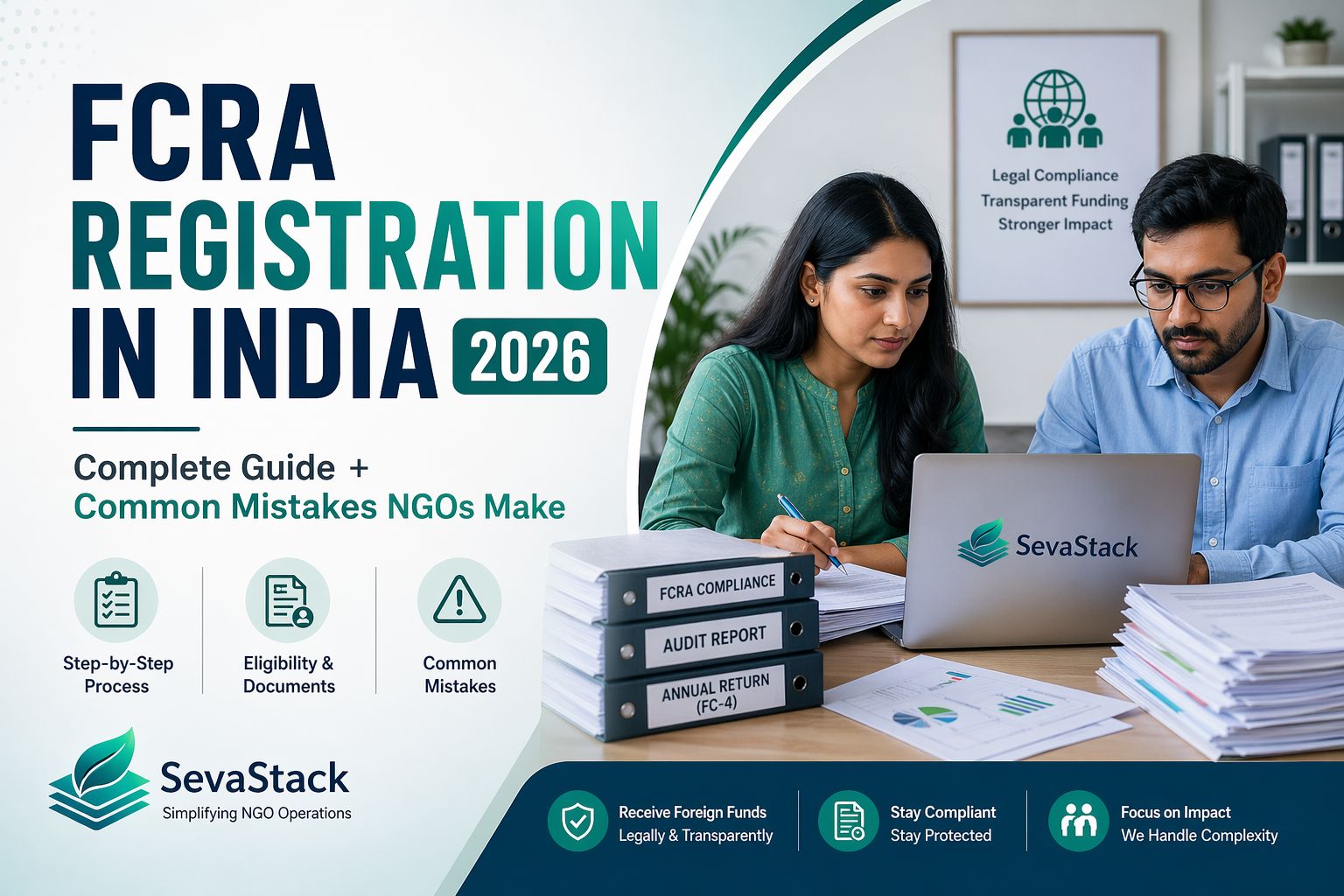
FCRA Registration in India — Complete 2026 Guide + Common Mistakes NGOs Make
Learn how to apply for FCRA registration in India, eligibility, documents required, step-by-step process, and common mistakes NGOs must avoid.
Vivek Bhos
Updated 4 min read
Form FC-4 statutory due date31/12/2026
Statutory due date
If your NGO wants to receive foreign funding in India, there’s one rule you cannot ignore:
👉 You need FCRA registration.
But this is where most NGOs get confused.
What is FCRA exactly?
Who can apply?
Why do applications get rejected?
What mistakes should you avoid?
This guide explains everything — in simple terms.
What is FCRA and Why It Matters
FCRA stands for Foreign Contribution Regulation Act.
It is a law that regulates how NGOs in India receive and use foreign funds.
In simple words:
👉 If money is coming from outside India, it is considered foreign contribution.
👉 And to receive it legally, your NGO must be registered under FCRA.
Who Needs FCRA Registration?
You need FCRA if:
You want to receive donations from foreign individuals
You plan to partner with international NGOs
You expect grants from foreign foundations
You are working on global impact programs
Even if a single rupee comes from outside India:
👉 It falls under FCRA rules.
Types of FCRA Registration
There are two main options:
1. FCRA Registration (Full License)
This is for NGOs with a track record.
Requirements:
NGO must be active for at least 3 years
Must have spent ₹10 lakh+ on core activities
Proper audited financials
👉 This is the long-term solution.
2. FCRA Prior Permission
This is for new NGOs.
Requirements:
You already have a confirmed foreign donor
You apply for permission for a specific project
👉 This is project-based approval, not permanent.
Basic Eligibility Criteria
To apply for FCRA, your NGO must:
Be registered as Trust / Society / Section 8
Have valid 12A registration
Have a clear social or charitable objective
Not be involved in political or prohibited activities
Step-by-Step Process for FCRA Registration
Step 1: Ensure Basic Compliance
Before applying, confirm:
NGO registration is complete
12A is active
Financial records are proper
Step 2: Open FCRA Bank Account
You must open a designated FCRA account at:
👉 SBI, New Delhi Main Branch (mandatory rule)
This is where all foreign funds will be received.
Step 3: Prepare Documents
You’ll need:
Registration certificate
PAN of NGO
3-year financial statements
Activity reports
Details of board members
Aadhaar & PAN of key persons
Step 4: Apply Online
Application is done on the FCRA portal (Ministry of Home Affairs).
Forms:
FC-3A → For registration
FC-3B → For prior permission
Step 5: Government Verification
After submission:
Background checks are done
Field inquiry may happen
Documents are verified
Step 6: Approval
If everything is correct:
👉 FCRA registration is granted
👉 Valid for 5 years
How Long Does It Take?
Registration: 3–6 months
Prior Permission: 2–4 months
👉 Delays happen if documents are incomplete.
Common Mistakes NGOs Make (Very Important)
This is where most NGOs fail.
1. Applying Too Early
Many NGOs apply without:
3-year track record
Proper financial history
👉 Result: Rejection
2. Weak Documentation
Missing:
Activity reports
Proper audit
Clear financial usage
👉 This raises red flags.
3. Mixing Local & Foreign Funds
This is a serious mistake.
👉 FCRA funds must be handled separately
👉 No mixing with domestic donations
4. Not Using Funds Properly
Funds must be used:
Only for declared purpose
With proper tracking
Misuse can lead to:
👉 Suspension or cancellation
5. Ignoring Annual Filing
After registration, NGOs must file:
👉 FCRA Annual Return (FC-4)
Even if:
No funds received
👉 Filing is mandatory.
6. Poor Record Keeping
Many NGOs don’t maintain:
Proper donor records
Expense tracking
Supporting documents
👉 This causes issues during audit.
What Happens If You Violate FCRA?
Consequences can be serious:
Penalties and fines
Suspension of license
Permanent cancellation
Legal action
👉 FCRA is strictly monitored.
How to Stay Safe and Compliant
To avoid problems:
Maintain separate accounts
Track every rupee
File returns on time
Keep documents ready
Work with a CA if needed
How SevaStack Helps with FCRA Compliance
Let’s be practical.
FCRA compliance is not easy to manage manually.
With SevaStack, NGOs can:
Track compliance deadlines
Maintain structured financial records
Store documents in one place
Stay ready for audits
👉 This reduces risk and saves time.
Final Thoughts
FCRA is not just a registration.
👉 It is a responsibility.
If done right:
It opens global funding opportunities
Builds credibility
Scales your NGO impact
If done wrong:
It can create serious legal issues
So take it seriously.
Prepare properly.
Then apply.
FCRA Registration Pricing
Vivek Bhos
Written by the Sevastack team, who build and maintain the 80G receipt, FCRA, and Form 10BD/10BE automation used by Indian NGOs on the platform every day. Compliance guidance is reviewed against current Income Tax Act and FCRA rules before publishing.
Read next

Fundraising
Diwali Fundraising for NGOs: A Simple 3-Week Campaign Plan
Diwali is on 8 November. Here is a simple 3-week plan for Indian NGOs to run a Diwali fundraising campaign, with ideas, messages and a daily checklist.

Fundraising
After Daan Utsav: How to Thank and Keep Your New Donors
Daan Utsav is over, but your work is not. Learn simple ways to thank new donors, share your impact and keep them giving all year.
Fundraising
Best Fundraising Platforms for NGOs in India (2026)
Ketto, Milaap, GiveIndia, Donatekart and more. A simple guide to the best fundraising platforms for NGOs in India in 2026, with fees and tips.
Never miss a filing date
Sevastack keeps your NGO's compliance calendar and reminds you by email and WhatsApp before each return is due. Donors, 80G receipts and accounts sit in the same place.