

New vs Old Income Tax Rules for NGOs in India (2026): What Has Actually Changed
A simple, practical guide explaining the difference between old and new income tax rules for NGOs in India, including registration, compliance, and key changes in 2026.
Vivek Bhos
Updated 5 min read
Introduction
If you are running an NGO in India, you have probably heard about changes in income tax rules.
Earlier, things were quite simple.
You got 12A and 80G registration, maintained basic records, and continued your work. There was not much pressure unless something went wrong.
But now, things are different.
The new income tax framework has made compliance more structured and more strict. It is no longer enough to just “have registrations.” You now need to maintain proper systems and stay updated regularly.
This article explains what has changed, in a simple and practical way.
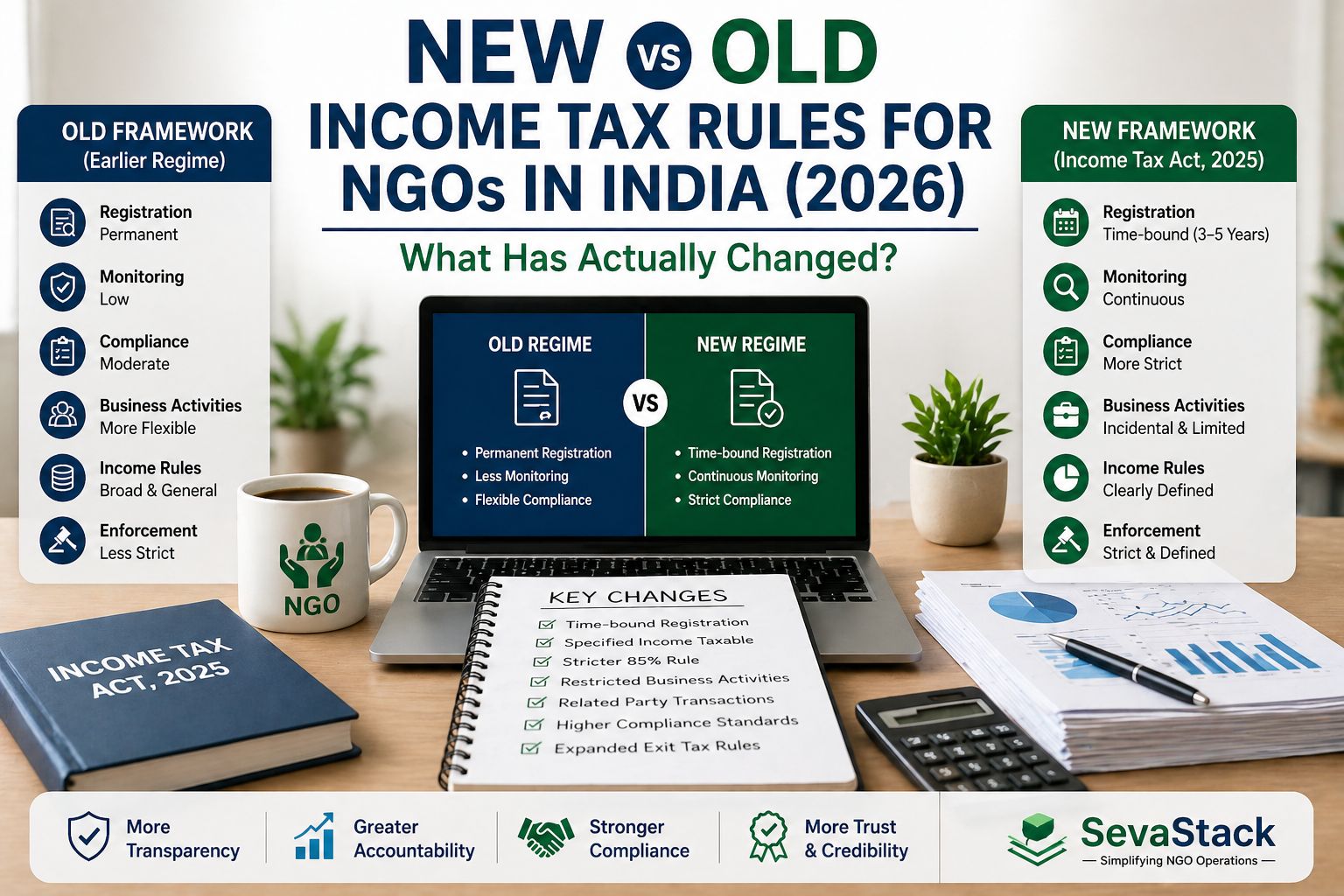
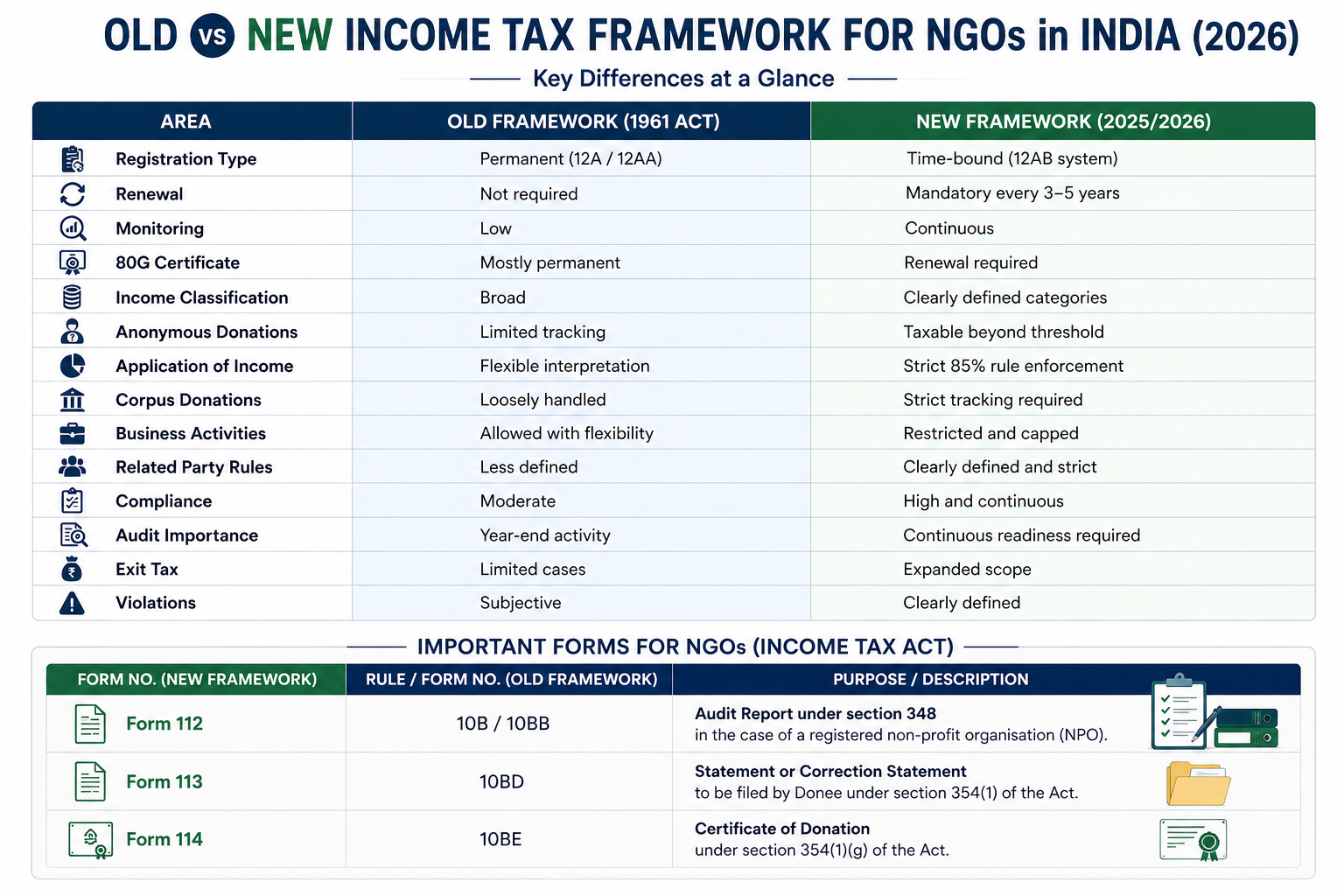
The Basic Difference: Old vs New System
Let’s understand this in one line.
Earlier system:
More flexible, less monitoring
New system:
More structured, more compliance, more checks
This is the biggest shift.
1. Registration Is No Longer Permanent
Earlier, once your NGO got 12A registration, it was mostly permanent. You did not have to think about it again.
Now, registration is valid only for a limited time.
You have to renew it every few years.
If you forget to renew or miss the deadline, you can lose your tax exemption.
That means your income may become taxable.
So registration is no longer a one-time process. It is something you need to track regularly.
2. Income Is Now Clearly Classified
Earlier, income of NGOs was treated in a broad way. There was not much clarity on different types of income.
Now, income is divided into categories.
One important category is “specified income.”
This includes things like:
Anonymous donations above a certain limit
Money used for personal benefit
Improper use of funds
This type of income is directly taxable.
So now there is less confusion, but also less flexibility.
3. The 85% Rule Still Applies (But More Strictly)
NGOs are still required to use at least 85% of their income for charitable activities.
This rule has not changed.
But now:
The definition of “spending” is clearer
There are fewer ways to adjust or delay spending
If you do not meet the 85% rule, you may have to pay tax on the remaining amount.
So tracking expenses properly is very important.
4. Corpus Donations Need Proper Handling
Earlier, many NGOs treated corpus donations casually.
Now, rules are stricter.
You must:
Clearly identify corpus donations
Keep them separate from regular funds
Invest them in approved ways
Also, anonymous donations are now taxable if they go beyond a certain limit.
This is done to increase transparency.
5. Business Activities Are Limited
Some NGOs run small business activities to support their work.
Earlier, this was allowed with fewer restrictions.
Now:
Business activity must be related to your main purpose
You must maintain separate records
It should not become a major part of your income
The idea is simple.
An NGO should not operate like a business.
6. Related Party Transactions Are Now Strict
Earlier, rules about using funds for personal benefit were not very clear.
Now they are clearly defined.
If money is used for:
Trustees
Founders
Family members
Close associates
It is treated as a violation.
This helps prevent misuse of funds.
7. Compliance Requirements Are Higher
This is where most NGOs feel the biggest change.
Now you are expected to:
Maintain proper books of accounts
File returns on time
Keep supporting documents
Stay audit-ready
If you don’t do this:
Your exemption can be removed
You may face penalties
So compliance is now a regular activity, not a yearly task.
8. Exit Tax Rules Are Expanded
There is also something called exit tax.
This applies if:
Your NGO registration is cancelled
Your NGO shuts down
You transfer assets improperly
In such cases, tax can be applied on the total value of assets.
This ensures that funds collected for social work are not misused later.
9. Violations Are Clearly Defined
Earlier, many rules were open to interpretation.
Now, violations are clearly listed.
These include:
Using funds for non-charitable purposes
Not following compliance rules
Running non-genuine activities
This makes enforcement stricter.
What This Means for NGOs
This new system has both benefits and challenges.
Benefits:
Clear rules
Better transparency
More trust from donors and companies
Challenges:
More documentation
Regular compliance work
Need for proper systems
Practical Advice for NGOs
If you are running an NGO, here is what you should start doing:
Keep all documents updated
Record income and expenses regularly
Track donations properly
Do not wait until year-end
Review compliance every few months
These small habits can prevent big problems.
Where Most NGOs Struggle
The problem is not the law.
The problem is how things are managed.
Most NGOs:
Use spreadsheets
Store documents in different places
Work in a reactive way
This creates stress during audit or compliance checks.
How SevaStack Helps
To follow the new system properly, NGOs need structure.
SevaStack helps NGOs:
Organize documents in one place
Track donations and expenses
Maintain compliance records
Stay ready for audits
It reduces manual work and confusion.
Final Thoughts
The new income tax framework is not just a rule change.
It is a shift in how NGOs are expected to operate.
Earlier, you could manage with basic effort.
Now, you need a proper system.
NGOs that adapt to this will:
Stay compliant
Build trust
Grow faster
Those who don’t may face:
Delays
penalties
Loss of opportunities
The change is clear.
Now it depends on how you respond to it.
New law, same rule. From 1 April 2026 the Income-tax Act, 2025 replaced the Income-tax Act, 1961. Section 12A/12AB is now covered by Section 332. Only the number changed, not what you have to do. People still say "Section 12A/12AB", so we use it here too. Filing close to the change-over? Check the form with your CA.
Vivek Bhos
Written by the Sevastack team, who build and maintain the 80G receipt, FCRA, and Form 10BD/10BE automation used by Indian NGOs on the platform every day. Compliance guidance is reviewed against current Income Tax Act and FCRA rules before publishing.
Read next
Compliance
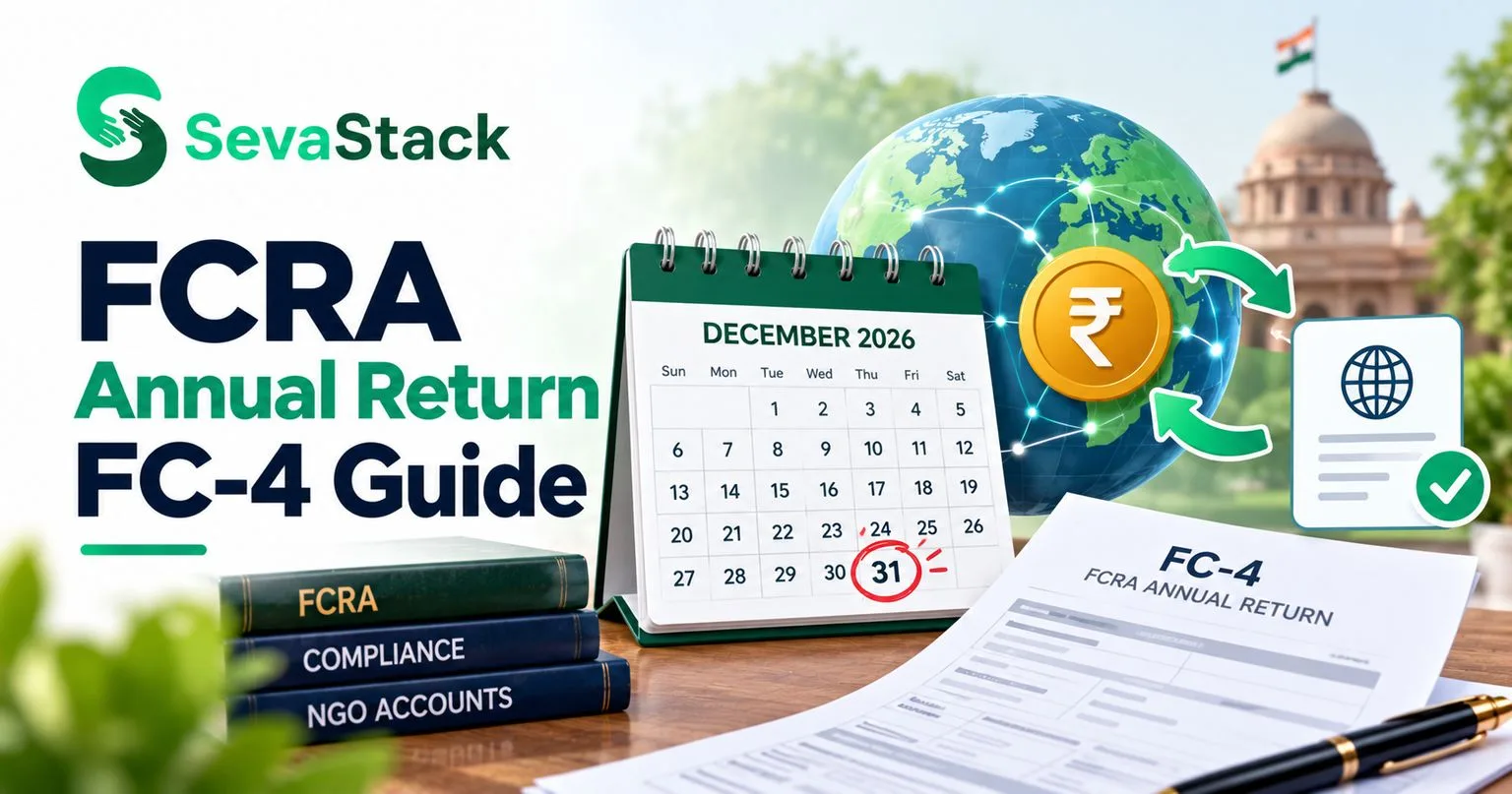
FCRA Annual Return (FC-4): Step-by-Step Guide for 2026
Got foreign donations? File your FCRA annual return (FC-4) by 31 December 2026. A simple step-by-step guide with documents, mistakes and a checklist.
Compliance
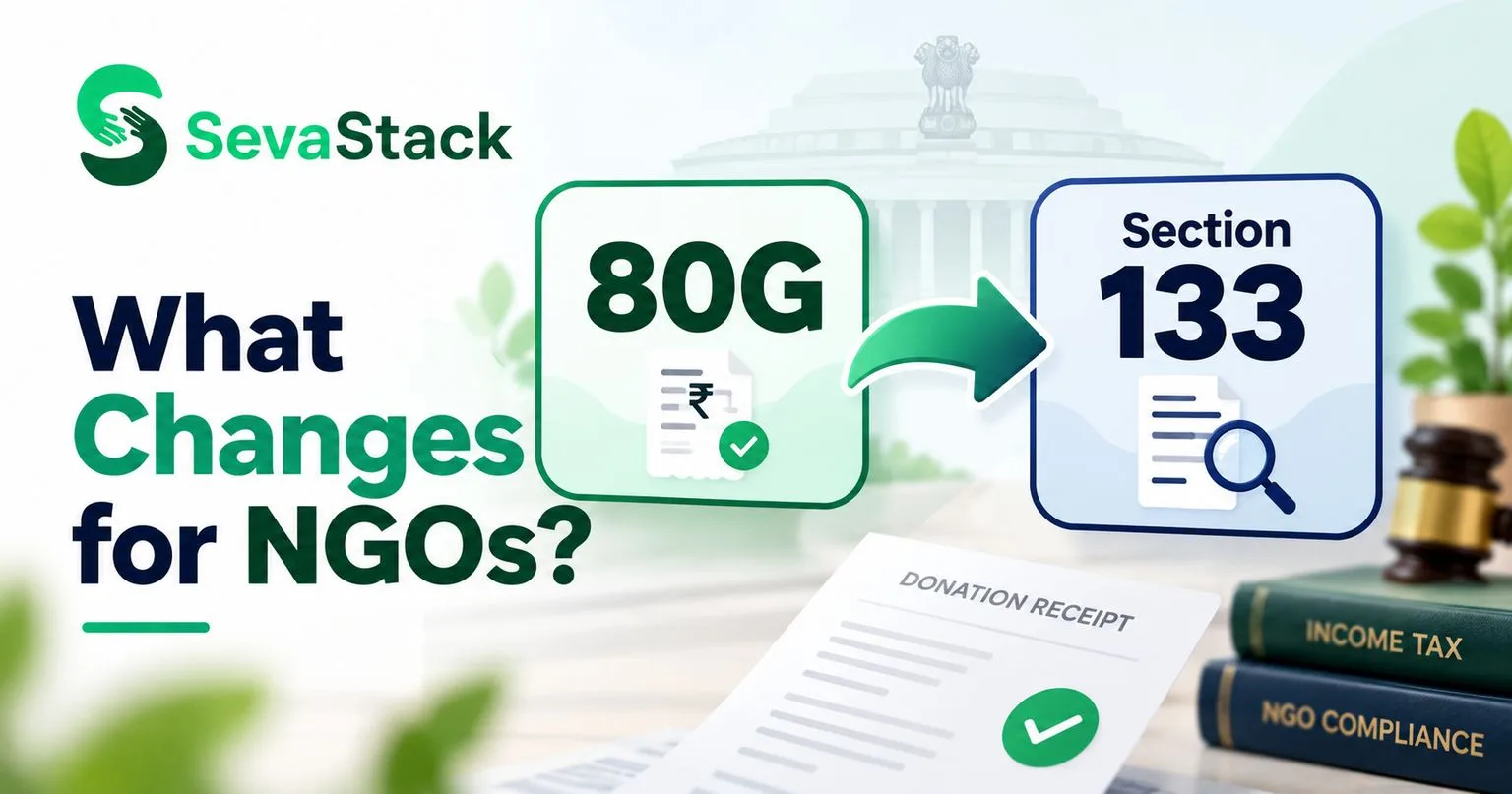
80G Is Now Section 133: What Changes on Your NGO Receipts
Section 80G is now Section 133 under the new Income-tax Act. Learn in simple words what changes for NGO receipts, Form 113 and Form 114, and what stays the same.

Compliance
ITR-7 Due Date Extended to 21 November: What NGOs Must Do
CBDT has extended the ITR-7 due date to 21 November 2026 and the audit report date to 21 October. Here is what your NGO should do now, step by step.
Never miss a filing date
Sevastack keeps your NGO's compliance calendar and reminds you by email and WhatsApp before each return is due. Donors, 80G receipts and accounts sit in the same place.