

₹1,000 Donation, ₹150 Back: How Section 80G Helps You Save Tax While Giving
Learn how to save tax under Section 80G in India. Understand 50% vs 100% deductions and how ₹1,000 donation can cost you less.
Vivek Bhos
Updated 3 min read
₹1,000 Donation, ₹150 Back: How Section 80G Helps You Save Tax While Giving
Giving is one of the most powerful things you can do.
Whether it’s helping a child get education, supporting healthcare, or feeding someone in need — your contribution creates real impact.
But here’s something many people don’t realize:
👉 The government actually rewards your generosity.
Through Section 80G, you can save tax while donating.
It’s a win-win.
You help someone in need…
And you also reduce your tax.
🤔 Did You Know? Not All Donations Are Treated the Same
When you donate, the tax benefit depends on the type of organization.
There are two main categories:
✅ 100% Tax Deduction
Mostly government funds (like PM Relief Fund)
Full donation amount is eligible for tax deduction
✅ 50% Tax Deduction
Most registered NGOs fall into this category
Only half of your donation is considered for tax saving
👉 Example:
If you donate ₹1,000 to a registered NGO,
You can claim ₹500 as a deduction from your taxable income.
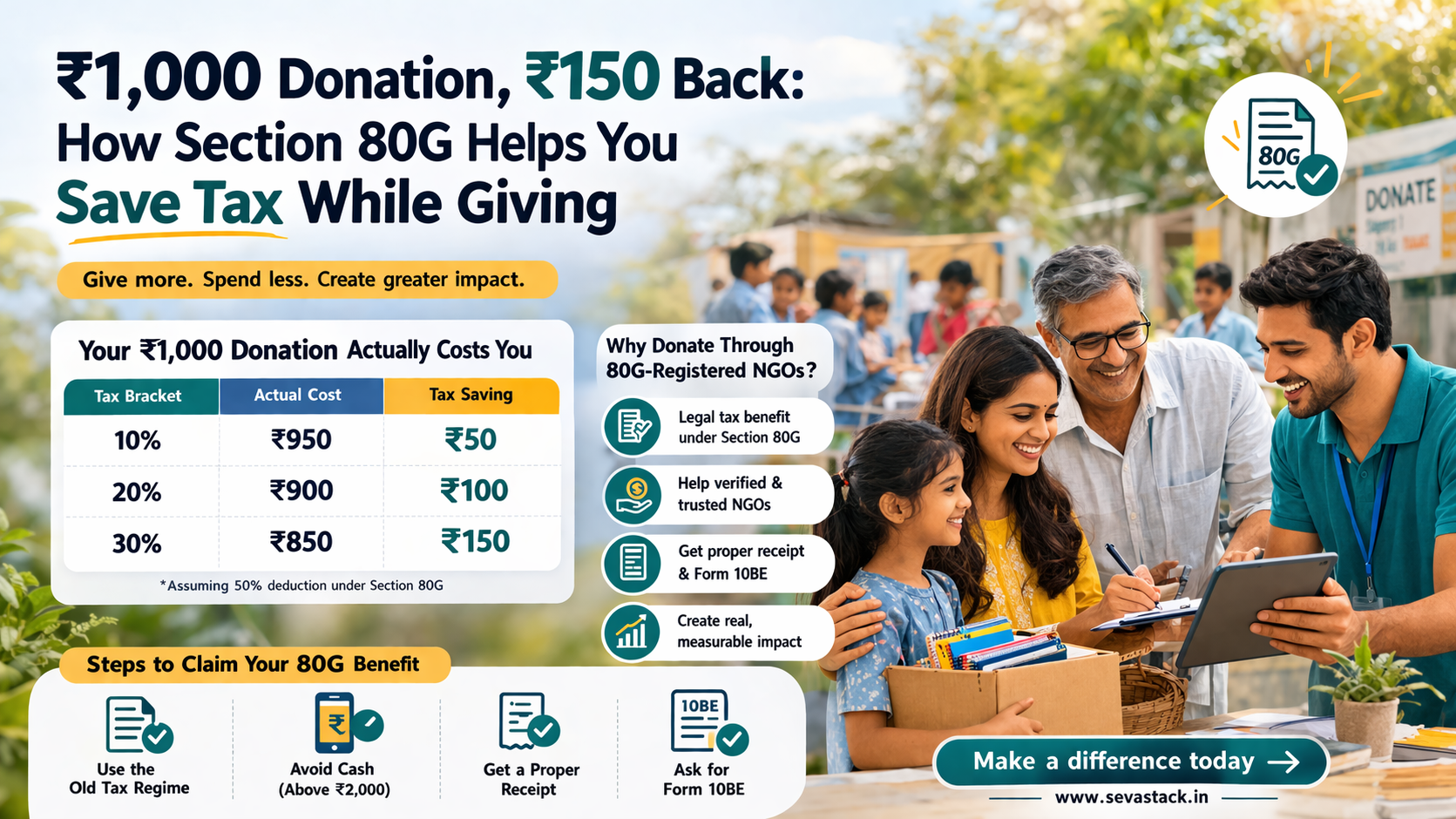
📊 The Math Made Simple
Let’s see how much you actually save:
Tax Bracket | Your ₹1,000 Donation Actually Costs You | Tax Saving |
|---|---|---|
10% | ₹950 | ₹50 |
20% | ₹900 | ₹100 |
30% | ₹850 | ₹150 |
💡 Assuming the NGO qualifies for 50% deduction under Section 80G
📌 Why This Matters
When donors understand this, something changes.
Instead of thinking:
❌ “I’m spending ₹1,000”
They realize:
✅ “I’m actually spending less — but creating full impact”
This makes people:
More willing to donate
More likely to donate again
More confident about giving
🧾 How to Claim Your 80G Tax Benefit (Simple Checklist)
Before you donate, keep these things in mind:
✔ Use the Old Tax Regime
80G benefits apply only under the old tax regime.
✔ Avoid Cash (Above ₹2,000)
Use UPI, net banking, or cheque for proper records.
✔ Get a Proper Receipt
Make sure your receipt includes:
NGO name
PAN number
80G registration number
✔ Ask for Form 10BE
At the end of the financial year, request this certificate from the NGO.
👉 This is required when filing your income tax return.
🌍 Your Small Contribution = Big Impact
₹1,000 may feel small.
But it can:
Provide meals for a family
Support a child’s education
Fund basic healthcare
And with tax benefits…
👉 It actually costs you less.
❤️ Final Thought
Giving is not just about money.
It’s about impact.
And now you know:
👉 You can give more… without spending more.
So next time you think about donating — remember:
You’re not just helping someone else.
You’re also making a smarter financial decision.
🌐 Ready to Make an Impact?
Donate today and make your contribution count:
Under the Income-tax Act, 2025 (effective 1 April 2026, replacing the Income-tax Act, 1961), Section 80G is now governed by Section 354 of the new Act. "Section 80G" remains the commonly used and searched term during the transition — the underlying requirement is unchanged, only the section/form numbering has moved. Confirm the applicable form with your CA if you're filing close to the transition date.
Vivek Bhos
Written by the Sevastack team, who build and maintain the 80G receipt, FCRA, and Form 10BD/10BE automation used by Indian NGOs on the platform every day. Compliance guidance is reviewed against current Income Tax Act and FCRA rules before publishing.
Read next
Finance
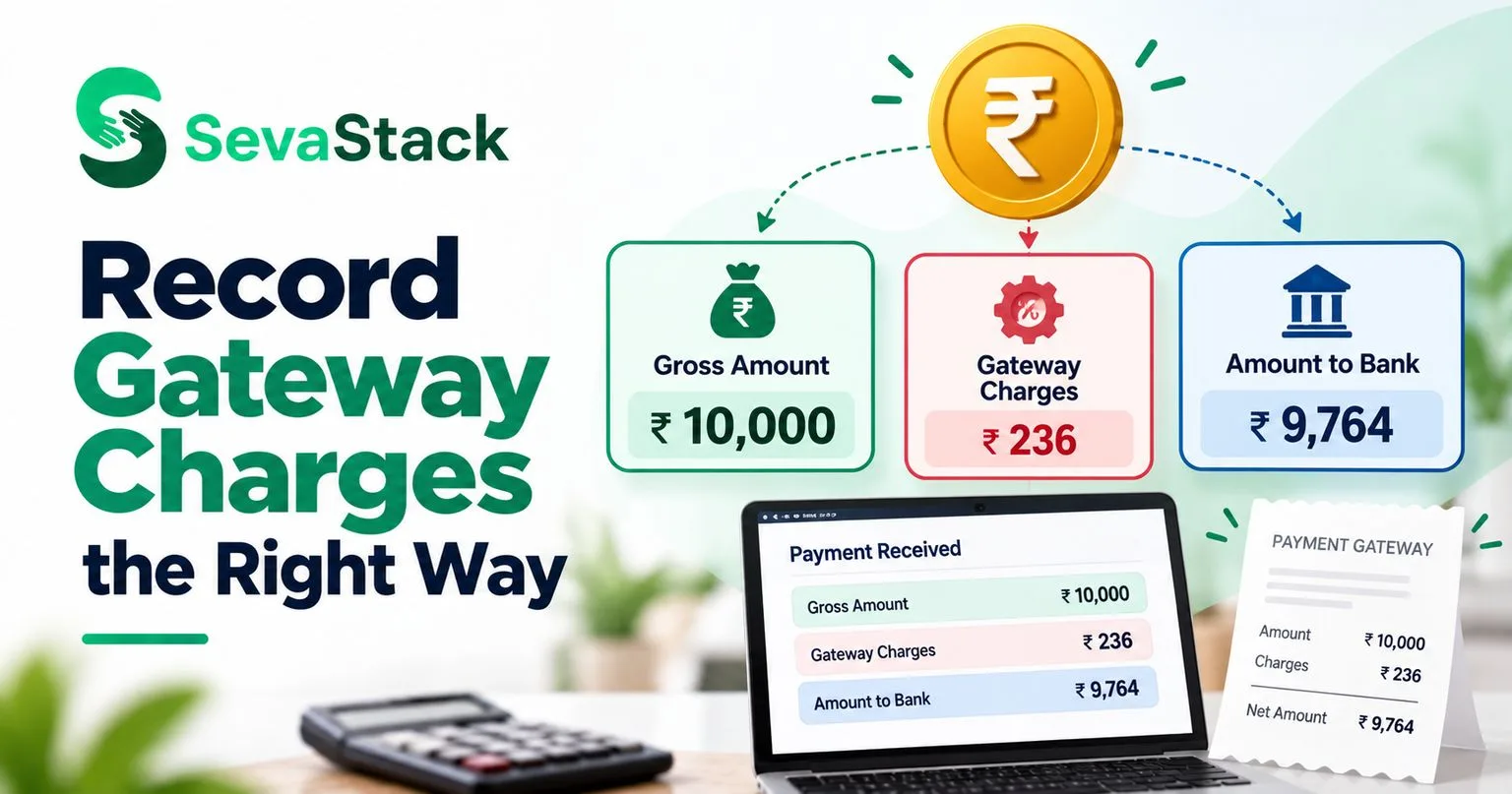
Payment Gateway Charges: How NGOs Should Record Them
Online donation reached your bank with some money cut? Learn in simple words how NGOs should record payment gateway charges, with an easy example.
Finance
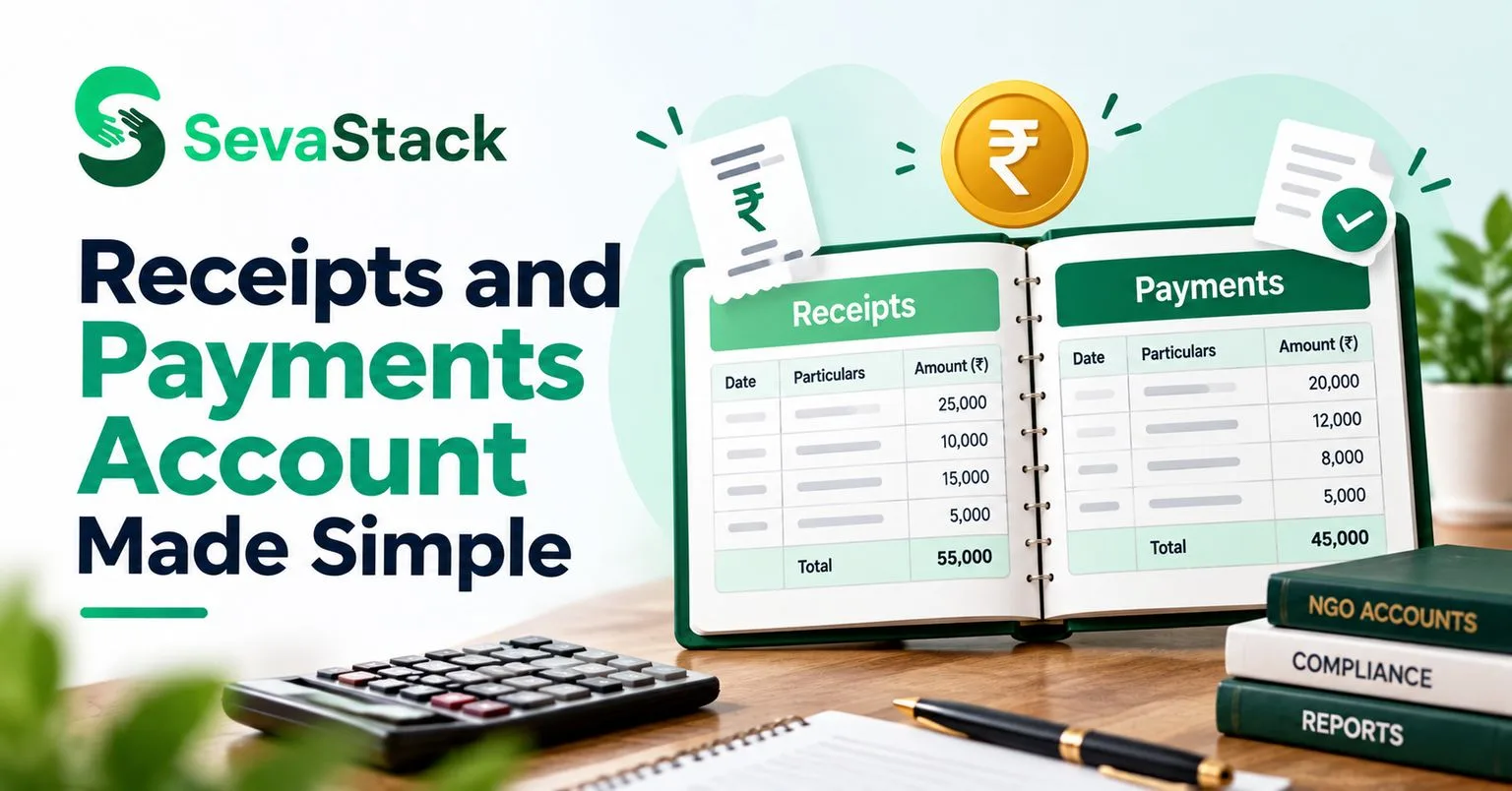
Receipts and Payments Account: A Simple Guide for NGOs
What is a Receipts and Payments Account? Learn in simple words how NGOs prepare it, how it differs from Income and Expenditure, with an easy example.
Finance
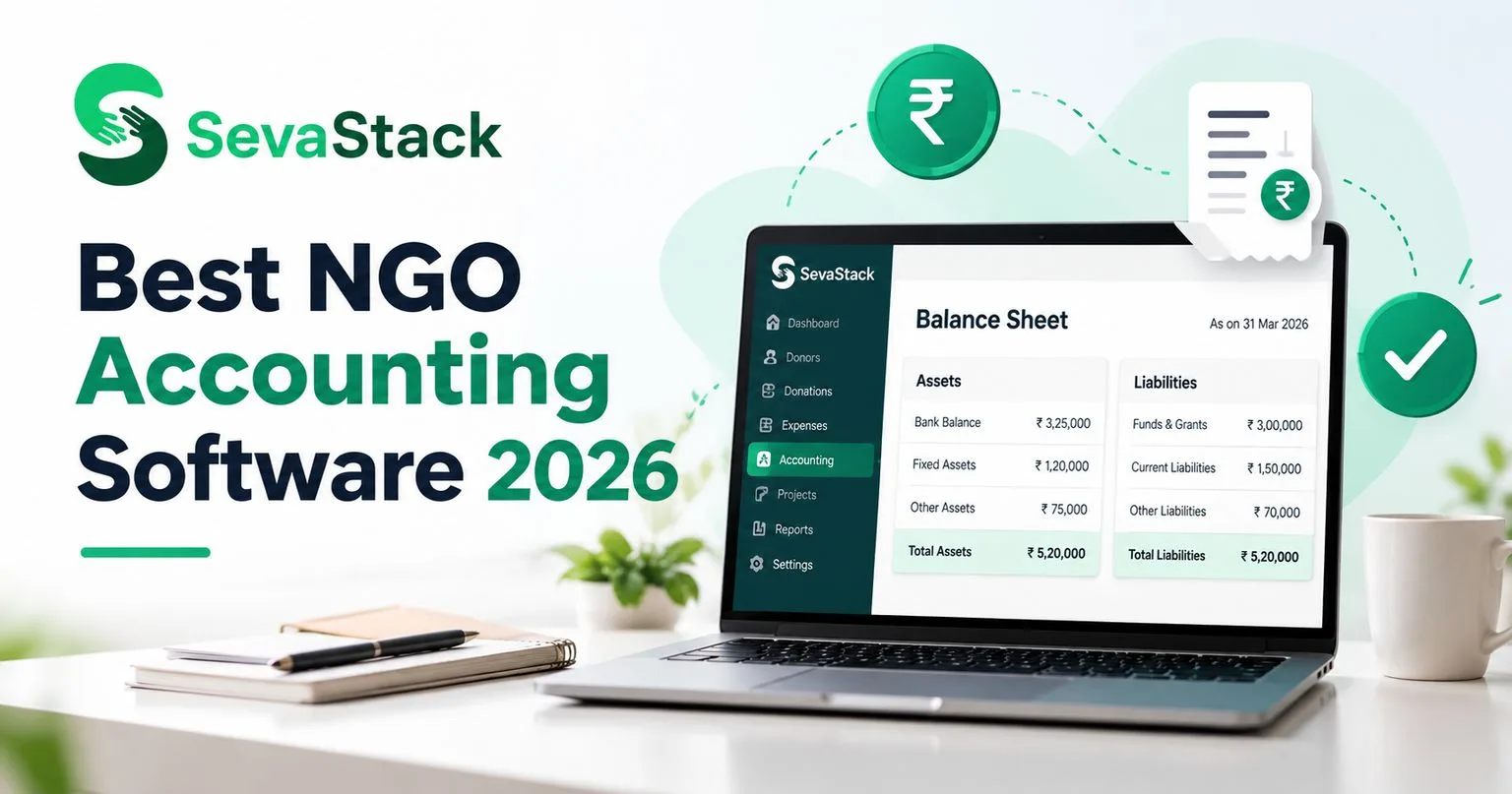
Best NGO Accounting Software in India (2026): Simple Guide
Confused about which accounting software to pick for your NGO? Here is a simple 2026 guide to Tally, Zoho Books, Excel and NGO-specific tools in India.
Never miss a filing date
Sevastack keeps your NGO's compliance calendar and reminds you by email and WhatsApp before each return is due. Donors, 80G receipts and accounts sit in the same place.