

80G Receipt Format in India — What Changed in 2022
Understand the latest 80G receipt format changes introduced in 2022. Learn about Form 10BD, Form 10BE, and how NGOs can stay compliant.
Vivek Bhos
Updated 4 min read
Introduction
If your NGO is still issuing donation receipts the same way it did a few years ago, it’s worth taking a closer look.
In 2022, the Income Tax Department introduced important changes to how 80G donations are reported and verified. These changes were meant to improve transparency and reduce misuse — but they also made compliance more structured and data-driven.
The problem is that many NGOs have not fully adapted to these changes. As a result, they are unknowingly exposing themselves to compliance risks and, more importantly, affecting their donors’ ability to claim tax benefits.
This article explains what actually changed, what is required now, and where most NGOs are going wrong.
What is an 80G Receipt?
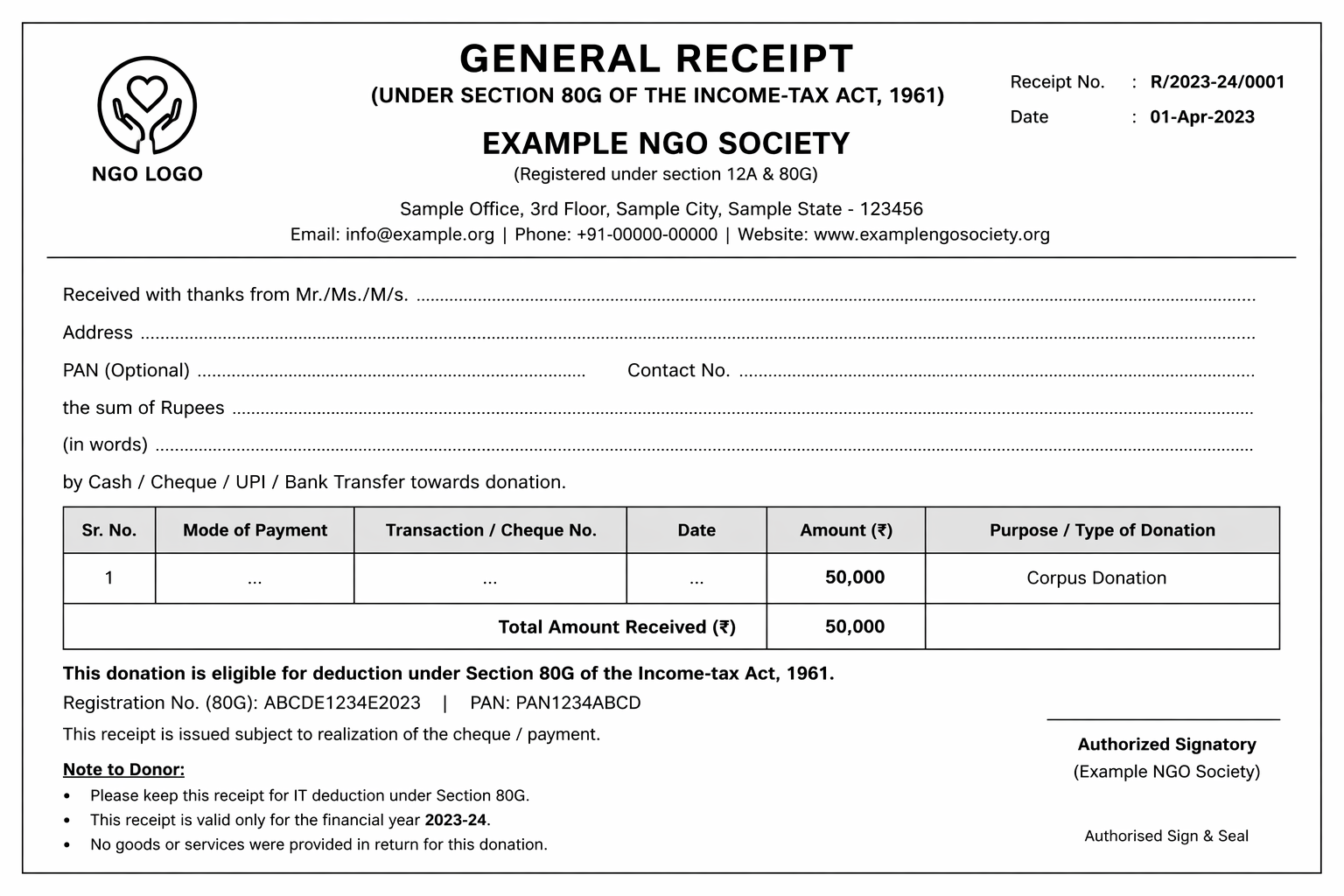
An 80G receipt is issued by an eligible NGO to acknowledge a donation. It allows the donor to claim a deduction under Section 80G of the Income Tax Act.
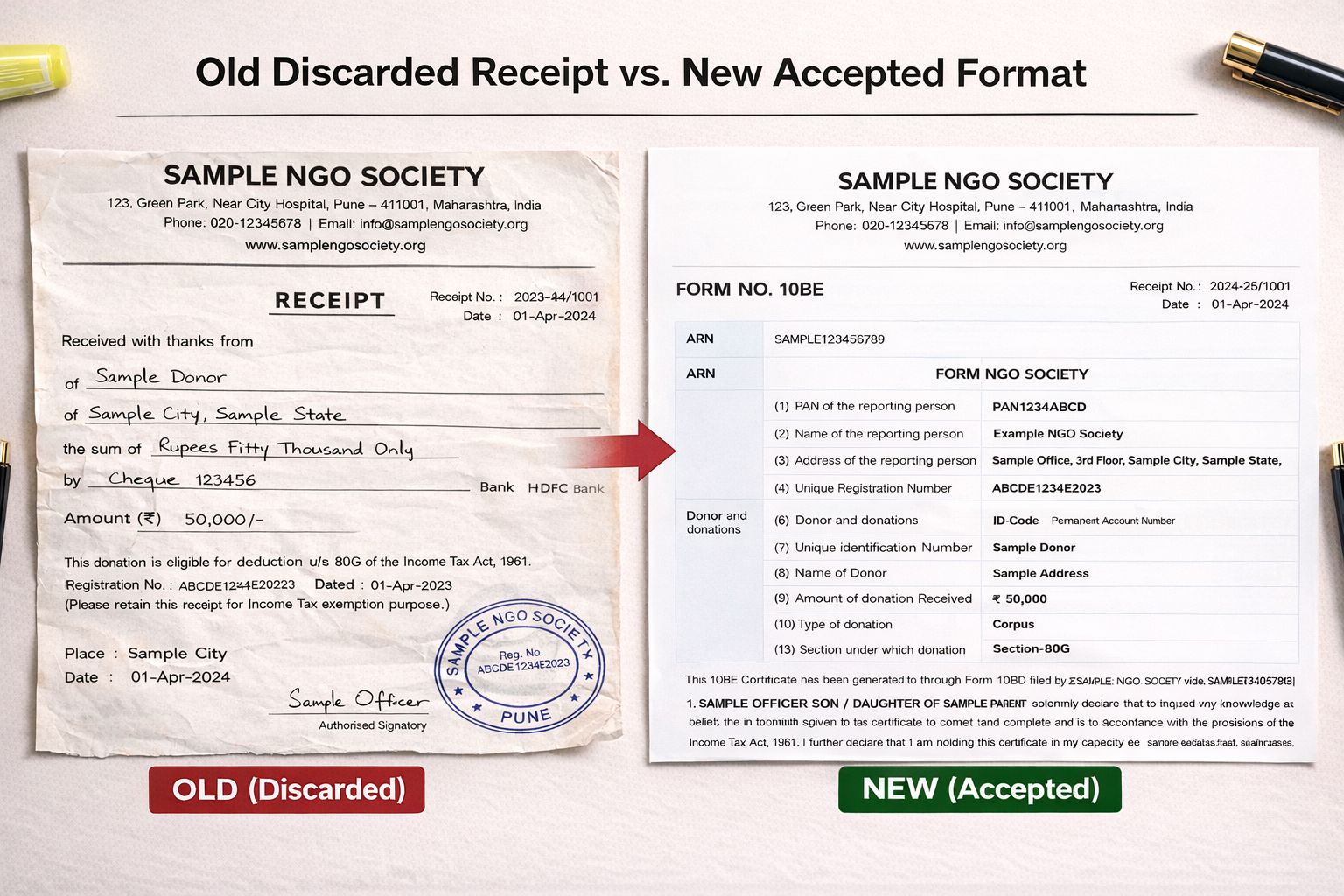
Earlier, the receipt itself was the primary proof. If it contained the necessary details, it was usually sufficient for tax purposes.
That is no longer the case.
What Changed in 2022?
The 2022 update did not just modify the format of the receipt — it introduced a system-based reporting structure.
1. Mandatory Filing of Form 10BD
NGOs are now required to file Form 10BD annually, which includes:
Donor name
PAN or Aadhaar
Donation amount
Mode of payment
This data is submitted directly to the Income Tax Department.
2. Introduction of Form 10BE
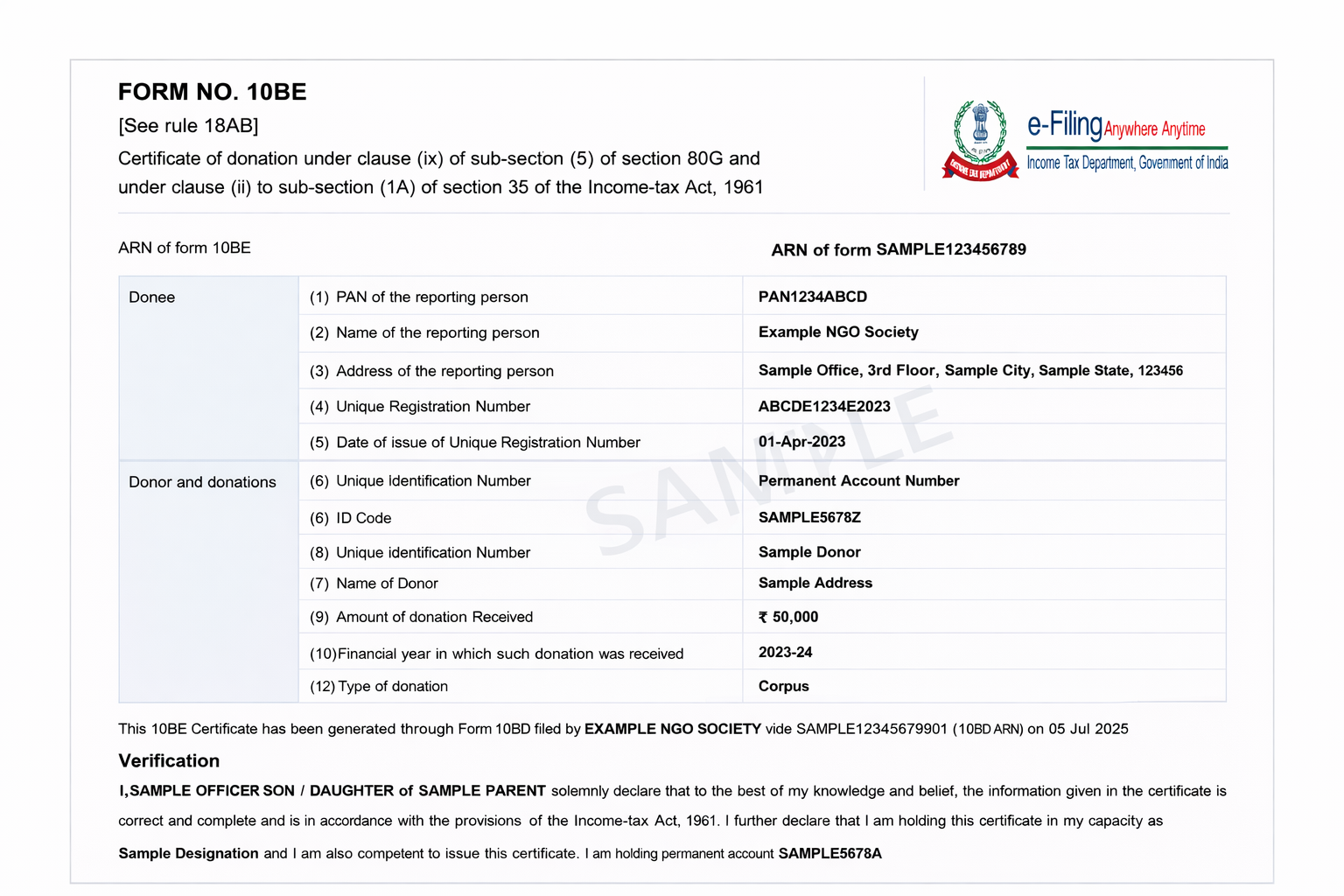
After filing Form 10BD, NGOs must issue Form 10BE to each donor.
This is now the official certificate that donors use to claim tax deductions.
In other words, the traditional receipt is no longer the final document — Form 10BE is.
3. PAN Requirement for Donors
Earlier, PAN was often optional in practice.
Now, it has become essential. Without accurate donor identification, the donation may not reflect in the donor’s tax records, which can lead to disputes or rejection of claims.
4. Centralised Verification
The system is now interconnected.
Donations reported by NGOs
Claims made by donors
Data available with the Income Tax Department
All of this is cross-verified.
This makes accuracy and consistency critical.
Old vs New System
Earlier System | Current System |
|---|---|
Receipt-based proof | System-based reporting |
Minimal data validation | Centralised verification |
PAN often optional | PAN effectively required |
Manual tracking | Digital compliance |
The shift is clear: from document-based trust to data-based verification.
Where Most NGOs Are Still Making Mistakes
Despite these changes, many NGOs continue to follow older practices:
Using outdated receipt formats
Not collecting donor PAN or correct details
Delaying or missing Form 10BD filing
Not issuing Form 10BE properly
Maintaining records in fragmented systems
These gaps may not always be visible immediately, but they create problems over time.
Why This Matters
Incorrect handling of 80G receipts can lead to:
Donors being unable to claim deductions
Loss of donor confidence
Queries or notices from tax authorities
Additional administrative burden during audits
For organizations that depend on trust and credibility, these risks are significant.
What a Proper 80G Process Looks Like Today
To stay compliant, NGOs need to treat receipts as part of a larger process.
This includes:
Collecting complete and accurate donor information
Issuing receipts with correct details
Maintaining structured records
Filing Form 10BD within deadlines
Issuing Form 10BE to donors
It’s not just about issuing a receipt anymore — it’s about ensuring that the entire chain of information is consistent.
The Operational Challenge
For many NGOs, the difficulty is not understanding the rules — it is managing the process.
When data is stored across spreadsheets, emails, and manual records, maintaining accuracy becomes difficult. Even small inconsistencies can create compliance issues later.
This is where structured systems start to make a difference.
How a System Like SevaStack Helps
A purpose-built NGO management system can simplify this process by:
Maintaining centralized donor records
Ensuring consistency between receipts and filings
Preparing data required for Form 10BD
Supporting generation of Form 10BE
Keeping records audit-ready
Instead of managing multiple disconnected steps, the process becomes more streamlined and reliable.
Conclusion
The 2022 changes to 80G compliance were not just procedural updates — they marked a shift towards transparency and accountability.
For NGOs, adapting to this shift is essential.
Those who update their processes will:
Build stronger donor trust
Avoid compliance issues
Be better prepared for audits and future growth
Those who don’t may find themselves dealing with avoidable complications.
Final Thought
If your NGO has not reviewed its 80G process since 2022, this is a good time to do so.
A small correction now can prevent much larger problems later.
New law, same rule. From 1 April 2026 the Income-tax Act, 2025 replaced the Income-tax Act, 1961. Form 10BD is now filed as Form 113 under Section 354(1). Only the number changed, not what you have to do. People still say "Form 10BD", so we use it here too. Filing close to the change-over? Check the form with your CA.
Vivek Bhos
Written by the Sevastack team, who build and maintain the 80G receipt, FCRA, and Form 10BD/10BE automation used by Indian NGOs on the platform every day. Compliance guidance is reviewed against current Income Tax Act and FCRA rules before publishing.
Read next
Compliance
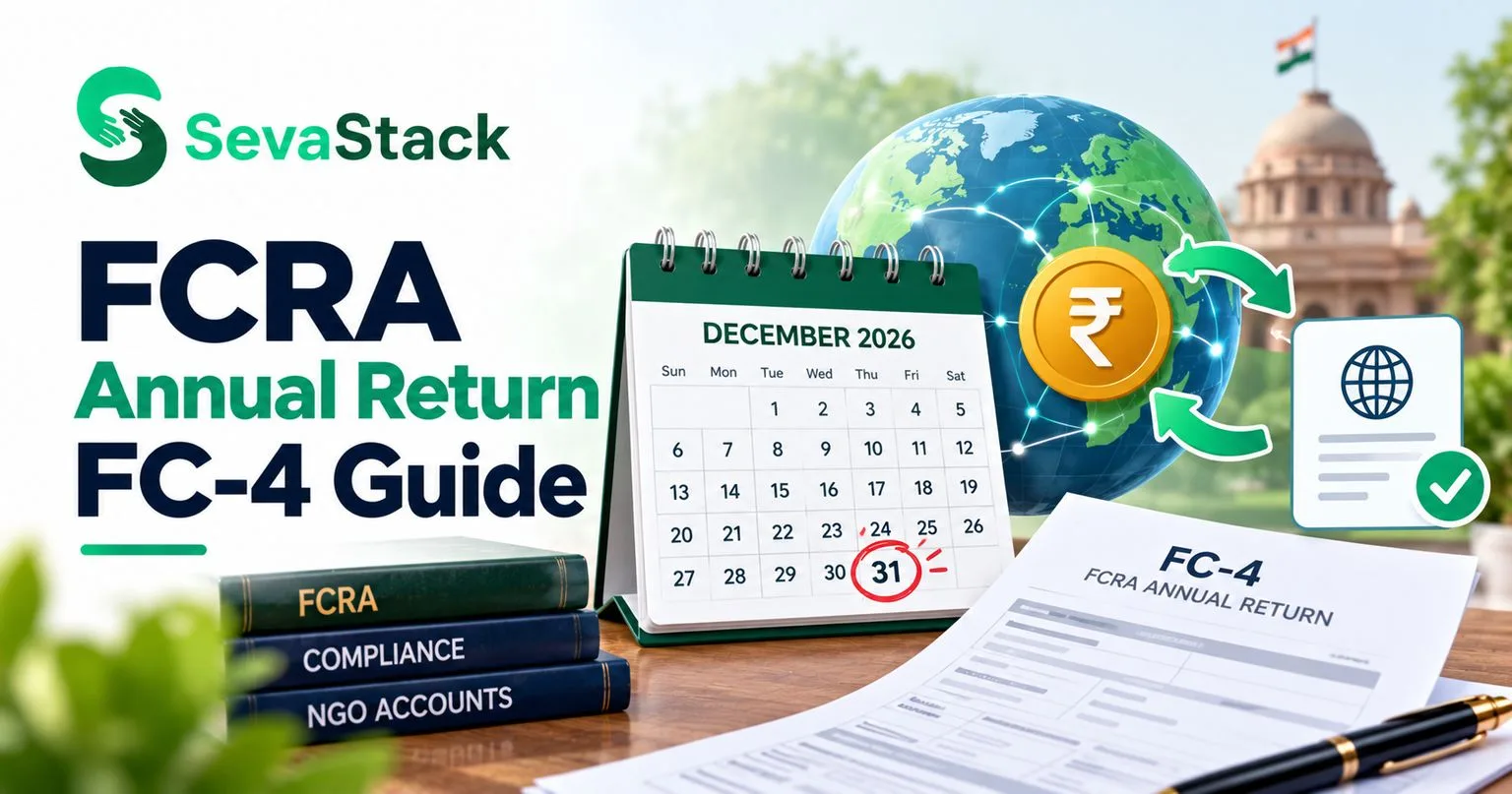
FCRA Annual Return (FC-4): Step-by-Step Guide for 2026
Got foreign donations? File your FCRA annual return (FC-4) by 31 December 2026. A simple step-by-step guide with documents, mistakes and a checklist.
Compliance
80G Is Now Section 133: What Changes on Your NGO Receipts
Section 80G is now Section 133 under the new Income-tax Act. Learn in simple words what changes for NGO receipts, Form 113 and Form 114, and what stays the same.
Compliance
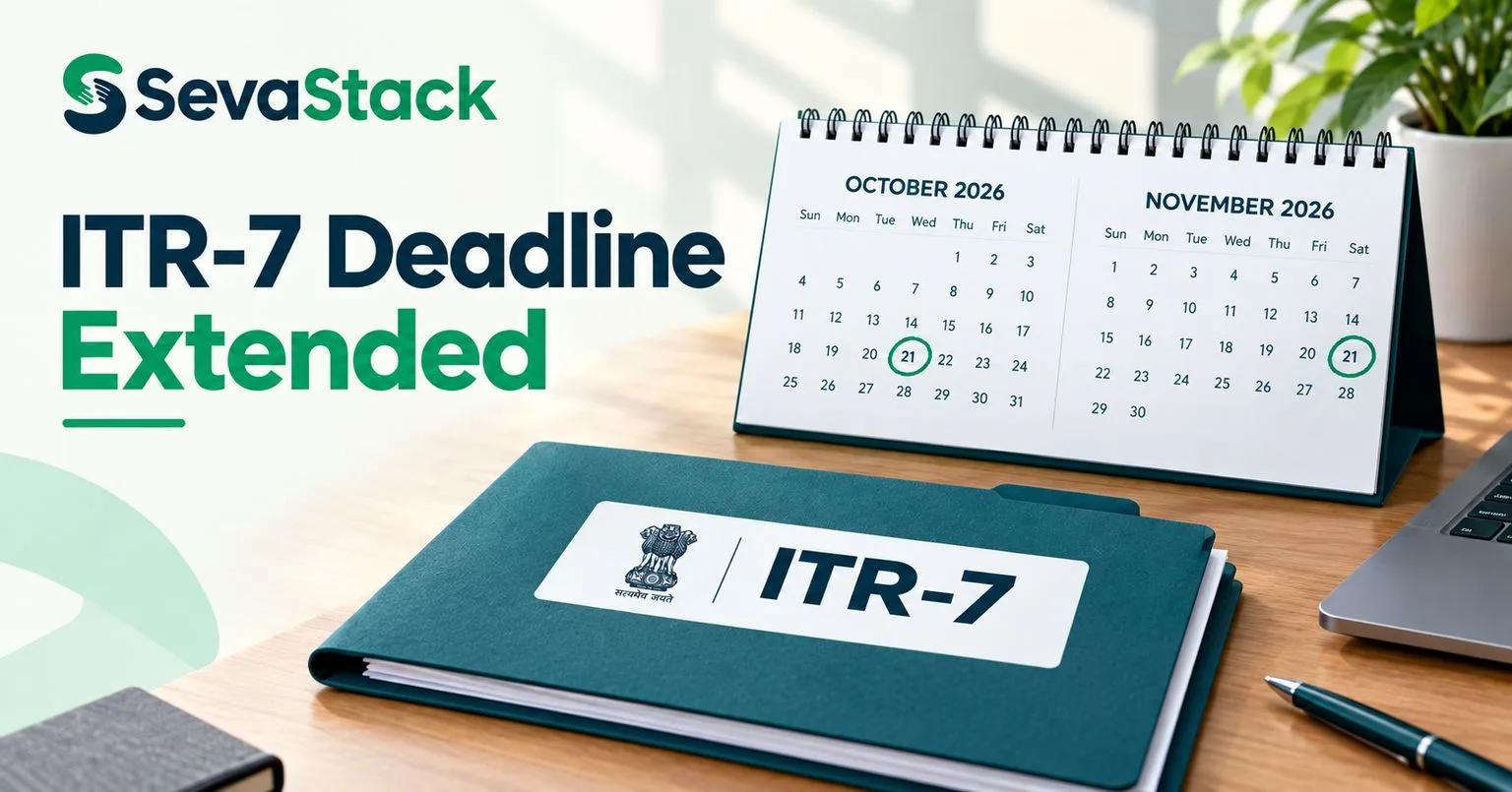
ITR-7 Due Date Extended to 21 November: What NGOs Must Do
CBDT has extended the ITR-7 due date to 21 November 2026 and the audit report date to 21 October. Here is what your NGO should do now, step by step.
Never miss a filing date
Sevastack keeps your NGO's compliance calendar and reminds you by email and WhatsApp before each return is due. Donors, 80G receipts and accounts sit in the same place.