

ITR-7 Filing Deadline June 30: What Every NGO Must Do in the Next 30 Days
ITR-7 deadline is June 30. Here's a week-by-week action plan for NGOs to file on time, avoid penalties, and get their documents in order.
Vivek Bhos
Updated 6 min read
ITR-7 statutory due date31/10/2026
Statutory due date
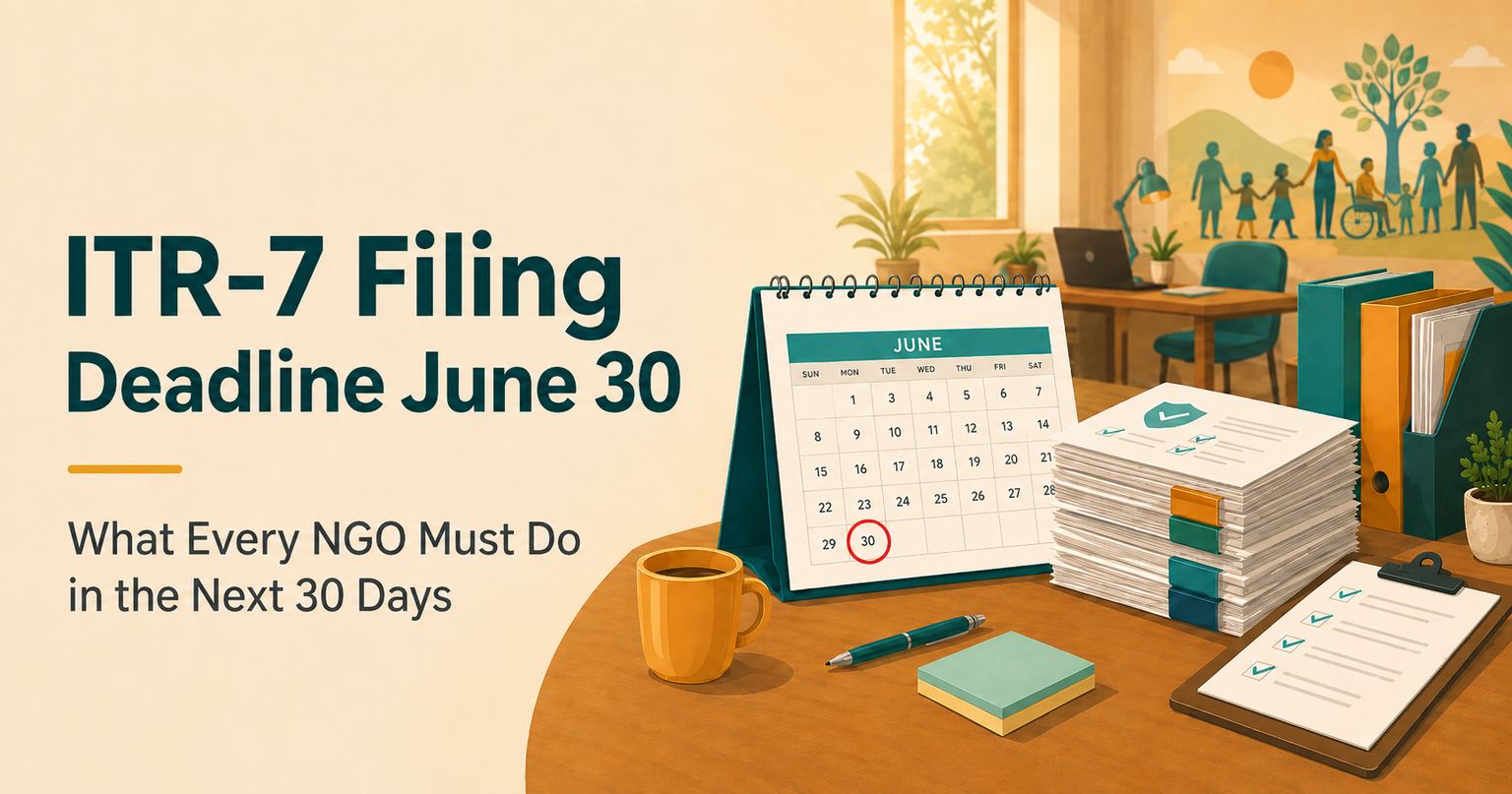
Editor’s note: For many NGOs, June 30 should be treated as the practical readiness deadline, even though the official portal timeline can vary based on audit requirements. The Income Tax Department’s guidance says audit reports like Form 10B / Form 10BB are generally due one month before the ITR due date, and timely filing under the due date matters for claiming exemptions.
If you are running an NGO, society, or trust, the ITR-7 filing deadline NGO 2026 should already be on your radar. You have only 28 days to get ready, and this is not the kind of task you should leave for the last week. A delayed or badly prepared filing can create stress, penalties, exemption issues, and uncomfortable questions from donors or CSR partners. The good news? If you use the next 30 days properly, your NGO income tax return can be handled in a calm and organised way.
Why the ITR-7 filing deadline NGO 2026 matters more than most NGOs realise
Many NGO founders think ITR-7 is “just one more annual form.” It is much more than that.
Your NGO income tax return is connected to the trust’s financial credibility. It tells the department how your NGO earned money, used donations, spent funds on charitable work, and whether you are correctly claiming exemptions linked to Section 12A, Section 12AB, and other applicable provisions.
If your NGO is required to get audited, then Form 10B or Form 10BB becomes a key part of the process. The Income Tax Department’s own guidance highlights that assessees registered under the relevant exemption provisions must e-file the audit report before filing the return, and missing due-date-based compliances can affect exemption claims.
Why does this matter so much in real life?
Penalty and late-fee risk: delayed filing can invite late filing consequences and extra follow-up work. The portal’s validation rules also recognise fees for default in furnishing the return under section 234F when filing is not within due date.
80G and donor confidence risk: when your tax and donation reporting is messy, donor trust goes down. For NGOs relying on tax-benefit giving, this is serious.
CSR funding impact: CSR teams usually ask for clean documents, audit readiness, and proof that the organisation is compliant. If your NGO compliance June 2026 looks weak, funding discussions may slow down.
Internal confusion: once the deadline gets close, even small issues like missing bank statements, donation lists, or expense categorisation can become big last-minute problems.
In simple words: ITR-7 is not only about filing. It is about protecting your NGO’s compliance reputation.
The 30-day action plan for the ITR-7 filing deadline NGO 2026
You do not need to solve everything today. You just need a weekly plan.
Week 1: Gather documents and clean up the basics
This week is about collecting, not panicking.
Start with the essentials:
PAN, registration details, and login access
Section 12A / Section 12AB registration documents
80G approval details, if applicable
bank statements for the full year
donation records
grant and CSR receipts
expense vouchers and ledgers
salary or vendor payment details
previous year return and audit papers
Also check whether your books are actually updated. Many NGOs think accounts are done, but entries for petty cash, reimbursements, earmarked grants, or corpus donations are still pending.
This is also the right time to identify whether your NGO needs Form 10B support from a CA. If yes, don’t wait.
Week 2: Handover to your CA or finance support
By the second week, your job is to move from “collecting” to “organising.”
Send one clean folder, not 27 random WhatsApp files.
Share:
final trial balance or account summary
donor-wise and grant-wise income breakup
major program expenses
balance sheet details
fixed asset details
any special notes, like foreign funding, corpus donations, or accumulated funds
This is the stage where your CA can tell you:
what should go in ITR-7
whether Form 10B is needed
whether any mismatch or missing disclosure exists
what may affect your exemption position
If something is unclear, ask in simple language. You do not need to know tax jargon. You just need to understand what is missing and who is responsible for it.
Week 3: Review the draft carefully
Do not treat the draft like a formality.
Once the draft return is ready, sit with it and review:
total income
donation classification
program expenses
admin expenses
bank balances
application of income
registration details
schedules related to exemptions
This is the week to catch mistakes like:
donation amount mismatch
wrong PAN or address
old Section 12AB number
missing audit attachment
incorrect carry-forward or accumulation treatment
Even if you are a non-finance founder, ask one basic question: “Does this draft correctly reflect how our NGO actually received and used money?”
If the answer is no, fix it now, not after filing.
Week 4: File, verify, and confirm
The final week is not just about clicking “Submit.”
Make sure you:
file the return,
complete verification,
save acknowledgement,
download filed copies,
store them in one compliance folder.
The Income Tax Department’s ITR-7 FAQ also notes that return verification is part of the filing journey, and the ITR-V must be completed within the allowed timeline after e-filing if not otherwise verified online.
After filing, send a short internal message to your board, founder group, or compliance team saying:
return filed,
acknowledgement saved,
supporting documents archived.
That one habit prevents future confusion.
What happens if you miss the deadline
Missing the ITR-7 due date is not always a dramatic legal disaster on day one, but it is definitely a compliance problem.
Here is what usually happens:
you may face late filing consequences or additional compliance burden,
your exemption-related claims may become harder to defend,
donor and CSR due diligence becomes stressful,
your CA may need extra correction work,
your NGO starts the year with a pending compliance cloud hanging over it.
The official ITR-7 guidance repeatedly links timely filing with eligibility for exemption-based claims and related forms.
So the real cost of delay is not only money. It is loss of clarity, credibility, and peace of mind.
7-point NGO checklist for June 2026
Our books are updated for the full financial year
Bank statements and donation records are collected
Section 12A / Section 12AB documents are ready
80G approval details are available
Form 10B / audit requirement has been checked
Draft ITR-7 has been reviewed by founder or compliance lead
Filed acknowledgement and proof of verification are safely stored
How SevaStack simplifies ITR-7 prep
SevaStack helps NGOs stay ready before deadlines become emergencies. With documents, donor records, approvals, and compliance files kept in one place, your team can prepare faster and hand over cleaner data for filing. It does not replace your CA — it makes your CA handover much smoother, so NGO compliance June 2026 feels manageable, not messy.
Vivek Bhos
Written by the Sevastack team, who build and maintain the 80G receipt, FCRA, and Form 10BD/10BE automation used by Indian NGOs on the platform every day. Compliance guidance is reviewed against current Income Tax Act and FCRA rules before publishing.
Read next
Compliance
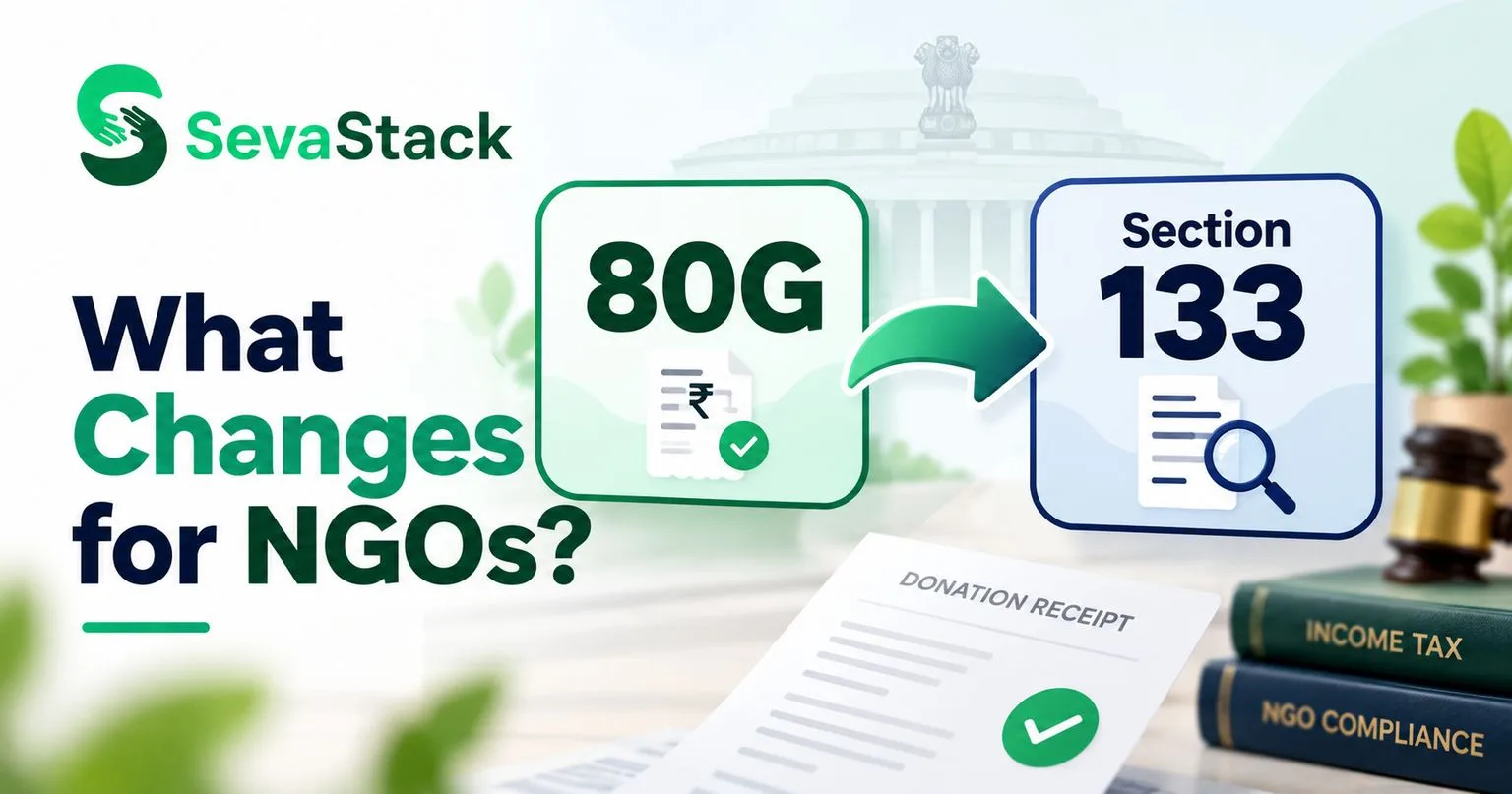
80G Is Now Section 133: What Changes on Your NGO Receipts
Section 80G is now Section 133 under the new Income-tax Act. Learn in simple words what changes for NGO receipts, Form 113 and Form 114, and what stays the same.
Compliance
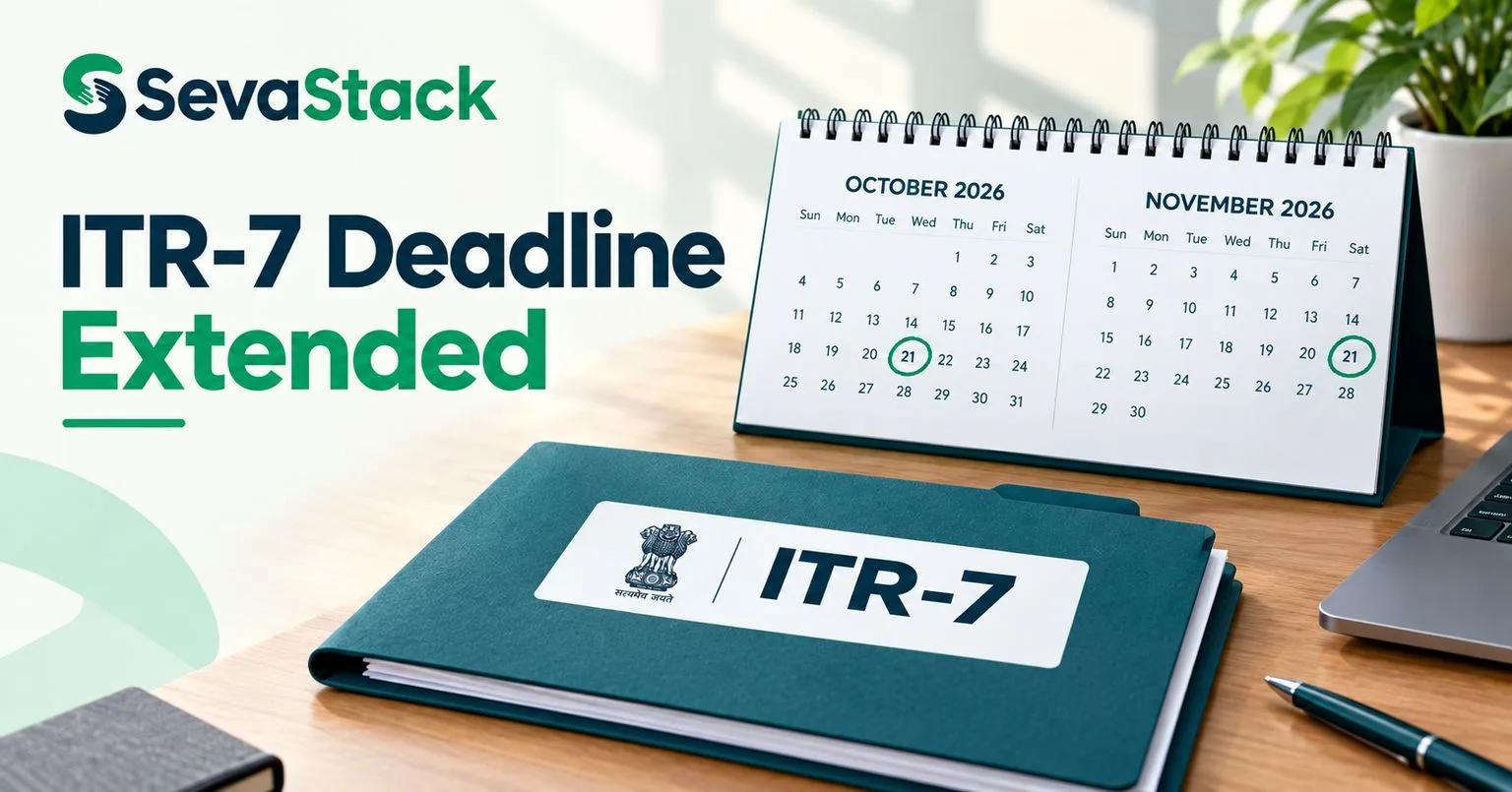
ITR-7 Due Date Extended to 21 November: What NGOs Must Do
CBDT has extended the ITR-7 due date to 21 November 2026 and the audit report date to 21 October. Here is what your NGO should do now, step by step.
Compliance
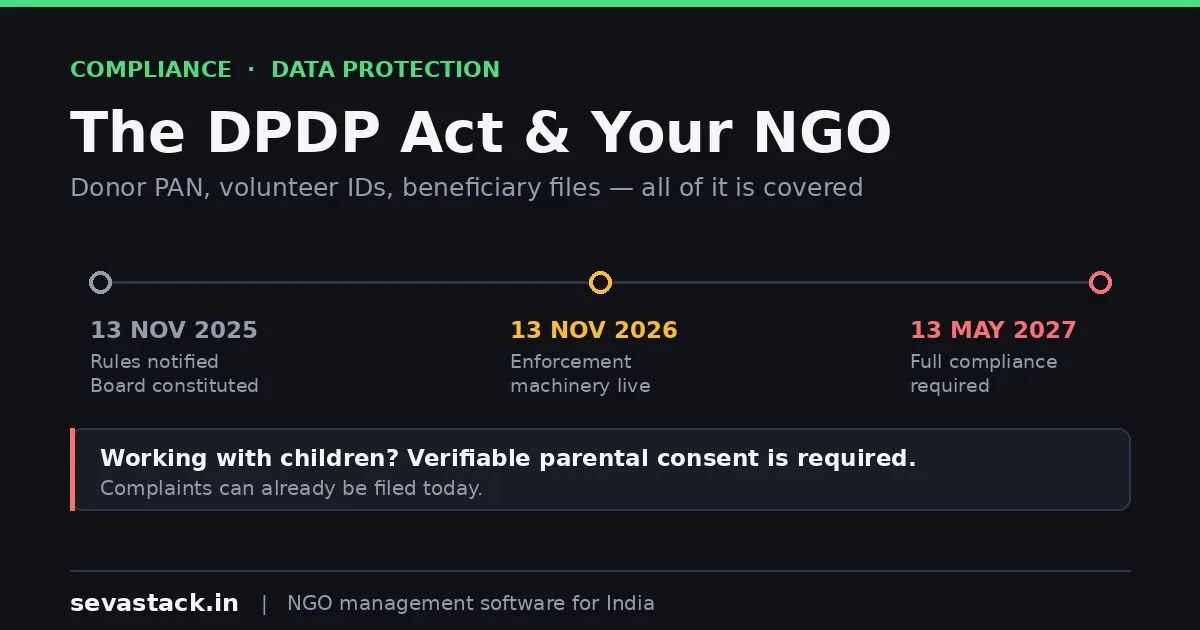
DPDP Act for NGOs in India: A Simple Compliance Guide
Your NGO holds donor PAN, phone numbers and beneficiary records. India's data protection law now covers all of it. Here is what to do, and by when.
Never miss a filing date
Sevastack keeps your NGO's compliance calendar and reminds you by email and WhatsApp before each return is due. Donors, 80G receipts and accounts sit in the same place.