

Donating Goods to NGOs in India: The Complete Guide
Complete guide to donating goods to NGOs in India. Learn what items are needed, how pickup works, tax benefits, and find verified NGOs near you.
Vivek Bhos
Updated 8 min read

Every year, Indian households throw away or let sit unused: old clothes, furniture nobody sits on anymore, books nobody reads, phones and laptops replaced by newer ones, toys kids outgrew, and medical equipment bought for a recovery that's long over. At the same time, thousands of verified NGOs across India — running shelters, schools, old-age homes, and community centres — are actively looking for exactly these items.
This guide covers everything you need to donate goods to NGOs in India: what's accepted, what NGOs actually need, how pickup and logistics work, whether you get anything for it (tax or otherwise), and how to find a verified NGO near you for each item type.
Why donate goods instead of throwing them away or selling them
- Usable items go to people who need them immediately — a working laptop can put a student through an entire semester of online classes; a spare bed can be the difference between sleeping on the floor and not, for a shelter resident.
- Selling old goods (OLX, Cashify, scrap dealers) takes time and earns little — for most used clothes, books, and low-end furniture, resale value is close to zero. Donating is faster and the impact is larger than the money you'd get.
- It keeps usable material out of landfills. Textile and e-waste in particular are recycled or reused far less than people assume once they're binned.
- Verified NGOs mean your donation is traceable — you know who received it and roughly how it will be used, unlike anonymous drop boxes.
What NGOs actually need (by category)
Not everything is donation-worthy. NGOs run on volunteer and limited staff time — items that need repair, are heavily soiled, or are missing parts usually can't be used and become a disposal burden for the NGO instead of a help. Here's what's genuinely useful, category by category.
Clothes
Wanted: shirts, sarees, kids' clothes, winter wear (jackets, sweaters, blankets), school uniforms, footwear in wearable condition.
Not useful: torn or heavily stained clothing, single shoes, undergarments (most NGOs cannot redistribute these for hygiene reasons — check with the specific NGO first).
Wash clothes before donating. A clean, folded bag of clothes gets used within days; a bag of unwashed clothes often sits unsorted for weeks.
Where to donate clothes in your city
Furniture
Wanted: chairs, tables, beds, cupboards, study desks, bookshelves — anything structurally sound.
Not useful: broken frames, furniture with missing legs/hardware, heavily termite-damaged wood.
Furniture is bulky, so pickup logistics matter more here than for any other category — see the pickup section below.
Where to donate furniture in your city
Books
Wanted: textbooks (especially school/college level — these are in constant demand from education-focused NGOs), story books, stationery, study material, competitive exam prep books.
Not useful: books in very poor physical condition (missing pages, water damage).
Textbooks a year or two old are often exactly what NGOs running tuition centres and libraries for underprivileged children need — don't assume "outdated" edition means unusable.
Where to donate books in your city
Electronics
Wanted: laptops, phones, tablets, fans, small appliances — working condition, or with clearly disclosed minor issues (e.g., "battery needs replacement" is fine to mention, NGOs will decide if it's still useful).
Before donating any device: back up your data, then factory reset it. This is the single most important step and is skipped surprisingly often. For phones and laptops, also remove SIM cards and any accounts signed in (Google/Apple/Microsoft account, cloud backup).
Not useful: devices that don't power on at all and can't be repaired cheaply — these belong with an e-waste recycler, not an NGO donation.
Where to donate electronics in your city
Toys
Wanted: toys, board games, sports gear, learning kits — clean and with all major pieces intact.
Not useful: toys with small detachable parts if targeted at very young children (choking hazard — flag this to the receiving NGO), broken electronic toys.
Where to donate toys in your city
Food
Wanted: unopened packaged food, dry rations (rice, dal, atta, oil) well within expiry, and in some cases freshly cooked meals arranged directly with an NGO that runs same-day distribution.
This category needs the most caution. Only donate cooked food to an NGO that has explicitly confirmed they can collect and distribute it the same day — never leave cooked food for pickup "whenever." For packaged/dry rations, check the expiry date is at least a few weeks out, not about to lapse.
Medical supplies
Wanted: wheelchairs, walkers, crutches, hospital beds, and other medical equipment — the most consistently high-demand category, since these are expensive to buy new and often only needed temporarily by the original owner.
Not useful: single-use consumables past date, prescription medicines (most NGOs cannot legally accept or redistribute unused medicines — do not include these; contact a pharmacy take-back program instead).
Where to donate medical equipment in your city
How the donation process actually works
Regardless of platform, the flow for donating goods to a verified NGO looks like this:
- List the item — a photo, short description, and your location. Be specific about condition; it saves back-and-forth later.
- A nearby NGO claims it — verified NGOs browsing by category and location see your post and claim what they can use.
- You arrange pickup or drop-off — contact details are shared only after a claim, so you're not exposed to random inquiries. Most NGOs will pick up furniture and larger items themselves; smaller items are often easier to drop off if you're passing near their location.
On Sevastack's NGO Connect marketplace, this entire flow is free with zero platform fee, and every NGO is verified against its 80G/12A registration before it can claim a post — so you're not handing items to an unregistered or unverifiable operator.
Is there a tax benefit for donating goods (in-kind donations)?
This is one of the most common questions, and the honest answer is: usually not directly. Section 80G of the Income Tax Act, which gives donors a deduction, applies to monetary donations, not to donations of goods. If you give away a used sofa or a box of clothes, there's generally no 80G receipt for it because no cash value is being transacted or verified.
If tax benefit matters to you, the practical options are:
- Donate cash to an 80G-registered NGO instead (you'll get a receipt with donor PAN, 80G URN, and 12A number that's usable at tax filing time).
- Sell the item and donate the proceeds — some people do this specifically to convert a goods donation into a monetary one for the receipt.
Don't let the absence of a tax deduction stop you from donating goods, though — it's still directly useful to the receiving NGO regardless of what it does for your tax filing.
Finding NGOs near you by item and city
The fastest way to find a verified NGO that wants what you're giving away is a platform that filters by both item type and location, so your post reaches NGOs that can realistically collect it. Sevastack's NGO Connect covers all the categories above across 20+ Indian cities:
- Donate clothes
- Donate furniture
- Donate books
- Donate electronics
- Donate toys
- Donate medical supplies
- Browse all categories and post an item
Frequently asked questions
Do I need to pay anything to donate goods to an NGO?
No. Posting an item and having an NGO claim it is free — there's no platform fee, and you're not expected to pay for pickup either (though offering to help with transport for bulky furniture is appreciated).
How do I know the NGO is legitimate?
Look for NGOs verified against their 80G and 12A registration numbers. On Sevastack, only verified NGOs can claim marketplace posts, so you're not handing items to an unregistered operator.
What if no NGO claims my item?
Keep the listing up — new NGOs join regularly, and demand varies by season (winter wear moves fast in October–December, school supplies move fast in April–June around admission season). If an item genuinely isn't in demand anywhere, consider a local recycler for electronics/e-waste rather than letting it sit indefinitely.
Can I donate directly to a specific NGO instead of an open marketplace?
Yes — if you already know and trust a specific NGO, contact them directly to ask what they currently need before dropping off unannounced. Marketplaces like NGO Connect are most useful when you don't already have an NGO relationship and want the item matched to whoever actually needs it right now.
What items should never be donated as "goods"?
Expired food, prescription medicines, undergarments, broken electronics with no realistic repair, and anything you wouldn't personally consider giving to a friend in its current condition.
Vivek Bhos
Written by the Sevastack team, who build and maintain the 80G receipt, FCRA, and Form 10BD/10BE automation used by Indian NGOs on the platform every day. Compliance guidance is reviewed against current Income Tax Act and FCRA rules before publishing.
Read next
Impact Stories
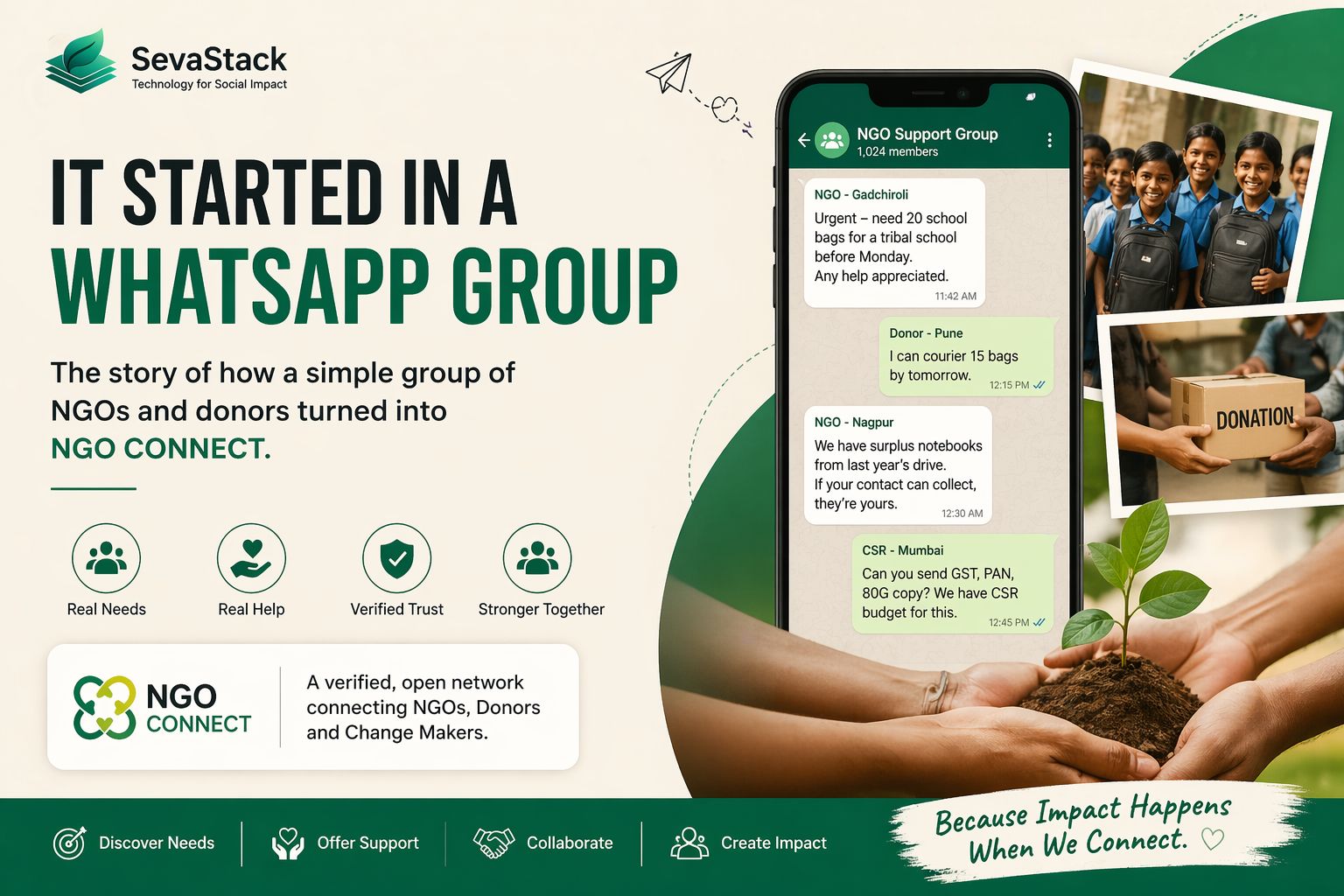
I built NGO Connect because a WhatsApp group was solving India's biggest giving problem — and also failing at it
The story of how a 324-member WhatsApp group of NGOs and donors inspired NGO Connect — India's verified, open network for needs, offers, and partnerships.
Finance
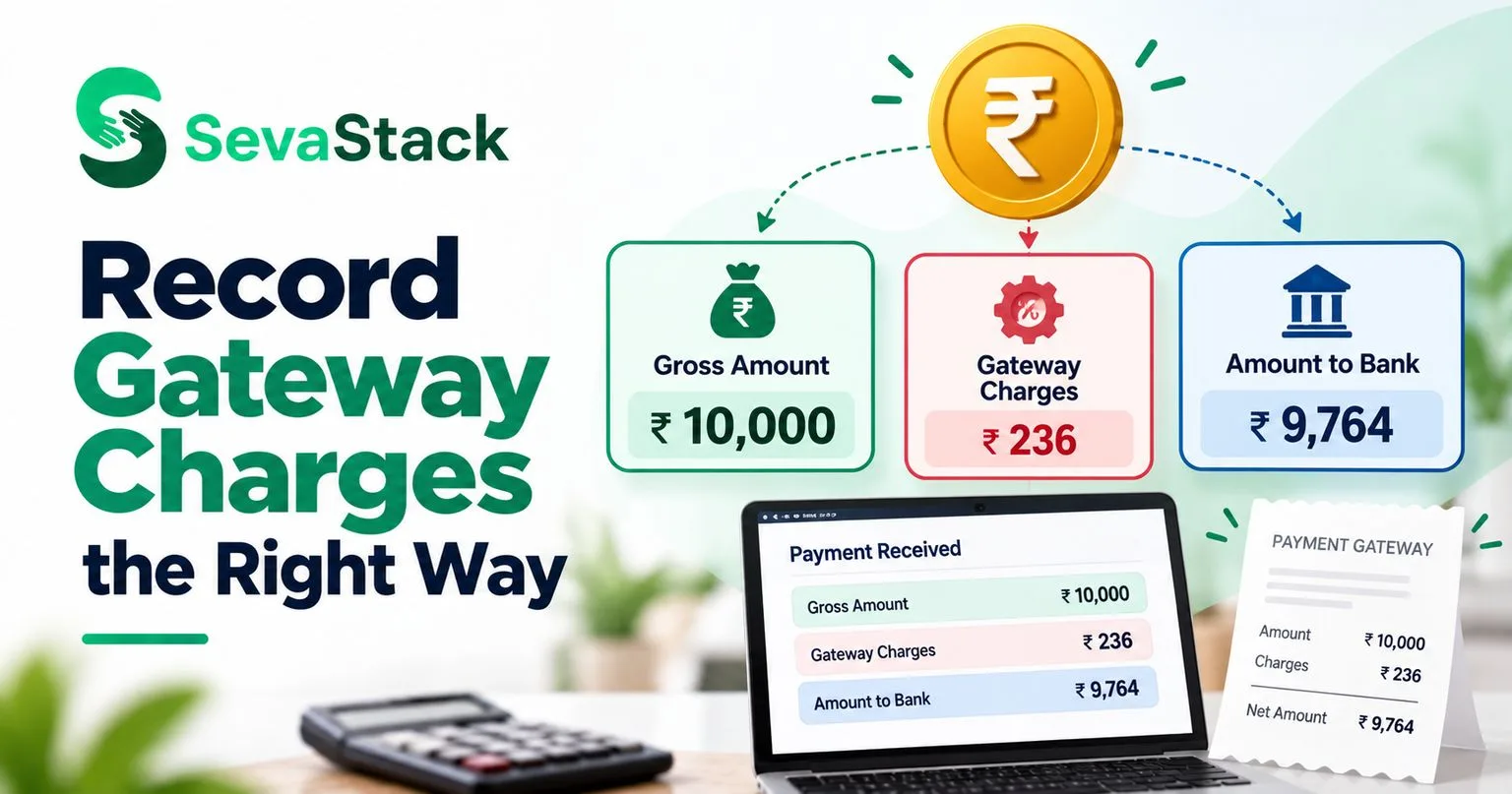
Payment Gateway Charges: How NGOs Should Record Them
Online donation reached your bank with some money cut? Learn in simple words how NGOs should record payment gateway charges, with an easy example.

Fundraising
Diwali Fundraising for NGOs: A Simple 3-Week Campaign Plan
Diwali is on 8 November. Here is a simple 3-week plan for Indian NGOs to run a Diwali fundraising campaign, with ideas, messages and a daily checklist.
Never miss a filing date
Sevastack keeps your NGO's compliance calendar and reminds you by email and WhatsApp before each return is due. Donors, 80G receipts and accounts sit in the same place.