

FCRA Annual Return (FC-4): Step-by-Step Guide for 2026
Got foreign donations? File your FCRA annual return (FC-4) by 31 December 2026. A simple step-by-step guide with documents, mistakes and a checklist.
Vivek Bhos
6 min read
Form FC-4 statutory due date31/12/2026
Statutory due date
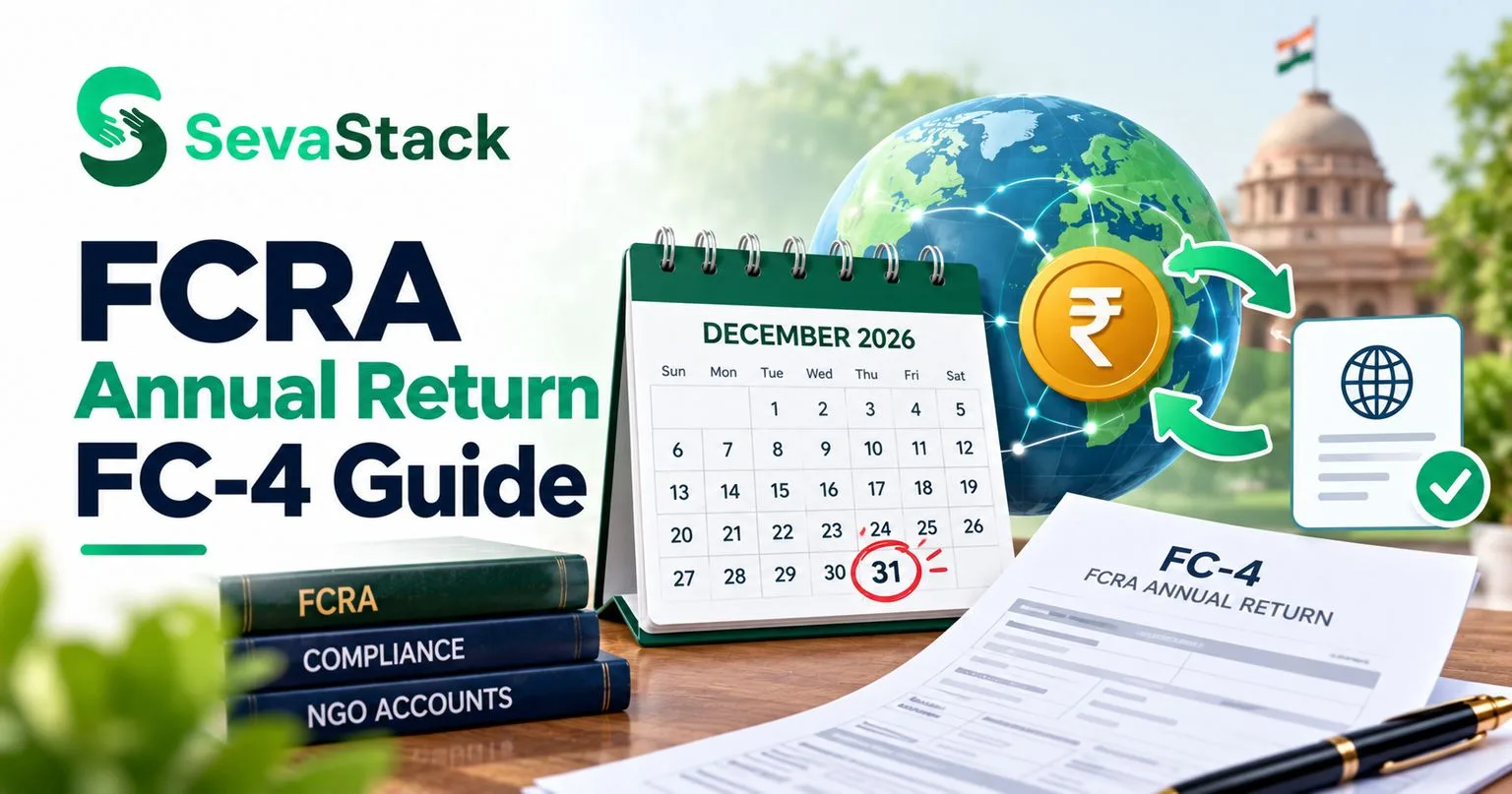
If your NGO receives foreign donations, you have an important yearly task: filing the FCRA annual return in Form FC-4. The last date is 31 December.
Many NGOs wait until December and then panic. In this post, we explain FC-4 in very easy words, with a step-by-step plan, so you can finish early and stay safe.
Note: FCRA rules can change. Please confirm details with your CA and the official FCRA portal.
What is FC-4?
FC-4 is the yearly report that every FCRA-registered NGO gives to the Ministry of Home Affairs. It shows:
How much foreign money you received
Who gave it (donor details)
How you spent it
How much is left at year-end
The return is filed online on the FCRA portal: fcraonline.nic.in.
Who must file it?
Every NGO with FCRA registration or prior permission must file FC-4, for every financial year.
Important: Even if you did not receive or spend any foreign money, you must still file a NIL return. Not filing at all is a violation.
What is the due date for 2026?
FC-4 must be filed within nine months of the end of the financial year, which is 31 December.
Financial year | Period | Last date to file |
|---|---|---|
FY 2025-26 | 1 April 2025 to 31 March 2026 | 31 December 2026 |
So this return covers the money you received between April 2025 and March 2026.
Why you should not wait
The portal gets slow near the last date.
Your CA is busy with income tax audits (the audit report is due 21 October and ITR-7 on 21 November this year).
If something is wrong in your accounts, you need time to fix it.
Late filing can bring a late fee. Serious delay can lead to cancellation of your FCRA registration and other action.
Aim to finish by end of November.
Documents you need
Keep these ready:
FCRA accounts, meaning the Balance Sheet, Income and Expenditure Account, and Receipts and Payments Account for your foreign contribution money
Certificate from a Chartered Accountant (CA)
Bank statement of your designated FCRA account
Declaration signed by your chief functionary (head of the NGO)
Donor list with names, countries and amounts
Details of how you used the money, purpose-wise or activity-wise
If you received no foreign money and had no balance to use, a NIL return is usually simple and may not need audited accounts. If you had unused foreign money from earlier years and spent some of it this year, it is not a nil case. Ask your CA.
Step-by-step: how to file FC-4
Step 1: Keep FCRA money separate all year
Receive foreign donations only in your designated FCRA bank account. Do not mix them with local donations. This is the base of everything.
Step 2: Close the books for FCRA funds
Make sure every foreign receipt and every expense from that account is recorded. Match the books with the bank statement.
Step 3: Prepare FCRA-wise financial statements
Your CA prepares the accounts for the FCRA funds. Expenses should be clear and, as far as possible, activity-wise (for example, education programme, health camp, admin costs).
Step 4: Get the CA certificate
Your CA checks the accounts and gives the required certificate.
Step 5: Log in to the FCRA portal
Go to fcraonline.nic.in, open Form FC-4 and log in with your FCRA ID and password.
Step 6: Fill in the form
Enter opening balance, foreign contributions received, amounts spent by purpose, and closing balance. Your NGO's basic details usually come pre-filled. If you need to change them (for example, address or office-bearers), do that separately before filing.
Step 7: Upload documents
Upload the accounts, CA certificate, bank statement and the chief functionary's declaration with the signature and seal, as asked on the portal. Check file sizes and formats.
Step 8: Check, submit and save
Check every figure against the audited accounts. Submit, then save and print the acknowledgement. Keep it safely.
Your 8-week plan
When | What to do |
|---|---|
Now | Collect FCRA bank statements and donor details |
Early November | Close FCRA books and match with the bank |
Mid November | Give papers to your CA |
Late November | Get accounts and CA certificate; fill FC-4 draft |
First week of December | Upload and submit |
Before 31 December | Keep a buffer for fixes |
Common mistakes to avoid
Mixing foreign and local funds. This is the most serious mistake.
Receiving foreign money in the wrong bank account. Use only your designated FCRA account.
Not filing a NIL return. NIL still needs to be filed.
Numbers not matching. The FC-4 figures must agree with your accounts and bank statements.
Missing donor details. Keep full name, country and amount for each donor.
Using foreign money for something not allowed. Spend only on the purpose you were approved for.
Filing in the last week. Delays can lead to a late fee and problems with your registration.
Quick summary
FC-4 is the yearly FCRA report
Due 31 December 2026 for FY 2025-26
NIL return is also required
File online at fcraonline.nic.in
Needs FCRA accounts and a CA certificate
Keep foreign money in the designated FCRA account
Start early and finish by end of November
Frequently asked questions
What is the last date for FC-4 for FY 2025-26?
31 December 2026.
Do we file FC-4 if we got no foreign money?
Yes. File a NIL return. Not filing at all is a violation.
Is FC-4 the same as the income tax return?
No. FC-4 goes to the Ministry of Home Affairs for foreign contributions. The income tax return (ITR-7) goes to the Income Tax Department.
Who signs the FC-4 documents?
The chief functionary of your NGO signs the declaration, and a Chartered Accountant gives the certificate.
What happens if we file late?
You may have to pay a late fee, and repeated or long delay can put your FCRA registration at risk. Ask your CA about the current rules.
Can we use the same accounts for the income tax audit and FC-4?
The books should agree, but FC-4 needs accounts for your foreign contribution money. Your CA will prepare the right statements.
Keep FCRA records clean all year
Sevastack helps Indian NGOs track foreign and domestic donations, deadlines and records in one place, so FC-4 time is calmer. Start free and keep your FCRA data ready.
Vivek Bhos
Written by the Sevastack team, who build and maintain the 80G receipt, FCRA, and Form 10BD/10BE automation used by Indian NGOs on the platform every day. Compliance guidance is reviewed against current Income Tax Act and FCRA rules before publishing.
Read next
Compliance
80G Is Now Section 133: What Changes on Your NGO Receipts
Section 80G is now Section 133 under the new Income-tax Act. Learn in simple words what changes for NGO receipts, Form 113 and Form 114, and what stays the same.
Compliance
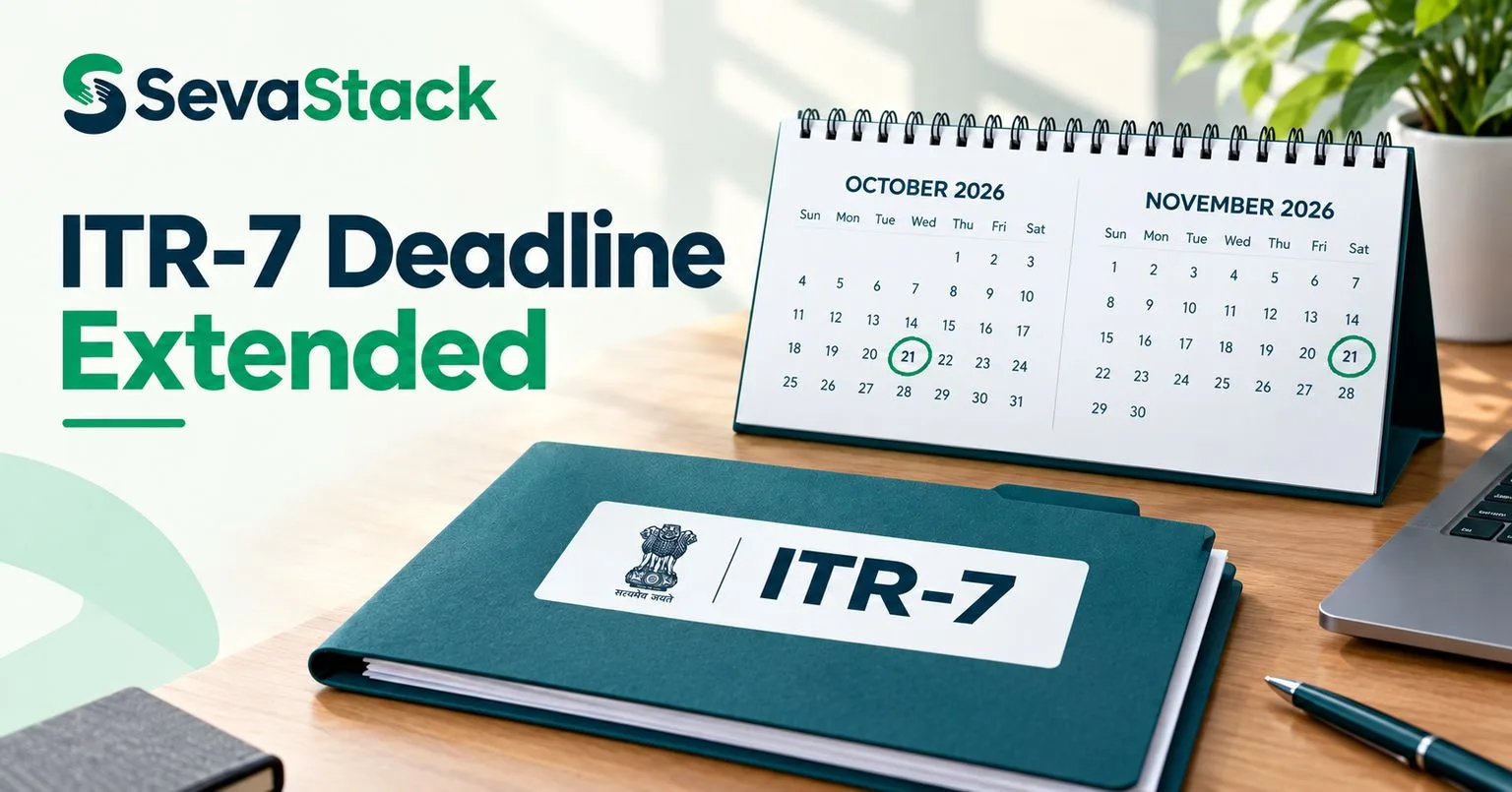
ITR-7 Due Date Extended to 21 November: What NGOs Must Do
CBDT has extended the ITR-7 due date to 21 November 2026 and the audit report date to 21 October. Here is what your NGO should do now, step by step.
Compliance
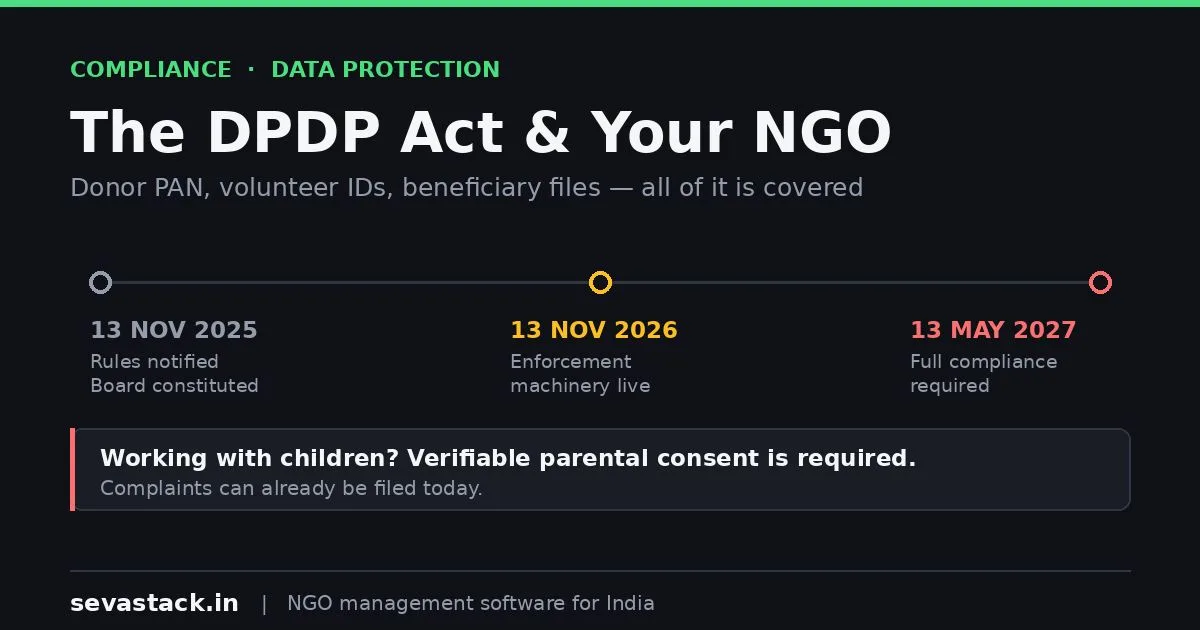
DPDP Act for NGOs in India: A Simple Compliance Guide
Your NGO holds donor PAN, phone numbers and beneficiary records. India's data protection law now covers all of it. Here is what to do, and by when.
Never miss a filing date
Sevastack keeps your NGO's compliance calendar and reminds you by email and WhatsApp before each return is due. Donors, 80G receipts and accounts sit in the same place.