

Diwali Fundraising for NGOs: A Simple 3-Week Campaign Plan
Diwali is on 8 November. Here is a simple 3-week plan for Indian NGOs to run a Diwali fundraising campaign, with ideas, messages and a daily checklist.
Vivek Bhos
7 min read
Diwali is the festival of light, joy and giving. Families clean their homes, buy gifts and think about helping others. For NGOs, it is one of the best times of the year to raise funds.
Diwali is on 8 November 2026. If you start now, you have about three weeks. That is enough time to run a good campaign, even with a small team and a small budget.
This post gives you a simple plan you can follow day by day.
Why Diwali works for NGOs
People are in a giving mood. Many donate in the name of family or loved ones.
Companies and families give festive gifts and bonuses.
Your story of "bringing light to someone's life" is easy to understand.
Donors share festive messages on WhatsApp and social media, so your campaign can spread.
Before you start: decide 4 things
Spend one day on these. Write them on a single page.
Goal: How much do you want to raise? Example: ₹1,00,000.
One cause: Pick one clear cause, for example "Light up 100 homes" or "Diwali gift boxes for 200 children". One simple idea works better than many.
Clear gift sizes: Show what each amount does.
₹500 = one Diwali sweet and diya kit for a family
₹1,000 = new clothes for one child
₹2,500 = a full festival gift box for a family
(Use real numbers from your own work.)
Who will do what: Name one person for messages, one for social media and one for donor follow-up.
Your 3-week plan
Week 1: Prepare and announce (about 18 to 24 October)
Goal: Be ready and tell people your plan.
Finish your campaign page or donation link. Test it on a phone.
Write your one-line story. Example: "This Diwali, help us bring light to 100 homes."
Collect 2 or 3 real photos or a short video (with permission, and extra care for children).
Make a simple poster for WhatsApp and Instagram.
Make a list of people to contact: past donors, volunteers, supporters, local businesses.
Send a personal message to your 10 closest supporters first. Ask them to be your first donors.
Announce your campaign on WhatsApp, Instagram, Facebook and email.
Quick tip: Early donors make others feel safe to give. A campaign that already shows some donations feels more trusted.
Week 2: Tell your story (about 25 to 31 October)
Goal: Help people feel why this matters.
Share one short story about a real person or family (with their permission).
Post a progress update: "We have reached ₹30,000 of ₹1,00,000. Thank you!"
Share a behind-the-scenes photo: packing gift boxes, buying diyas, meeting families.
Ask volunteers and staff to share the link in their family and friends groups.
Send a thank-you message to every donor within 2 days. (See our post on how to thank and keep your new donors.)
Contact local shops and small businesses and ask if they would like to support or match a part of your goal.
Quick tip: Do not post only "donate now". Mix stories, thanks and updates, with a donate link in each.
Week 3: Final push (about 1 to 7 November)
Goal: Reach your target before Diwali.
Start a countdown: "7 days left", "3 days left", "Last day".
Share the amount still needed: "Only ₹25,000 left to reach our goal."
Send a reminder to people who opened your link but did not donate.
Thank your top supporters publicly (with their permission).
Send a short, warm message to everyone on your list one or two days before Diwali.
Keep your team ready to answer questions and send receipts quickly.
Simple ideas for Diwali campaigns
Light up a home: ₹500 gives a family diyas, sweets and a festival kit.
Gift a child: new clothes, a toy or books for a child.
Share a meal: a festival meal for elderly people, workers or street families.
Dedicate a gift: Donors give "in the name of" a loved one and get a thank-you card.
Corporate gifting: Small businesses can donate in place of festival sweets or gifts for staff.
Employee drives: Ask company staff to collect new clothes, sweets or school items for you.
Diya or craft sale: Sell diyas, candles or handmade items made by your beneficiaries.
Sample messages you can copy
WhatsApp (to past donors):
Namaste [Name] ji, Diwali is on 8 November. This year, we want to bring light to 100 homes in [place]. Your ₹500 gives one family a festival kit. Would you like to join us? [link] Thank you for always being with us. Team [NGO Name]
Instagram or Facebook post:
This Diwali, let us light one more home. ₹500 = one festival kit for a family. We have reached ₹40,000 of our ₹1,00,000 goal. Join us. [link]
Last-week reminder:
Only 3 days left! We need ₹25,000 more to bring Diwali joy to 100 families. Even ₹200 helps. [link]
Don't forget the receipts and rules
Send receipts quickly. Donors who want tax benefit will ask for them. Keep their name and PAN correct.
Rules have changed. For donations from 1 April 2026, the donor deduction falls under Section 133. See our post 80G Is Now Section 133. Check receipts and wording with your CA.
Cash donations above ₹2,000 are not eligible for deduction, so encourage UPI, bank transfer or card.
Foreign donations need to follow FCRA rules and go to the right account. Do not mix them with domestic money.
Be honest. Use real stories and real numbers. Never promise more than you can deliver.
After Diwali
Thank every donor again.
Share a photo report within 2 or 3 weeks showing what their money did.
Invite donors to give monthly.
Note down what worked, so next year is easier.
Common mistakes to avoid
Starting too late. Three weeks is the minimum.
Too many causes. One clear idea works best.
Only asking, never thanking. Thank people quickly and often.
Hard-to-use donation page. Test it on a phone. If it takes more than a minute, people leave.
No update after Diwali. This loses donors for next year.
Quick summary
Diwali is on 8 November 2026, so start now
Choose one cause, one goal and clear gift sizes
Week 1: prepare and announce
Week 2: tell stories and share progress
Week 3: countdown and final push
Send receipts and thanks fast
Share results after Diwali
Frequently asked questions
When should an NGO start a Diwali fundraising campaign?
At least 3 weeks before Diwali. Starting early gives time to share stories and follow up.
How much should we ask for?
Choose a goal based on your past donations and your network. It is better to reach a realistic target than to miss a big one.
What is the best way to share a campaign in India?
WhatsApp works best, then Instagram, Facebook and email. Personal messages to past donors work better than group posts.
Can we run a Diwali campaign with a small team?
Yes. Use one cause, one link and a simple daily plan. Ask volunteers to share your message.
Should we send tax receipts for Diwali donations?
Yes, if you are eligible. Send them quickly and check the details with your CA.
Run your Diwali campaign with Sevastack
Sevastack helps Indian NGOs collect online donations, send receipts automatically and keep donor records in one place. Start free and be ready before Diwali.
Vivek Bhos
Written by the Sevastack team, who build and maintain the 80G receipt, FCRA, and Form 10BD/10BE automation used by Indian NGOs on the platform every day. Compliance guidance is reviewed against current Income Tax Act and FCRA rules before publishing.
Read next
Fundraising
After Daan Utsav: How to Thank and Keep Your New Donors
Daan Utsav is over, but your work is not. Learn simple ways to thank new donors, share your impact and keep them giving all year.
Fundraising
Best Fundraising Platforms for NGOs in India (2026)
Ketto, Milaap, GiveIndia, Donatekart and more. A simple guide to the best fundraising platforms for NGOs in India in 2026, with fees and tips.
Fundraising
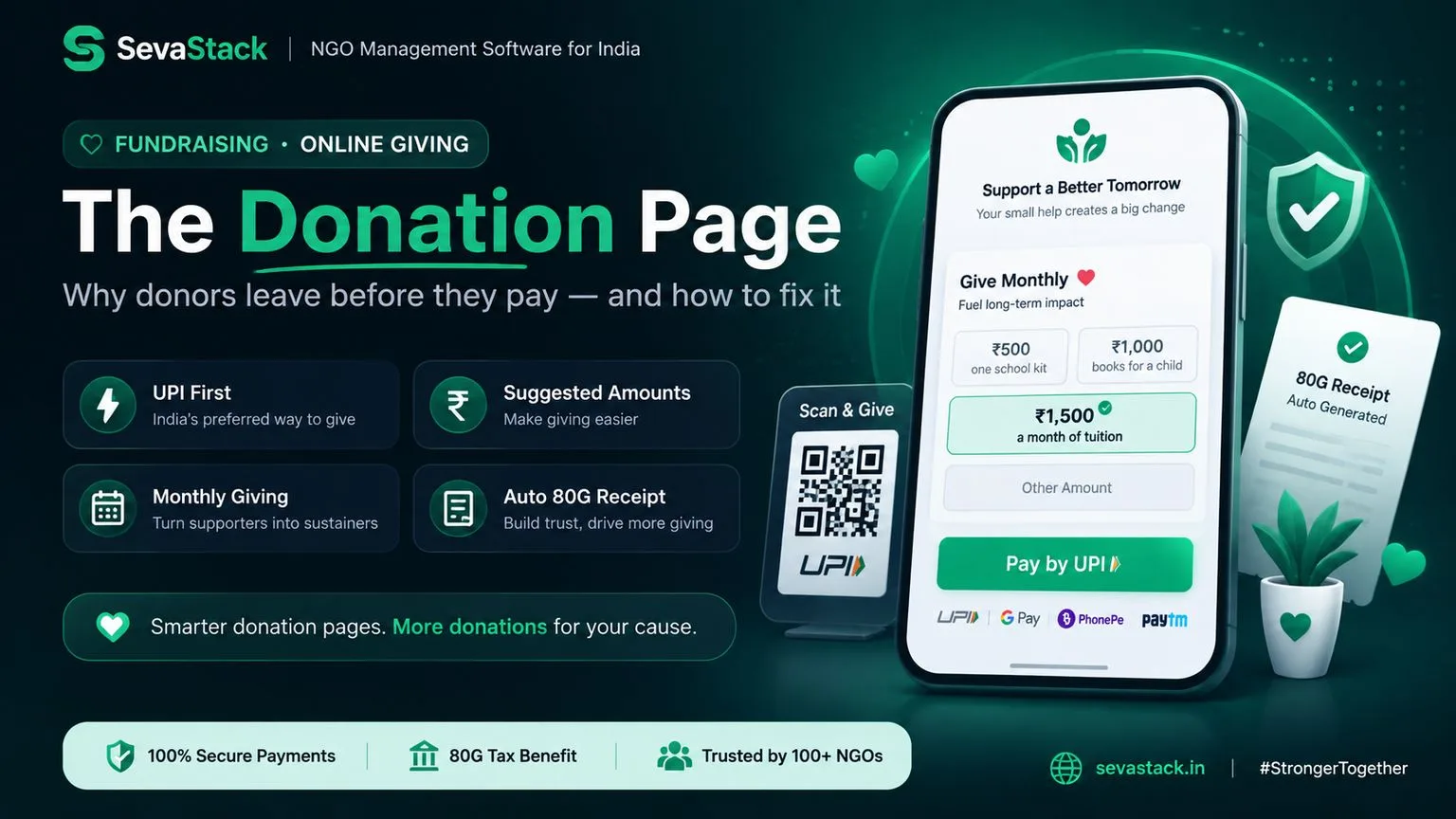
How to Build a Donation Page That Actually Gets Donations
Most NGO donation pages lose donors before they pay. Here is what to fix: UPI, mobile speed, suggested amounts, PAN collection and instant 80G receipts.
Never miss a filing date
Sevastack keeps your NGO's compliance calendar and reminds you by email and WhatsApp before each return is due. Donors, 80G receipts and accounts sit in the same place.