

How to Verify if an NGO is Genuine Before Donating
Before donating to an NGO in India, learn how to verify its legitimacy using government portals, legal registrations, and financial transparency checks to ensure your money creates real impact.
Vivek Bhos
Updated 4 min read
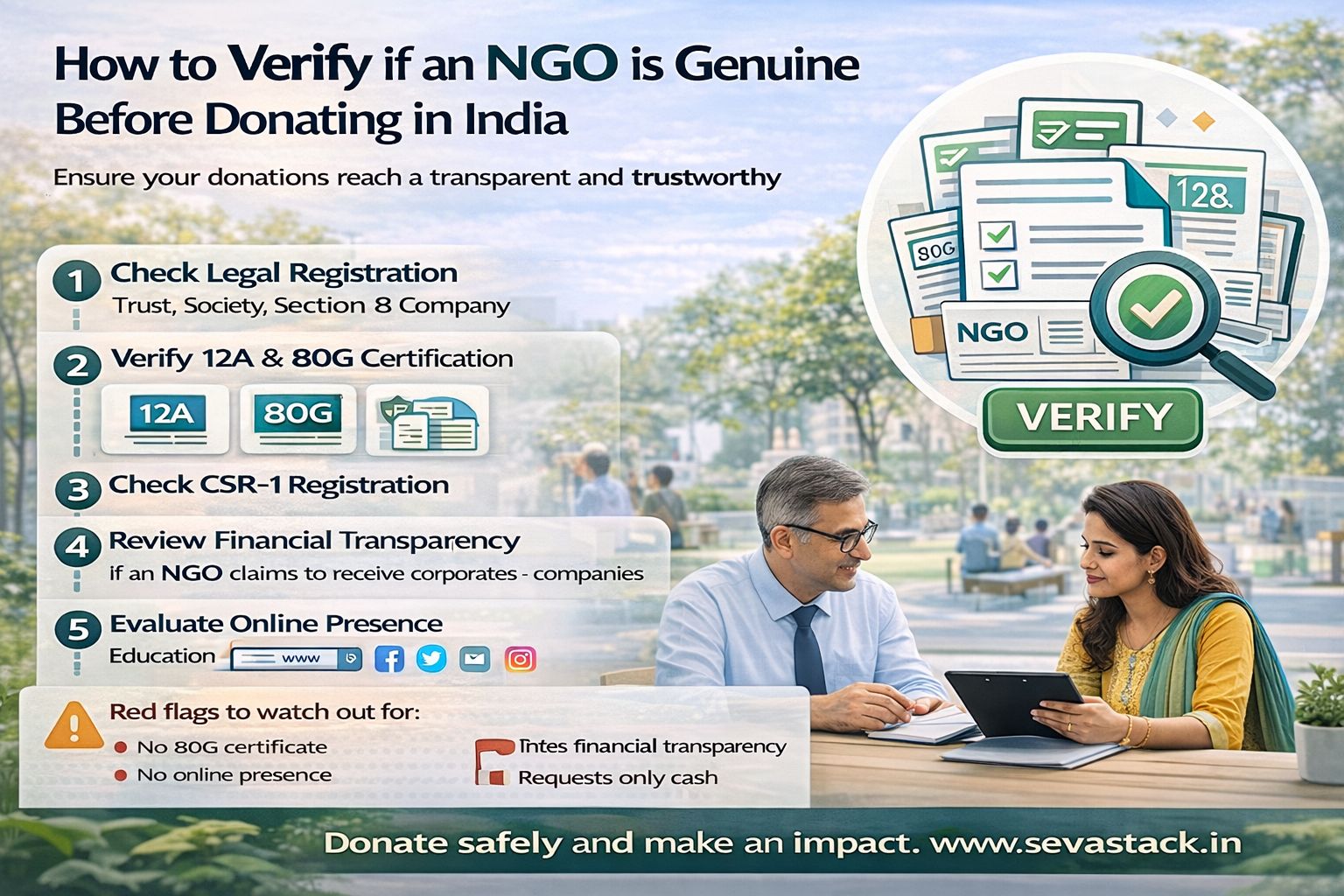
Donating to a good cause is one of the most impactful decisions you can make.
But with the rise of online fundraising and digital campaigns, one important question arises:
How do you know if an NGO is genuine?
In India, thousands of NGOs operate across sectors — but not all maintain proper transparency, compliance, or accountability.
Before you donate, it's important to verify whether your contribution will actually create real, lasting impact.
Why NGO Verification Matters
When you donate, you are not just giving money.
You are placing trust.
If that trust is misplaced, it can lead to:
Misuse of funds
Lack of measurable impact
Loss of confidence in the nonprofit ecosystem
Verifying an NGO ensures your contribution reaches the right hands and is used effectively.
Key Checks to Verify a Genuine NGO
1. Check Legal Registration
A legitimate NGO must be registered under one of the following:
Trust
Society
Section 8 Company
Ask for their registration details and verify:
Registration number
Date of incorporation
Governing body
You can also validate details on the MCA21 portal or FCRA public database.
2. Verify 12A and 80G Certification
These are essential tax registrations:
12A — Confirms the NGO is exempt from income tax
80G — Allows donors to claim tax deductions on contributions
If an NGO cannot provide valid 80G details, consider it a serious red flag.
3. Check CSR-1 Registration
If the NGO claims to receive corporate funding, it must hold:
CSR-1 registration filed with the Ministry of Corporate Affairs
This is mandatory for NGOs receiving CSR funds from companies operating in India.
4. Review Financial Transparency
A genuine NGO should be completely open about its finances.
Look for:
Audited financial statements
Annual reports
Clear fund allocation breakdowns
If financial data is unavailable, outdated, or vague — proceed with caution.
5. Evaluate Online Presence
A credible NGO typically maintains:
A professional website with updated content
Active social media profiles on platforms like Facebook, Instagram, or LinkedIn
Clear, detailed information about their programs and beneficiaries
Check for:
Real project updates with dates
Authentic photos and field reports
Consistent, professional communication
6. Look for Impact Evidence
Don't rely on claims alone.
Look for proof of work:
Beneficiary stories with names and locations
Before/after results from projects
Detailed project reports and outcome data
Impact should always be measurable and visible — not just described in vague terms.
7. Check the Donation Process
A genuine NGO will always offer:
Secure, traceable payment options (UPI, net banking, cards)
Proper donation receipts via email or post
PAN number and registration details clearly mentioned
Avoid NGOs that:
Accept only cash payments
Do not issue official receipts
Refuse to share legal documentation
8. Verify Contact Details
Always confirm the NGO provides:
A verified office address
A working phone number
An active email support channel
Try contacting them directly — a genuine NGO will always respond promptly and professionally.
Red Flags You Should Never Ignore
Be cautious if an NGO:
❌ Refuses to share registration certificate or 80G details
❌ Has no audited financials or annual reports
❌ Lacks any credible online presence
❌ Uses high-pressure emotional tactics without sharing proof
❌ Cannot confirm their CSR-1 or FCRA status
These are common warning signs of unreliable or fraudulent organizations.
Why Transparency Matters More in 2026
Donors today rightfully expect:
Accountability at every stage of fund utilization
Real-time updates on projects and campaigns
Clear, structured reporting on outcomes
With increasing digital adoption across India, NGOs are expected
Organizations that fail to meet these expectations risk losing donor trust.
How Technology Helps in NGO Verification
Modern platforms now help NGOs:
Maintain proper records
Manage donors
Track compliance
Share reports transparently
For donors, this means:
Better visibility
More confidence
Safer donations
Final Thoughts
Donating is not just about generosity.
It’s about responsibility.
Before you contribute, take a few minutes to verify the NGO.
It ensures your money creates real impact — not just promises.
Donate with Confidence
Support organizations that are transparent, compliant, and impact-driven.
👉 www.sevastack.in
Vivek Bhos
Written by the Sevastack team, who build and maintain the 80G receipt, FCRA, and Form 10BD/10BE automation used by Indian NGOs on the platform every day. Compliance guidance is reviewed against current Income Tax Act and FCRA rules before publishing.
Read next
Fundraising
Diwali Fundraising for NGOs: A Simple 3-Week Campaign Plan
Diwali is on 8 November. Here is a simple 3-week plan for Indian NGOs to run a Diwali fundraising campaign, with ideas, messages and a daily checklist.

Fundraising
After Daan Utsav: How to Thank and Keep Your New Donors
Daan Utsav is over, but your work is not. Learn simple ways to thank new donors, share your impact and keep them giving all year.
Fundraising
Best Fundraising Platforms for NGOs in India (2026)
Ketto, Milaap, GiveIndia, Donatekart and more. A simple guide to the best fundraising platforms for NGOs in India in 2026, with fees and tips.
Never miss a filing date
Sevastack keeps your NGO's compliance calendar and reminds you by email and WhatsApp before each return is due. Donors, 80G receipts and accounts sit in the same place.