

TDS on Vendor Payments: A Simple Guide for NGOs (2026)
Does your NGO need to cut TDS when paying vendors, contractors or professionals? A simple 2026 guide with rates, limits, due dates and mistakes to avoid.
Vivek Bhos
7 min read
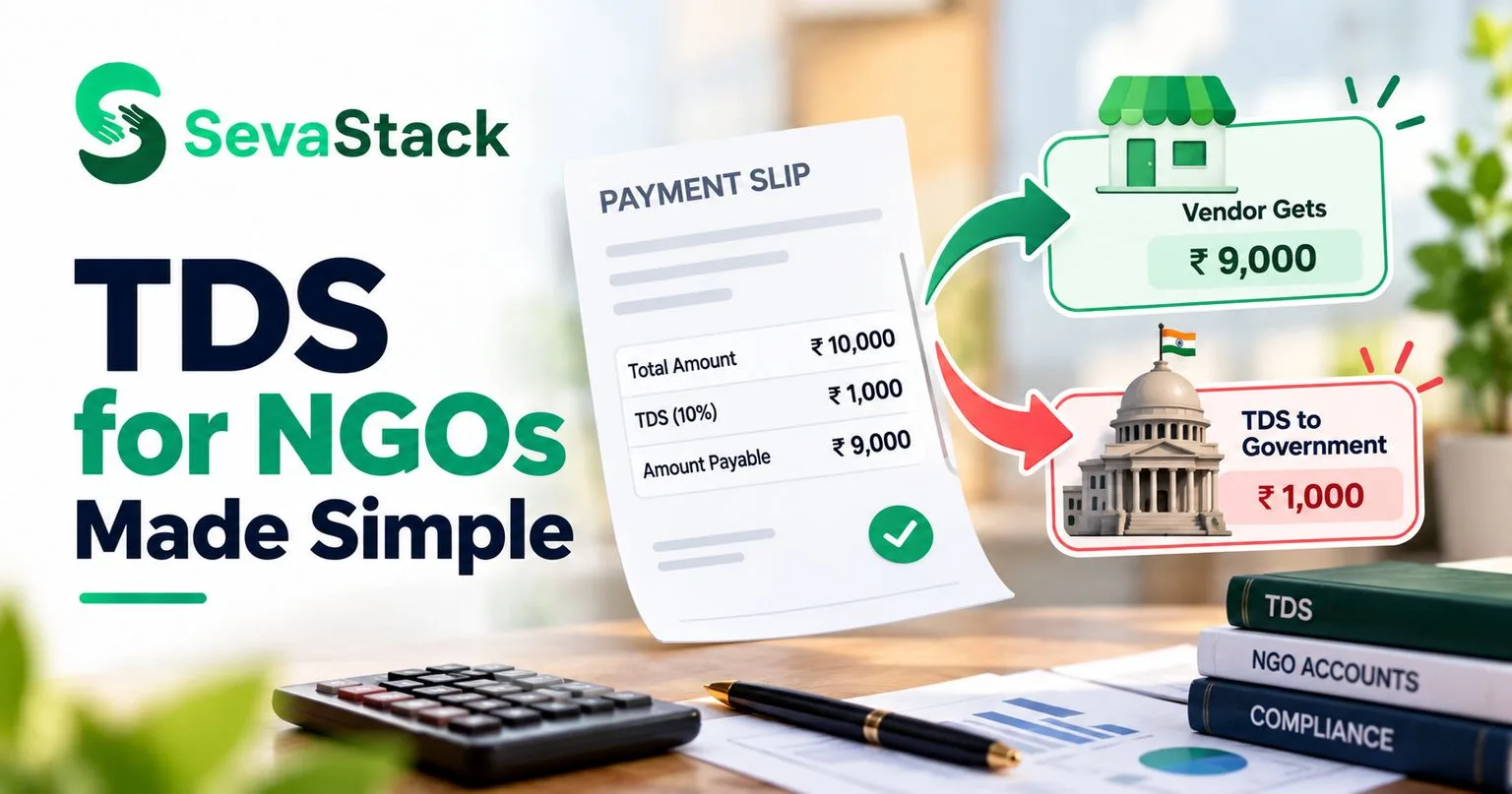
Your NGO pays a printer for banners, a contractor for repairs, a CA for audit fees and a landlord for rent. Do you need to cut TDS on these payments?
Many NGOs think "we are a charity, so TDS does not apply to us". This is not correct. NGOs must cut TDS on many vendor payments, just like any other organisation. Mistakes can lead to interest, penalties and trouble at audit time.
In this post, we explain TDS on vendor payments in very simple words.
Note: This post is general information. Rates and limits can change, so confirm them with your CA before you deduct.
What is TDS?
TDS means Tax Deducted at Source. When you pay certain people above a limit, you keep back a small part as tax and deposit it with the government. The vendor gets the rest and can claim credit for this tax in their own return.
So your NGO acts like a tax collector for the government.
Salary TDS is a separate topic. This post is only about payments to vendors, contractors and professionals.
What changed in 2026?
The new Income-tax Act, 2025 started on 1 April 2026.
For payments made up to 31 March 2026, the old section names (like 194C and 194J) are used.
For payments made from 1 April 2026, the new law applies. Most contractor and vendor TDS now comes under Section 393.
The rates have mostly stayed the same. What changed is the section numbers and form names.
Many accountants still say "194C" and "194J" in daily talk, so you will hear both.
TDS on common NGO payments
This table shows common payments, using the rates widely reported for FY 2026-27. The limits are checked against the old section names.
Payment | Old section | Rate | When TDS applies |
|---|---|---|---|
Contractor or job work (printing, event work, repairs, catering, manpower supply), paid to an individual or HUF | 194C | 1% | Single payment above ₹30,000, or total above ₹1,00,000 in the year |
Same, paid to a company, firm, trust or others | 194C | 2% | Same limits |
Professional fees (CA, lawyer, doctor, consultant, designer) | 194J | 10% | Total above ₹50,000 in the year |
Technical services | 194J | 2% | Total above ₹50,000 in the year |
Rent for land or building | 194I | 10% | Total rent above ₹6,00,000 in the year |
Commission or brokerage | 194H | 2% | Total above ₹20,000 in the year |
Limits and rates change from time to time. Please confirm each one with your CA before using it.
A simple example
Your NGO pays a printing company (a firm) ₹50,000 for banners and brochures. Contractor TDS at 2% applies, since the payment is above ₹30,000.
TDS = 2% of ₹50,000 = ₹1,000
You pay the printer ₹49,000
You deposit ₹1,000 with the government
If the printer's invoice shows GST separately, TDS is normally cut on the amount before GST. Your CA can confirm this for each type of payment.
What if the vendor has no PAN?
Always collect the vendor's PAN before paying. If a vendor does not give a PAN, TDS may have to be cut at a much higher rate (generally 20%). Make PAN collection a rule in your NGO.
When should you cut TDS?
Cut TDS at the earlier of these two moments:
When you record the bill in your books (credit), or
When you make the payment.
Do not wait until payment if you have already booked the bill.
Due dates every NGO should know
What | Due date |
|---|---|
Deposit TDS with the government | 7th of the next month (for March, 30 April) |
Quarterly TDS return, Q1 (Apr to Jun) | 31 July |
Quarterly TDS return, Q2 (Jul to Sep) | 31 October |
Quarterly TDS return, Q3 (Oct to Dec) | 31 January |
Quarterly TDS return, Q4 (Jan to Mar) | 31 May |
So the Q2 return for July to September 2026 is generally due on 31 October 2026. Please check this with your CA, in case any date has changed.
Remember also that the audit report is due on 21 October and the ITR-7 on 21 November for NGOs whose accounts are audited. Plan your TDS work around these dates.
Under the new rules, the return form for payments to residents (other than salary) is Form 140, earlier called Form 26Q. The TDS certificate for vendors replaces the old Form 16A. Your CA or TDS software will use the right forms.
Step-by-step: how to handle TDS in your NGO
Step 1: Get a TAN
To deduct TDS, your NGO needs a TAN (Tax Deduction Account Number). If you do not have one, apply for it.
Step 2: Collect vendor details
Take the vendor's name, PAN and address. Ask whether the vendor is an individual, firm or company, since the rate depends on it.
Step 3: Decide if TDS applies
Check the type of payment and the yearly total against the limits above. Keep a simple list for each vendor.
Step 4: Deduct at the right rate
Deduct TDS when you book the bill or make the payment, whichever is earlier.
Step 5: Deposit by the 7th
Pay the TDS to the government by the 7th of the next month. Keep the challan.
Step 6: File the quarterly return
Your CA files it by the due date. Keep all vendor and challan details ready.
Step 7: Give TDS certificates to vendors
Vendors need these certificates to claim credit for the tax you deducted.
What happens if you make mistakes?
If you do not deduct TDS, you may have to pay interest, and the expense may be questioned at audit.
If you deduct but do not deposit, the interest is higher, and there can be penalties.
If you file the return late, there is a late fee for each day.
For an NGO, these problems also add questions to your audit. It is far cheaper to follow the rules from the start.
Common mistakes to avoid
Thinking NGOs are exempt. They are not.
Not collecting PAN. This can force a higher TDS rate.
Missing the aggregate limit. Many small bills can cross the yearly limit. Track totals vendor by vendor.
Cutting TDS but not depositing. Always deposit by the 7th.
Using the wrong rate. Check if the vendor is an individual, firm or company.
Mixing salary TDS with vendor TDS. They have different rules and forms.
Doing it all in the last week. Do it every month.
Quick summary
NGOs must cut TDS on many vendor payments
Common ones: contractors, professionals, rent and commission
Rates are mostly the same, but sections are now under Section 393
Collect PAN before paying
Deposit TDS by the 7th of the next month
Q2 return is generally due 31 October
Confirm rates and limits with your CA
Frequently asked questions
Do NGOs need to deduct TDS?
Yes. NGOs, trusts and societies must deduct TDS on payments that fall under the TDS rules, above the limits.
What is the TDS rate on contractor payments?
Generally 1% for individuals and HUFs, and 2% for others such as firms and companies.
Is the section number for TDS changed?
Yes. From 1 April 2026, most vendor TDS falls under Section 393 of the new Income-tax Act, 2025. The old names like 194C are still used in daily talk and for older payments.
When is the TDS return for July to September due?
Generally 31 October 2026. Check with your CA in case of any change.
Do we cut TDS on the GST amount?
Usually TDS is cut on the amount before GST, if GST is shown separately on the invoice. Your CA can confirm for your case.
What if the vendor refuses to give a PAN?
TDS may have to be cut at a higher rate. Always collect the PAN before paying.
Track vendor payments easily
Sevastack helps Indian NGOs keep expenses, vendor details and accounts in one place, so your TDS work is clearer for your CA. Start free and stay ready before every due date.
Vivek Bhos
Written by the Sevastack team, who build and maintain the 80G receipt, FCRA, and Form 10BD/10BE automation used by Indian NGOs on the platform every day. Compliance guidance is reviewed against current Income Tax Act and FCRA rules before publishing.
Read next
Finance
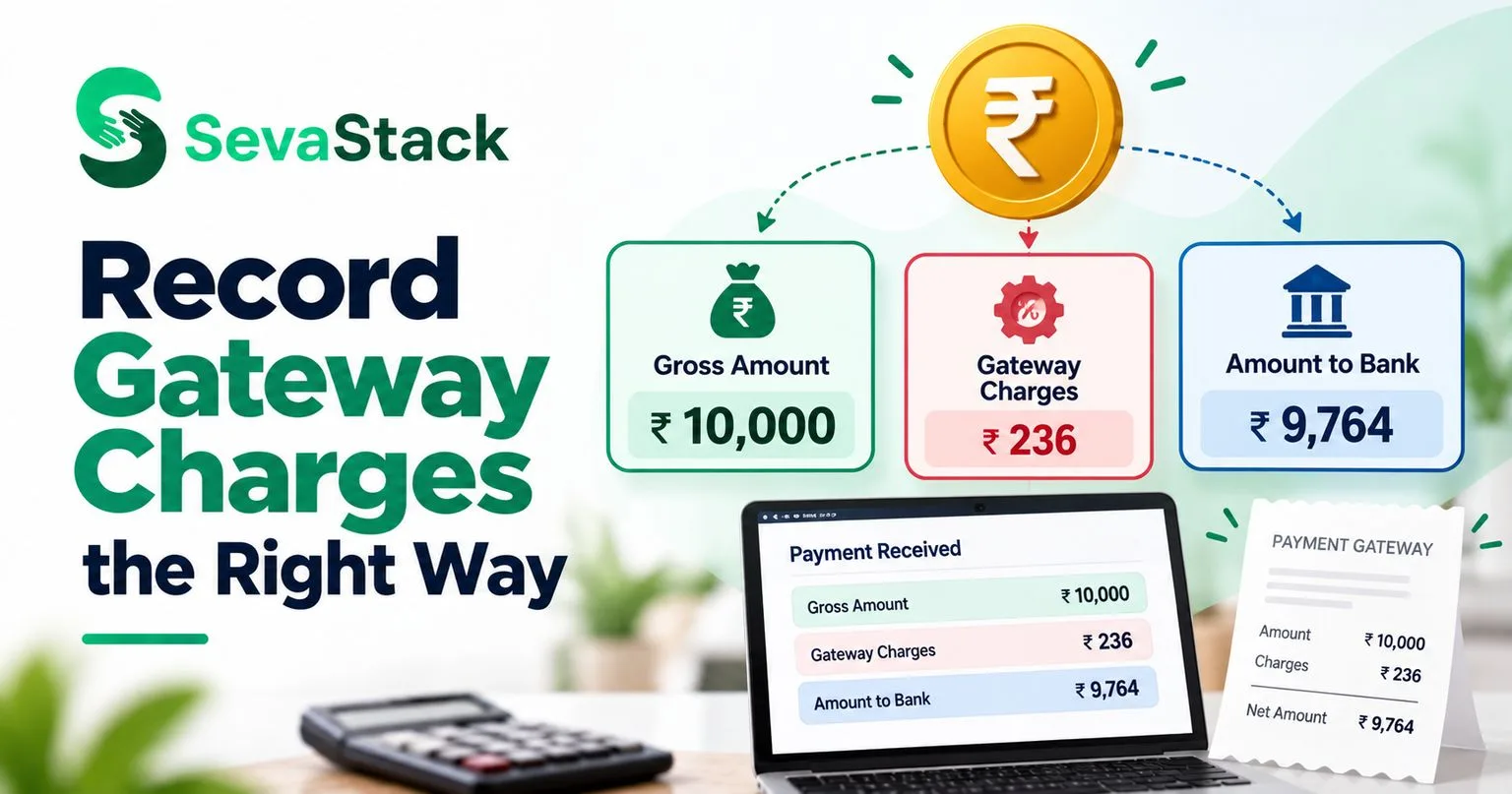
Payment Gateway Charges: How NGOs Should Record Them
Online donation reached your bank with some money cut? Learn in simple words how NGOs should record payment gateway charges, with an easy example.

Finance
Receipts and Payments Account: A Simple Guide for NGOs
What is a Receipts and Payments Account? Learn in simple words how NGOs prepare it, how it differs from Income and Expenditure, with an easy example.
Finance
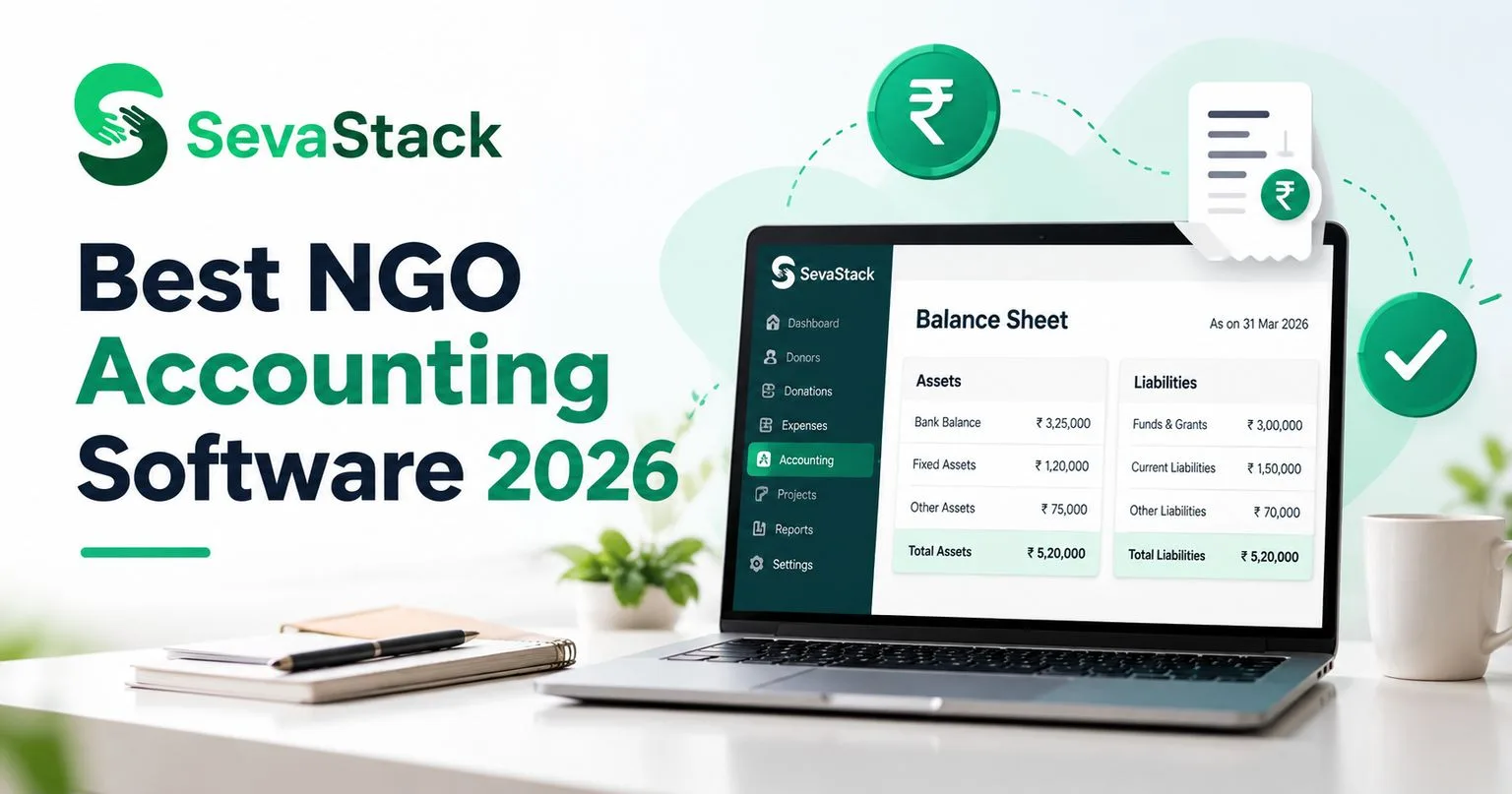
Best NGO Accounting Software in India (2026): Simple Guide
Confused about which accounting software to pick for your NGO? Here is a simple 2026 guide to Tally, Zoho Books, Excel and NGO-specific tools in India.
Never miss a filing date
Sevastack keeps your NGO's compliance calendar and reminds you by email and WhatsApp before each return is due. Donors, 80G receipts and accounts sit in the same place.