

Why NGOs Lose Donors After the First Donation (And How to Fix It)
Learn why NGOs lose donors after their first donation and discover practical strategies to improve donor retention and build long-term relationships.
Vivek Bhos
Updated 3 min read
Getting a donation feels like a win.
But here’s the harsh reality:
👉 Most donors never come back.
Not because they don’t care…
But because something breaks after the first donation.
If your NGO struggles with repeat donations, you’re not alone.
But the good news?
👉 This problem is completely fixable.
📉 The Real Problem: One-Time Donors
Many NGOs focus only on:
Getting new donors
Running campaigns
Increasing reach
But ignore what happens after someone donates.
And that’s where the biggest loss happens.
Because:
👉 A one-time donor is easy to get
👉 A repeat donor is where real growth happens
🚫 Why Donors Don’t Come Back
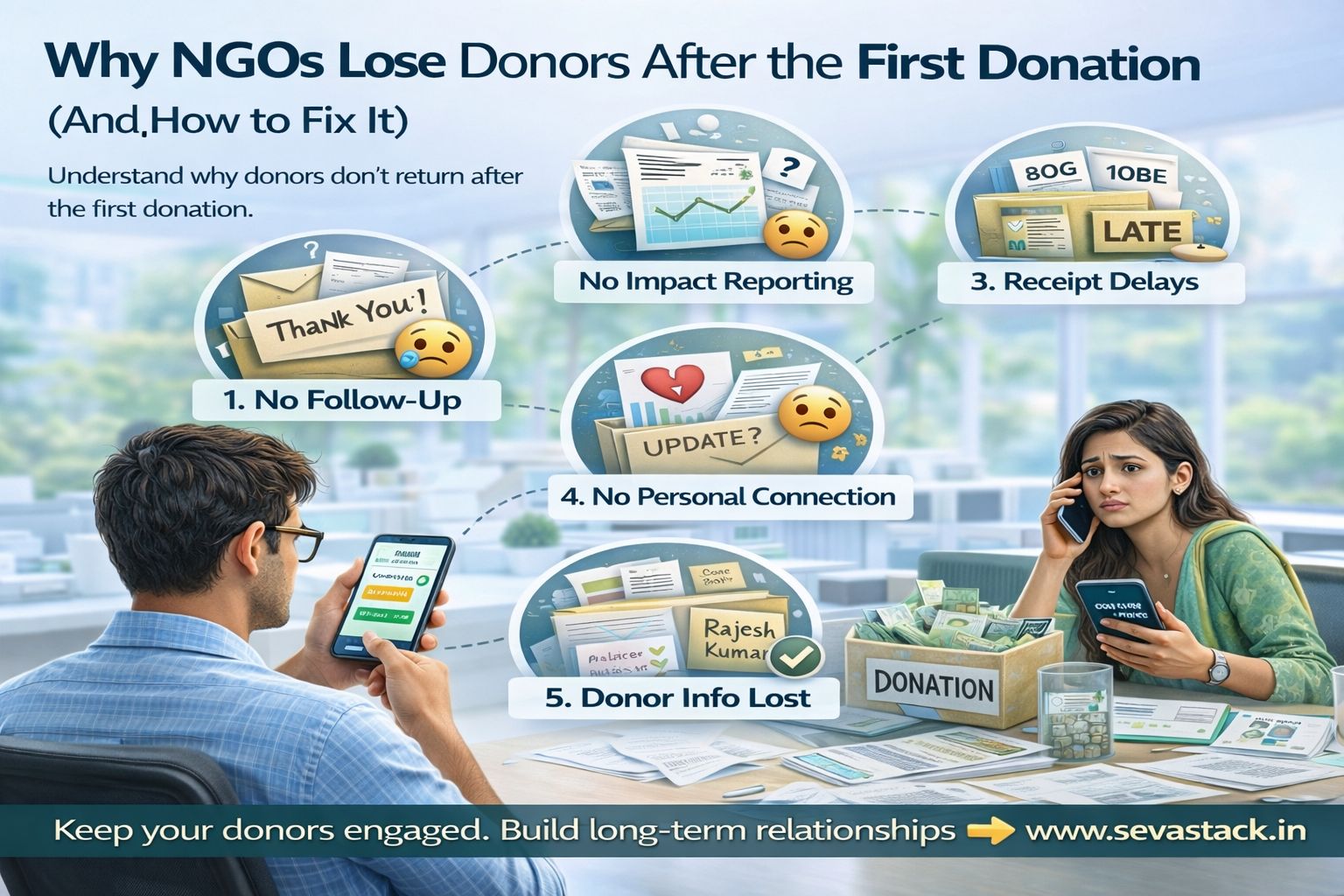
1. No Follow-Up After Donation
A donor gives money…
And then hears nothing.
No thank you. No update. No communication.
👉 This makes donors feel unimportant.
2. No Proof of Impact
Donors want to know:
Where their money went
Who it helped
What changed
If they don’t see results, they lose trust.
3. Poor Receipt & Tax Experience
Missing or delayed:
Donation receipts
Form 10BE
Creates frustration — especially during tax filing.
4. No Emotional Connection
Donations are emotional.
If NGOs don’t share:
Stories
Real impact
Human connection
Donors forget.
5. Treating Donors Like Transactions
Many NGOs treat donations like one-time payments.
Instead of:
👉 Building relationships
6. No System to Manage Donors
When data is scattered:
Donor history is lost
Follow-ups don’t happen
Communication breaks
This leads to silent drop-offs.
🔍 What Donors Actually Expect in 2026
Today’s donors expect:
Instant acknowledgment
Clear communication
Transparency
Impact updates
Proper documentation
If these are missing…
👉 They move on.
✅ How to Fix Donor Drop-Off
1. Send Instant Thank You
Every donation should trigger:
Email confirmation
Thank you message
Receipt
This builds immediate trust.
2. Share Impact Regularly
Don’t wait months.
Send updates like:
“Your donation helped 100 families this week”
Photos, stories, reports
Make donors feel involved.
3. Fix Tax & Compliance Experience
Ensure donors get:
Proper receipts
Form 10BE on time
👉 This alone improves retention massively.
4. Build Relationships, Not Lists
Engage donors through:
Emails
Updates
Invitations
Turn them into long-term supporters.
5. Use a Proper Donor Management System
Manual systems don’t scale.
Use tools to:
Track donor history
Automate communication
Manage compliance
6. Make Giving Easy Again
Simplify:
Donation process
Payment options
Follow-up communication
👉 Less friction = more repeat donations
📈 The Real Growth Strategy
Here’s the truth:
👉 Retaining donors is cheaper than acquiring new ones
NGOs that focus on retention:
Raise more funds
Build trust
Grow faster
🤝 Final Thoughts
Donors don’t stop giving randomly.
They stop when:
Communication stops
Trust breaks
Experience fails
If you fix these…
👉 You don’t just get donations
👉 You build a community
🚀 Build Long-Term Donor Relationships
If you want to manage donors, automate communication, and improve retention:
Vivek Bhos
Written by the Sevastack team, who build and maintain the 80G receipt, FCRA, and Form 10BD/10BE automation used by Indian NGOs on the platform every day. Compliance guidance is reviewed against current Income Tax Act and FCRA rules before publishing.
Read next
Fundraising
Diwali Fundraising for NGOs: A Simple 3-Week Campaign Plan
Diwali is on 8 November. Here is a simple 3-week plan for Indian NGOs to run a Diwali fundraising campaign, with ideas, messages and a daily checklist.
Fundraising
After Daan Utsav: How to Thank and Keep Your New Donors
Daan Utsav is over, but your work is not. Learn simple ways to thank new donors, share your impact and keep them giving all year.
Fundraising
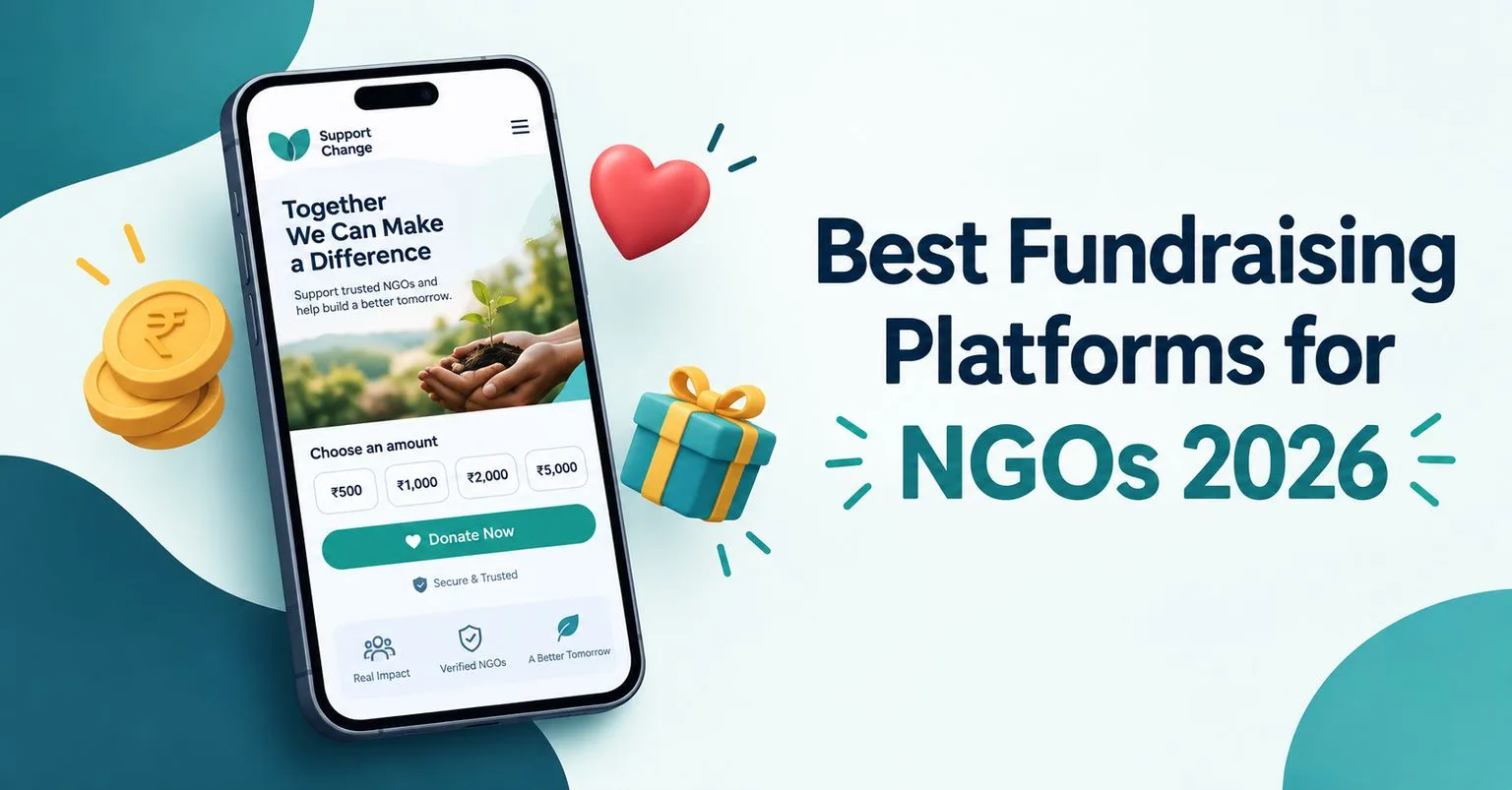
Best Fundraising Platforms for NGOs in India (2026)
Ketto, Milaap, GiveIndia, Donatekart and more. A simple guide to the best fundraising platforms for NGOs in India in 2026, with fees and tips.
Never miss a filing date
Sevastack keeps your NGO's compliance calendar and reminds you by email and WhatsApp before each return is due. Donors, 80G receipts and accounts sit in the same place.