

The 85% Rule: How Much Must Your NGO Actually Spend?
Indian NGOs must spend 85% of income every year or pay tax on the shortfall. Here is what counts as spending, what does not, and how to fix a gap.
Vivek Bhos
Updated 8 min read
Every NGO in India with 12A registration has to follow one basic rule:
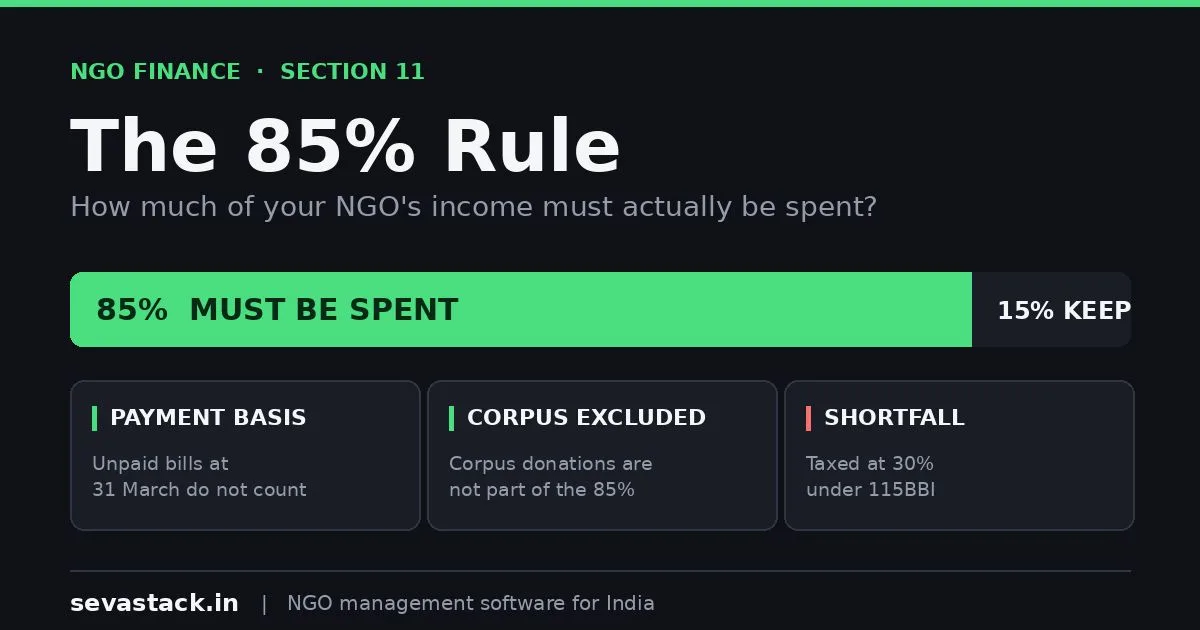
Out of every ₹100 your NGO receives, you must spend at least ₹85 on your work during the same year.
The remaining ₹15 you can keep. Forever. No forms, no permission, no questions.
That is the whole rule.
The confusing part is not the number. It is that money can go out of your bank account and still not count as "spending" in the eyes of the Income Tax Department. That is where NGOs get into trouble.
This guide explains it with one simple example, in plain language.
Meet Asha Foundation
We will follow one NGO through the whole article.
Asha Foundation runs after-school centres. Last year they received:
What they received | Amount |
|---|---|
General donations | ₹80,00,000 |
Grant from a company | ₹15,00,000 |
Bank interest | ₹5,00,000 |
Corpus donation from one donor | ₹20,00,000 |
Total in the bank | ₹1,20,00,000 |
Now let us work out what they must spend.
Step 1: Find your "income" figure
Not everything in your bank account counts as income for this rule.
One thing is removed: corpus donations.
A corpus donation is money where the donor has given a written instruction that it should be kept permanently as your corpus fund. It is like a fixed deposit for your NGO. You keep it and use the returns.
Because it is meant to be kept, the law does not expect you to spend it. So it is taken out of the calculation.
Important: Money is corpus only if the donor wrote it down. If a donor gave ₹20 lakh and said nothing, it is not corpus. It is normal income and you must spend 85% of it.
Asha Foundation's income for this rule:
₹80 lakh + ₹15 lakh + ₹5 lakh = ₹1 crore
The ₹20 lakh corpus is kept aside separately.
Step 2: Work out your 85%
This part is easy.
₹1 crore × 85% = ₹85 lakh
Asha Foundation must spend ₹85 lakh on their work this year.
They can keep ₹15 lakh with no conditions at all.
Step 3: Now check what your spending actually counts
Asha Foundation looked at their books and found ₹87 lakh of expenses. They relaxed.
Then their CA went through it. Here is what happened.
These counted fully ✅
Expense | Amount | Counts? |
|---|---|---|
Teacher salaries | ₹35,00,000 | Yes |
Centre rent and electricity | ₹12,00,000 | Yes |
Books and learning materials | ₹8,00,000 | Yes |
A van bought for the centres | ₹9,00,000 | Yes — full amount |
Good news about buying things: If you buy a vehicle, land, computers or build a classroom for your work, the full cost counts in the year you pay for it. You do not spread it over years.
These did NOT count ❌
1. A bill they received but had not paid — ₹6,00,000
They got the invoice in March. They approved it. They recorded it in their books. But they paid it in April.
It does not count this year. Spending counts only when the money actually leaves your account. Not when the bill arrives.
This is the single most common mistake. Pay your pending bills before 31 March.
2. Cash payment of ₹40,000 to one vendor in one day
Any cash payment above ₹10,000 to one person in one day does not count.
Solution: Pay by bank transfer, cheque or UPI. Then it counts.
3. TDS was not deducted on a ₹5,00,000 consultant payment
When TDS should have been deducted and was not, 30% of that payment is removed. So only ₹3.5 lakh counted, not ₹5 lakh.
Good news: You get the missing ₹1.5 lakh back as spending in the year you fix the TDS.
4. ₹4,00,000 spent from the corpus fund
Money you spend out of your corpus does not count as spending this year.
You can claim it later — when you put that money back into the corpus.
5. ₹10,00,000 donated to a partner NGO
This one surprises everyone. When you give money to another registered NGO, only 85% of it counts as your spending.
So ₹10 lakh donated = only ₹8.5 lakh counted.
And if you give a corpus donation to another NGO, nothing counts at all. Zero.
Where Asha Foundation actually landed
Item | In books | Actually counted |
|---|---|---|
Salaries, rent, materials, van | ₹64,00,000 | ₹64,00,000 |
Unpaid bill | ₹6,00,000 | ₹0 |
Cash payment | ₹40,000 | ₹0 |
Consultant (no TDS) | ₹5,00,000 | ₹3,50,000 |
Spent from corpus | ₹4,00,000 | ₹0 |
Donation to partner NGO | ₹10,00,000 | ₹8,50,000 |
Total | ₹89,40,000 | ₹76,00,000 |
They thought they spent ₹89 lakh. Only ₹76 lakh counted.
Their target was ₹85 lakh.
They are short by ₹9 lakh.
Step 4: One more thing — extra spending does not carry forward
Many trustees believe that if you spend a lot one year, it covers a weak year.
It does not.
Each year is separate. If you spend ₹95 lakh when you only needed ₹85 lakh, the extra ₹10 lakh is simply gone. You cannot use it next year.
This is why you should check your numbers in January, not in March.
What if you fall short?
Asha Foundation is ₹9 lakh short. They have two options. Both need a form.
Option 1: Form 9A — "the money came late"
Use this if you fell short because the money did not reach you in time.
Example: A grant was approved in March but the money arrived in your account in April. You could not spend what you did not have.
You file Form 9A. You then spend that money in the year you received it, or the year after.
Option 2: Form 10 — "we are saving for something specific"
Use this if you are deliberately saving for a big plan.
Example: You are collecting money to build a hostel.
The rules:
You must write down the exact purpose
You can save it for a maximum of 5 years
You must keep the money in the approved investment types
You must actually spend it on that purpose
If 5 years pass and you have not spent it, it becomes taxable.
When to file these forms
Both forms are due by 31 August — two months before your income tax return.
The tax department has said that filing by the return due date (31 October) is also accepted. But do not plan for that. File by 31 August.
What happens if you do nothing?
The shortfall gets taxed at 30%.
For Asha Foundation, ₹9 lakh short means roughly ₹2.7 lakh in tax — money that could have paid four teachers for a year.
And you cannot hide it. Your auditor reports this position in your audit report.
Simple checklist for January
Do this every January, while you still have two months to fix things:
☐ Add up all money received this year
☐ Remove corpus donations from that total
☐ Multiply by 85% — this is your target
☐ Add up what you have actually paid so far (not bills received)
☐ Pay any pending bills before 31 March
☐ Check no cash payment crossed ₹10,000 to one person in one day
☐ Check TDS was deducted where needed
☐ Count partner NGO donations at 85%, not 100%
☐ If short, decide now: Form 9A or Form 10
☐ Set a reminder for 31 August to file the form
Common questions
Do we pay tax on the 15% we keep? No. It is completely free. You can keep it forever with no conditions.
A donor gave us money and said "use it for the school project." Is that corpus? No. That is a restricted donation, not corpus. It still counts in your 85% calculation. Corpus needs the donor to specifically say the money is for your corpus fund.
We bought land this year. Does the whole amount count? Yes, if the land is for your charitable work. The full cost counts in the year you pay.
We spent 90% but forgot TDS on one big payment. Are we safe? Maybe not. Losing 30% of a large payment can pull you below 85%. Check the actual numbers.
Our NGO had almost no income last year. Does this rule matter? The 85% calculation will not be an issue. But you still have to file your audit report and income tax return as normal.
Can we just show the pending bill as spent? No. Only actual payments count. Recording an expense in your books is not enough.
The real problem
The 85% rule is simple maths. What makes it hard is that most NGOs only find out their real position in September, when the auditor finishes — six months after the date that mattered.
By then nothing can be fixed.
NGOs that stay safe do three things: they keep corpus money separate from the day it arrives, they track payments (not bills), and they check their percentage every few months.
Sevastack keeps your corpus, restricted and general funds separate automatically, shows your spending percentage at any time, and warns you if you are falling behind — while you can still do something about it. Start free — no credit card needed.
This article is general information, not tax advice. Please check your NGO's exact position with your Chartered Accountant.
Related guides
Vivek Bhos
Written by the Sevastack team, who build and maintain the 80G receipt, FCRA, and Form 10BD/10BE automation used by Indian NGOs on the platform every day. Compliance guidance is reviewed against current Income Tax Act and FCRA rules before publishing.
Read next
Finance
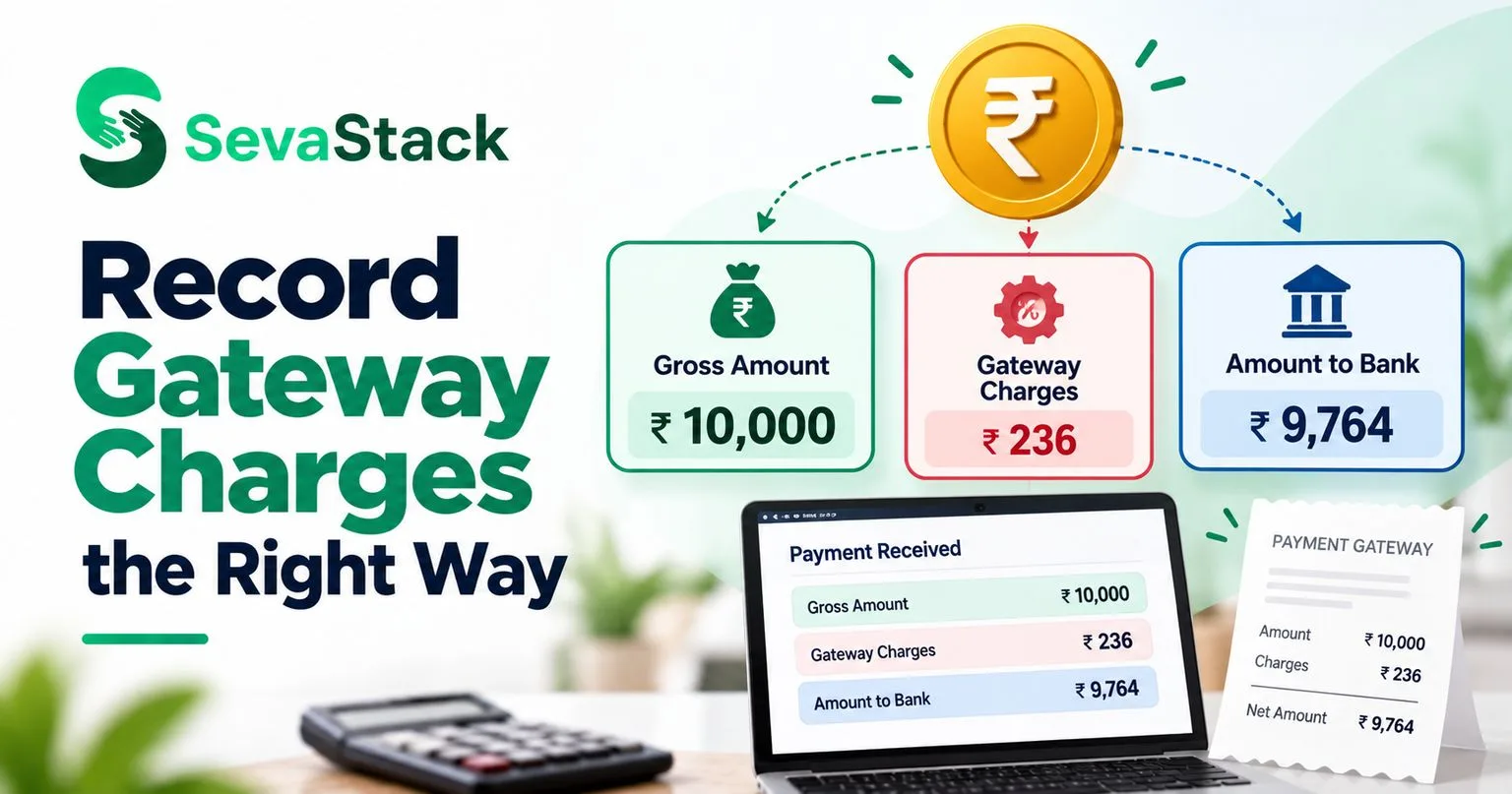
Payment Gateway Charges: How NGOs Should Record Them
Online donation reached your bank with some money cut? Learn in simple words how NGOs should record payment gateway charges, with an easy example.

Finance
Receipts and Payments Account: A Simple Guide for NGOs
What is a Receipts and Payments Account? Learn in simple words how NGOs prepare it, how it differs from Income and Expenditure, with an easy example.
Finance
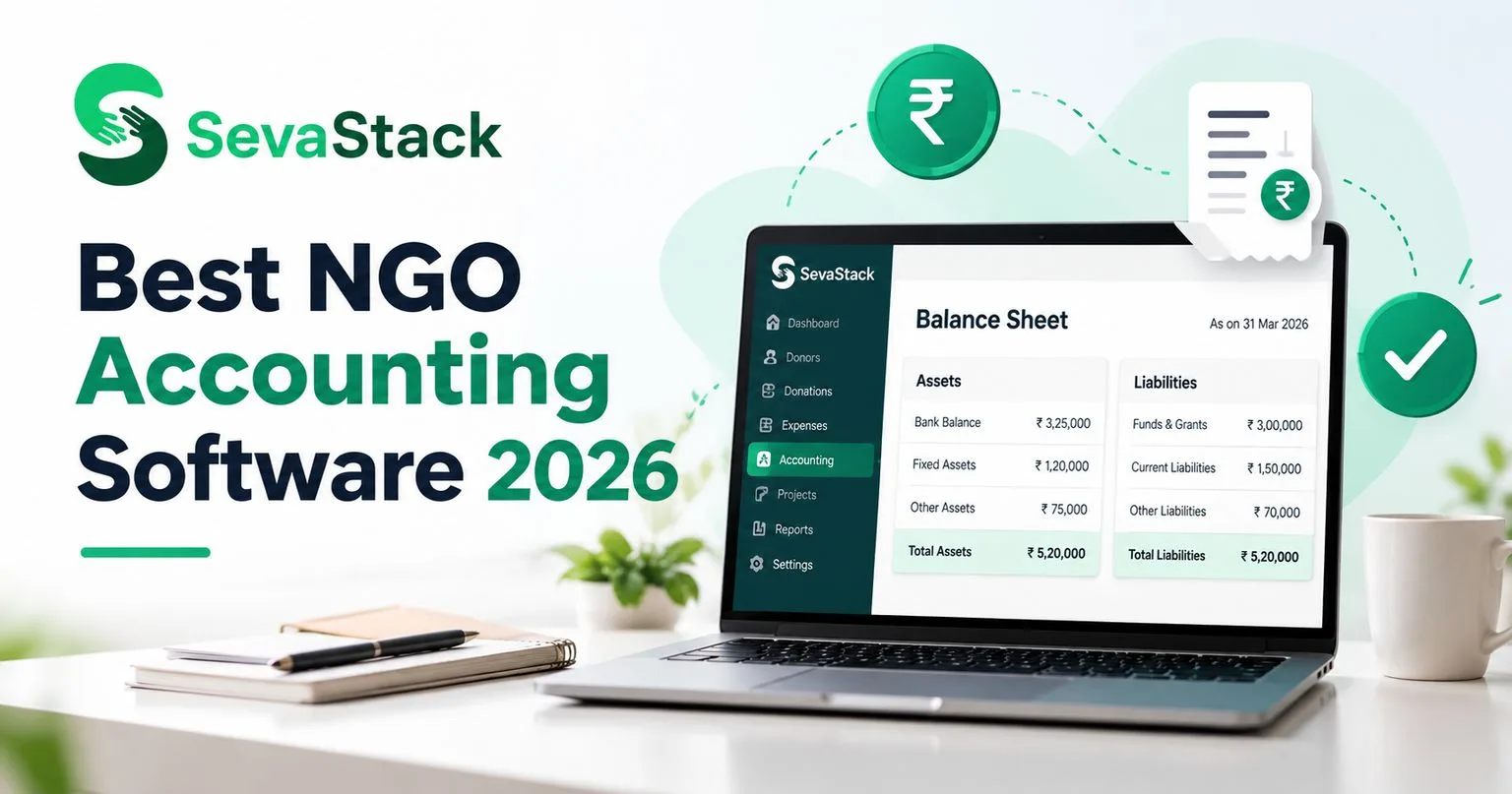
Best NGO Accounting Software in India (2026): Simple Guide
Confused about which accounting software to pick for your NGO? Here is a simple 2026 guide to Tally, Zoho Books, Excel and NGO-specific tools in India.
Never miss a filing date
Sevastack keeps your NGO's compliance calendar and reminds you by email and WhatsApp before each return is due. Donors, 80G receipts and accounts sit in the same place.